Thenna Andersen
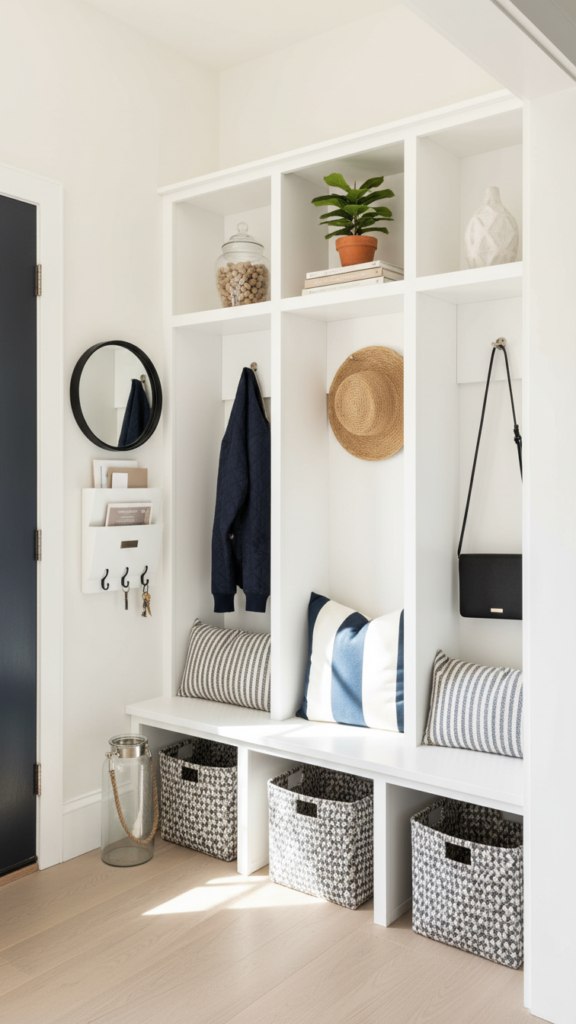
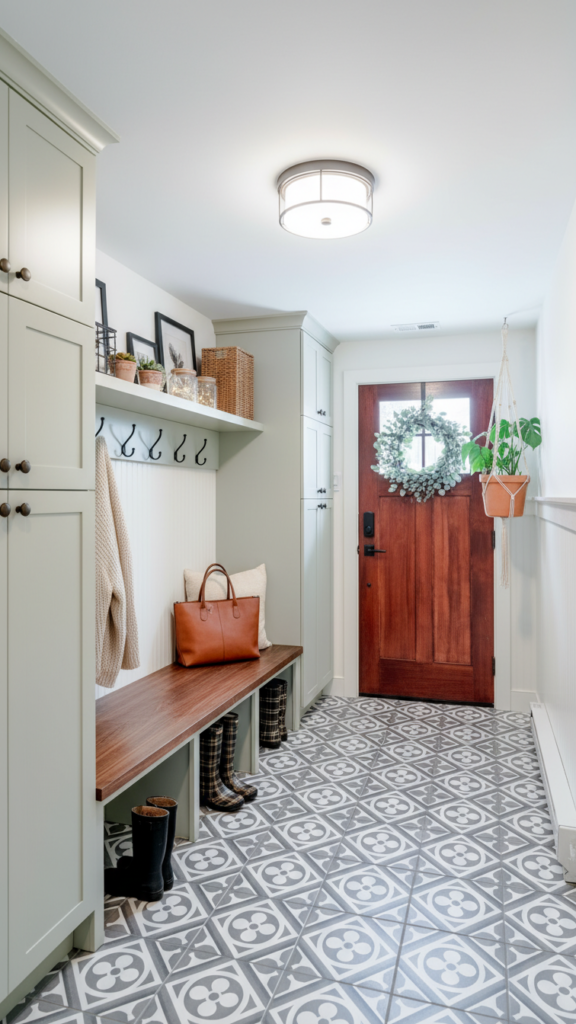
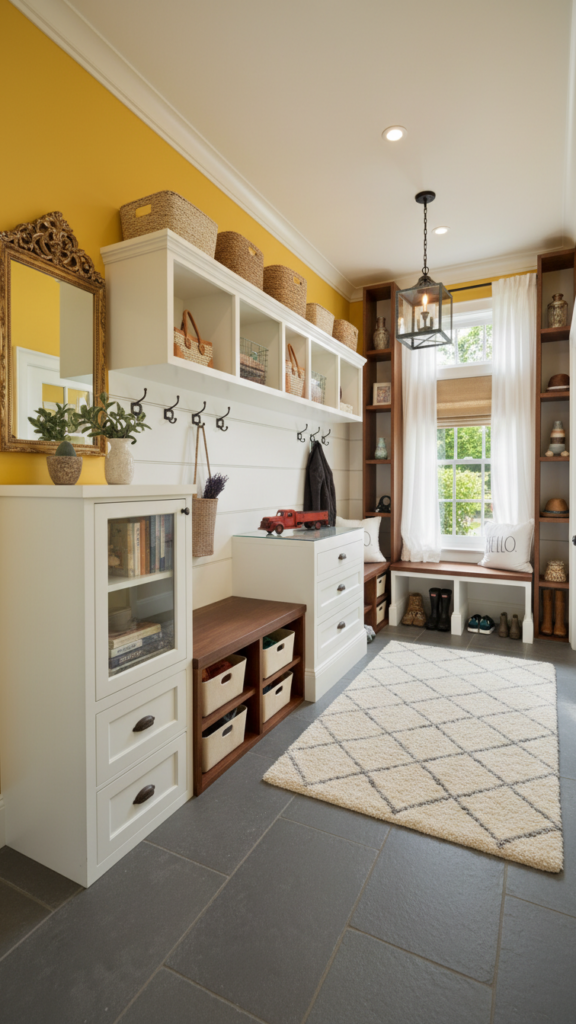
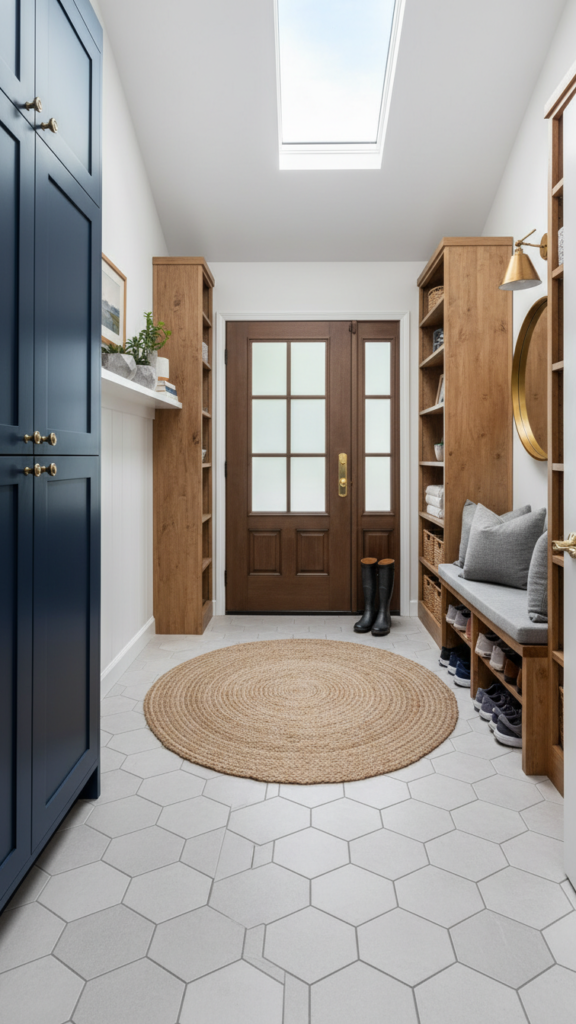
Searching for Small Entryway Ideas signifies a desire to reclaim this vital transitional space. You aren’t just looking for a place to hang your coat; you are looking for architectural hacks, visual illusions, and smart storage solutions that make your small footprint feel grand. Whether you are working with a narrow apartment hallway or a non-existent foyer that opens directly into the living room, this guide provides the blueprint for transformation.
The secret lies in the trifecta of verticality, reflection, and multi-functionality. We must lift the eye upward, bounce light around the room, and demand that every piece of furniture serve at least two purposes. In this comprehensive guide, we will explore definitive strategies to turn your small entryway into a high-impact design moment.

Contents
The Magic of the Oversized Round Mirror
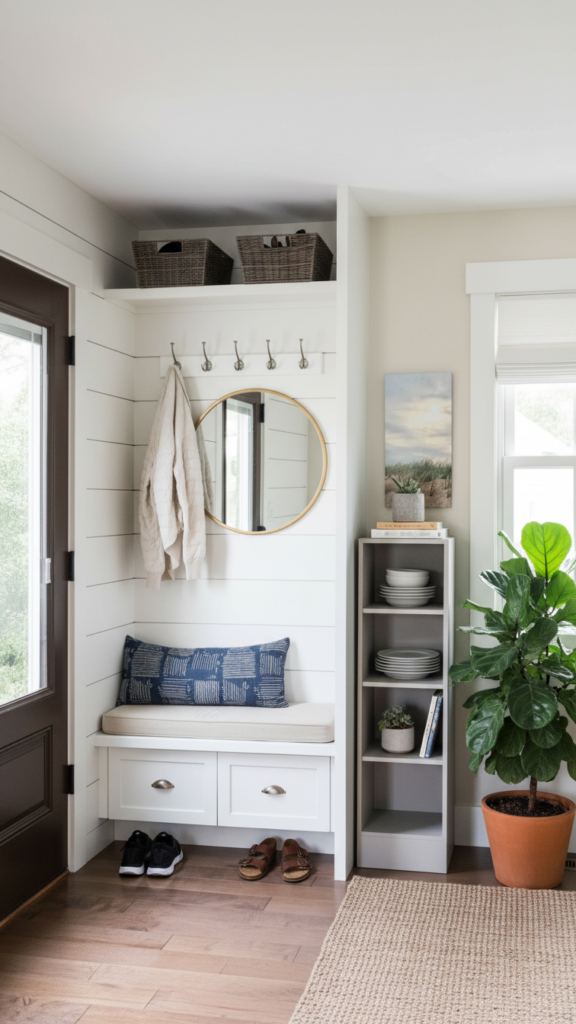
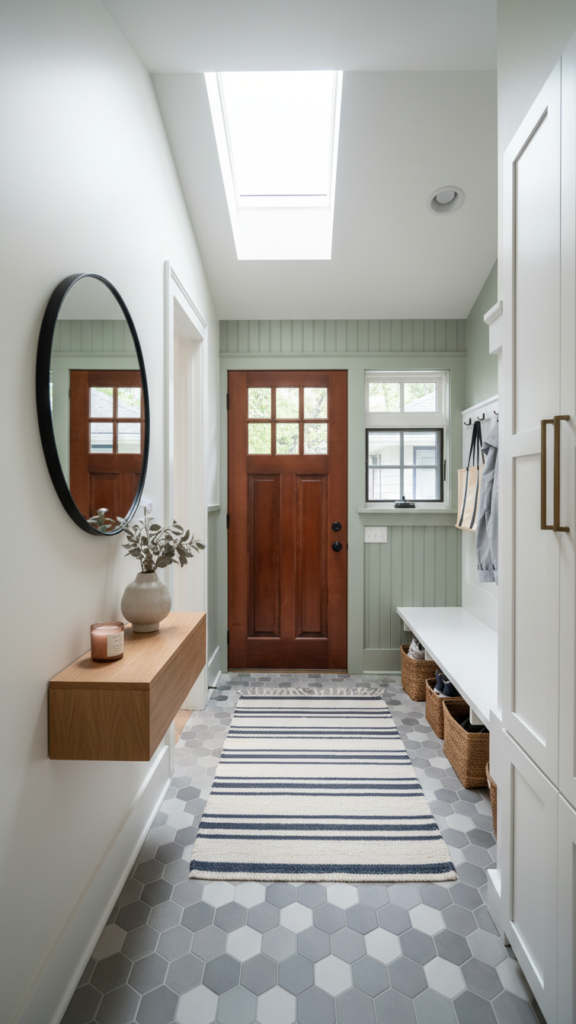
In a small entryway, a mirror is not just a vanity item; it is a window. A Round Gold Wall Mirror (24 Inch) acts as a visual “hole” in the wall, creating depth where there is none. The curvature of a round mirror softens the harsh, boxy lines of a narrow hallway. Alternatively, a Frameless Arched Mirror creates a window-like effect that draws the eye upward. Place it directly opposite a light source—like a window or a doorway—to bounce natural light deeper into the home. This simple trick effectively doubles the perceived visual space of the area.
The Floating Console Table Illusion
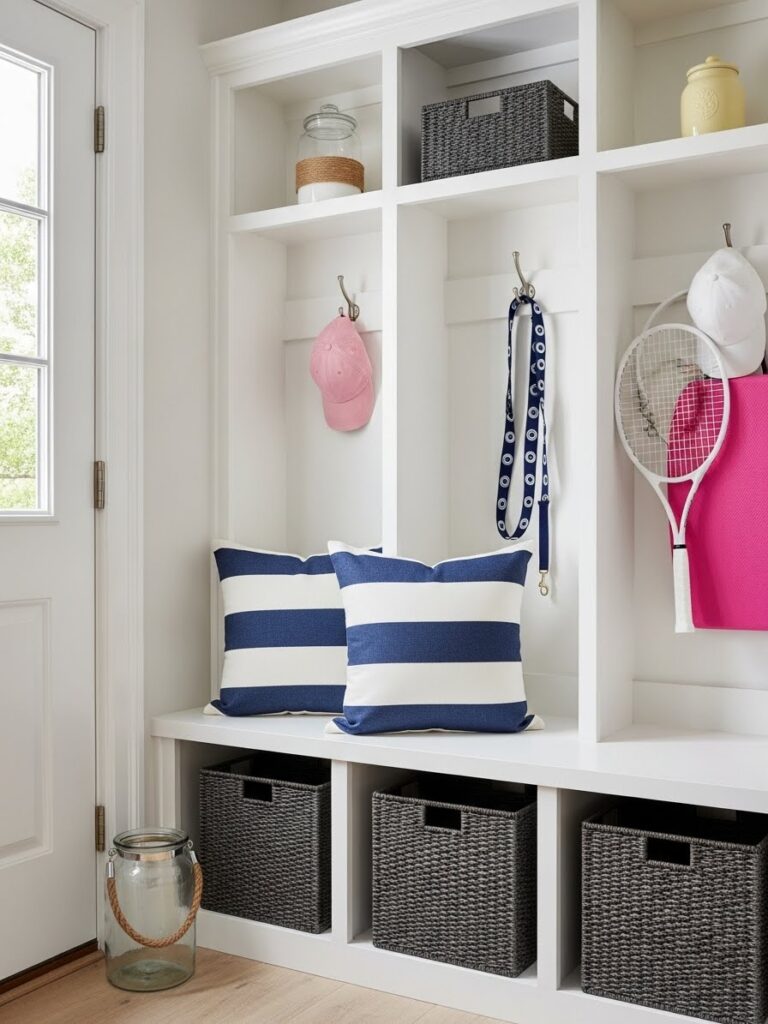
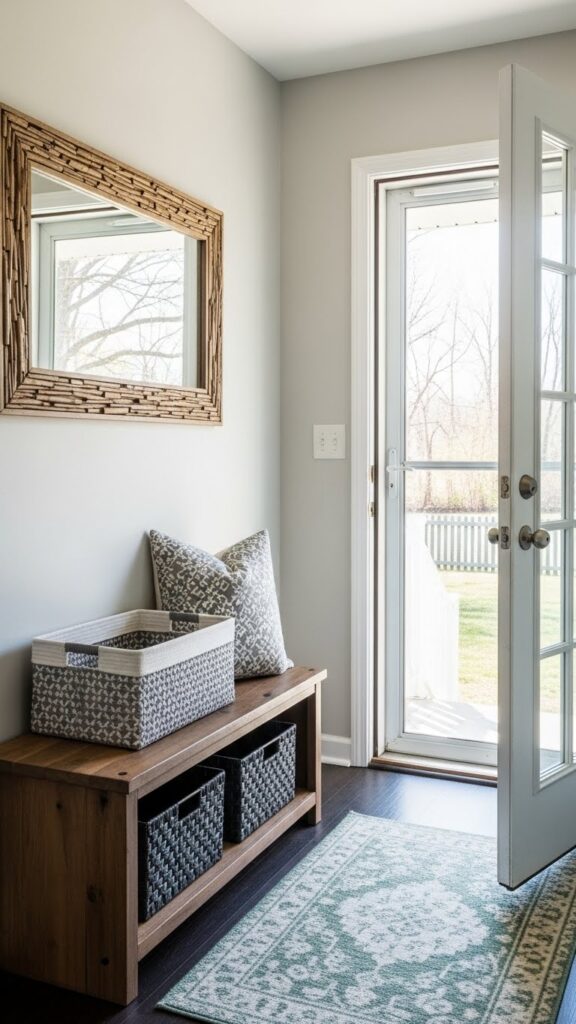
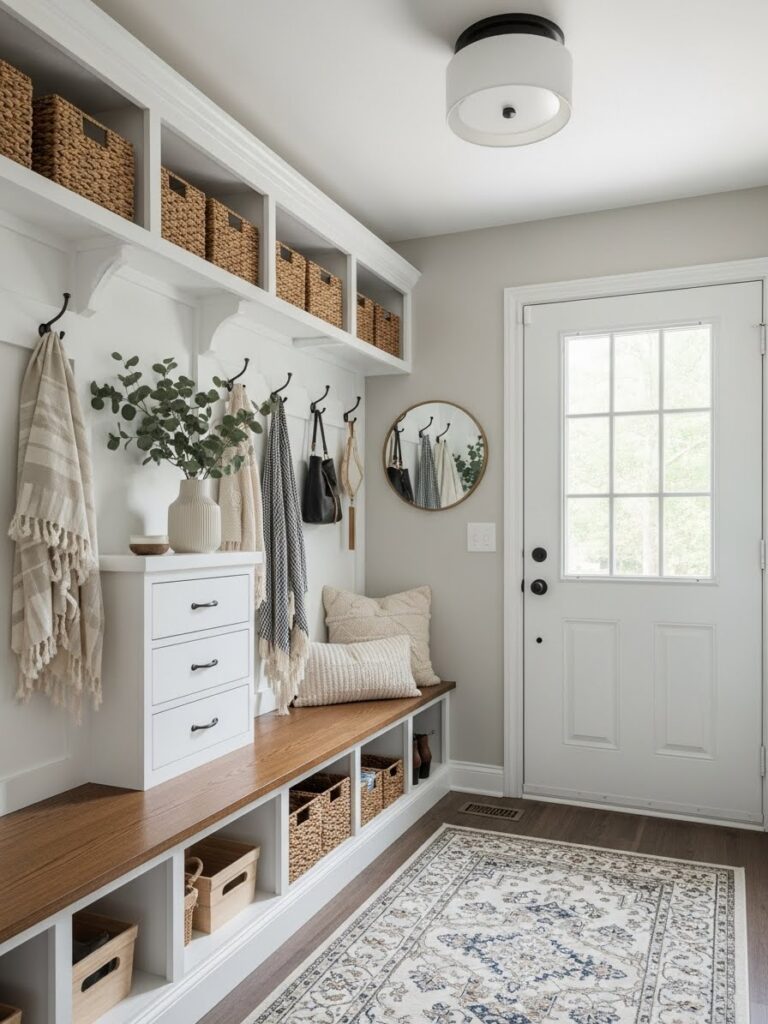
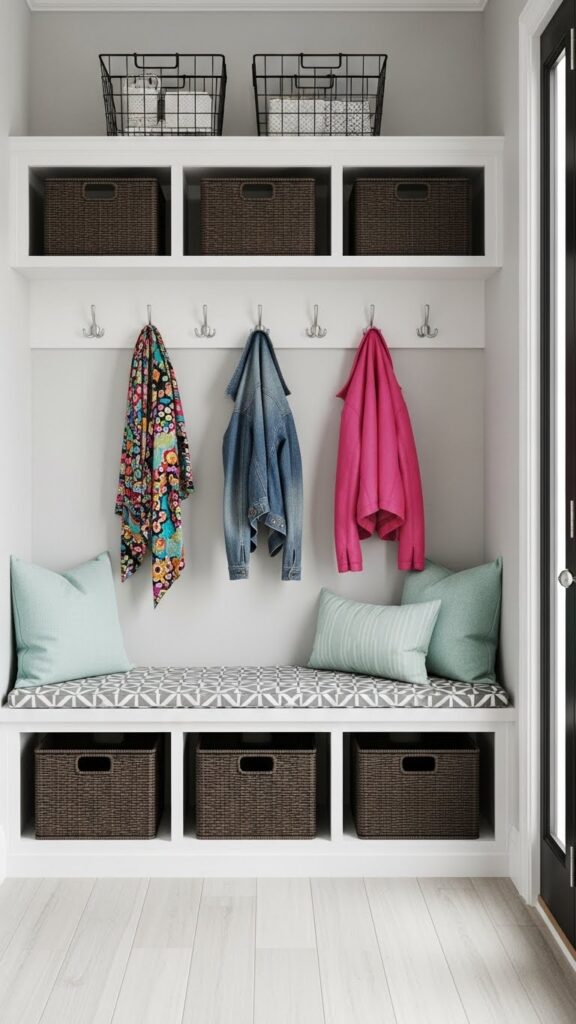
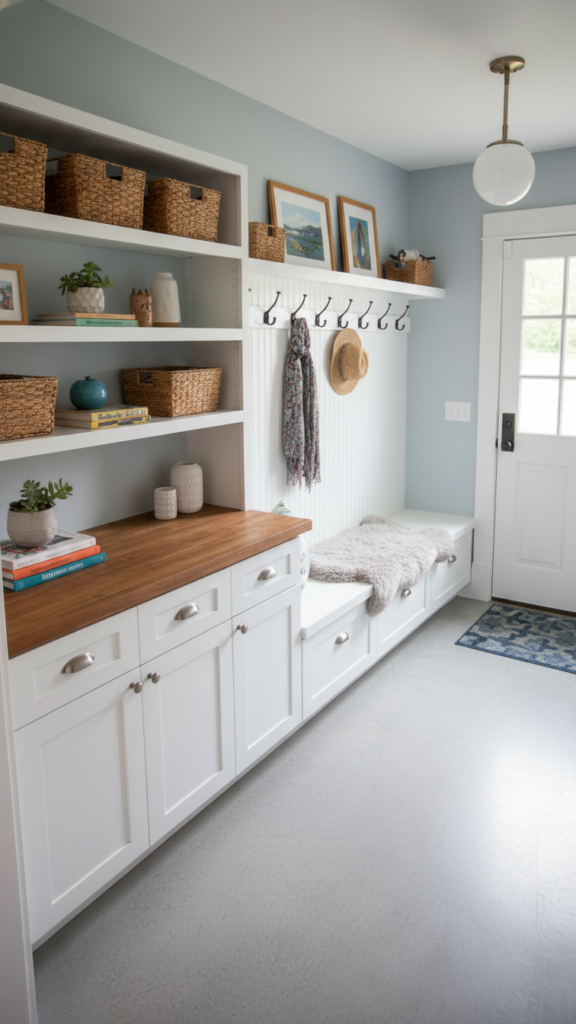
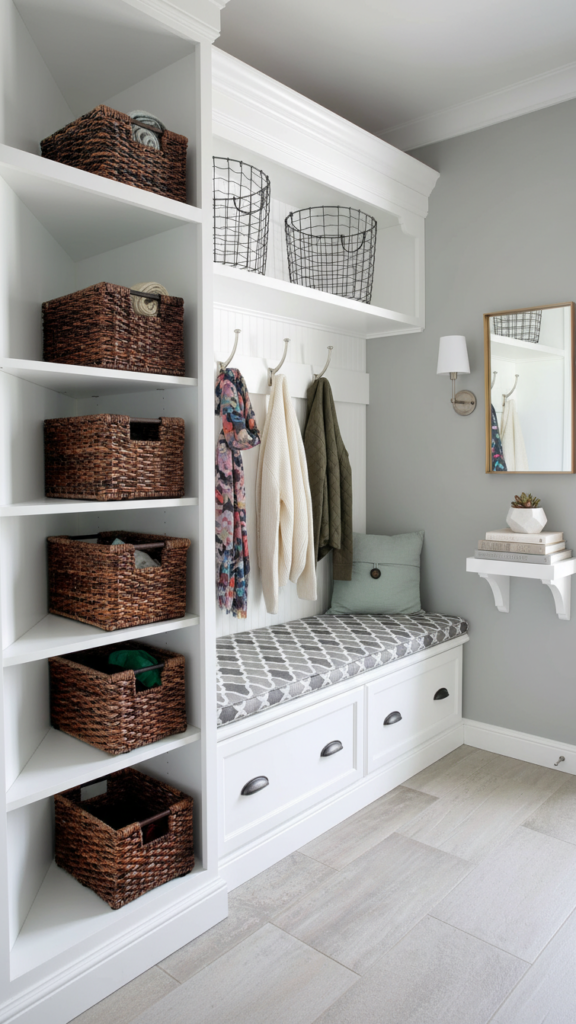
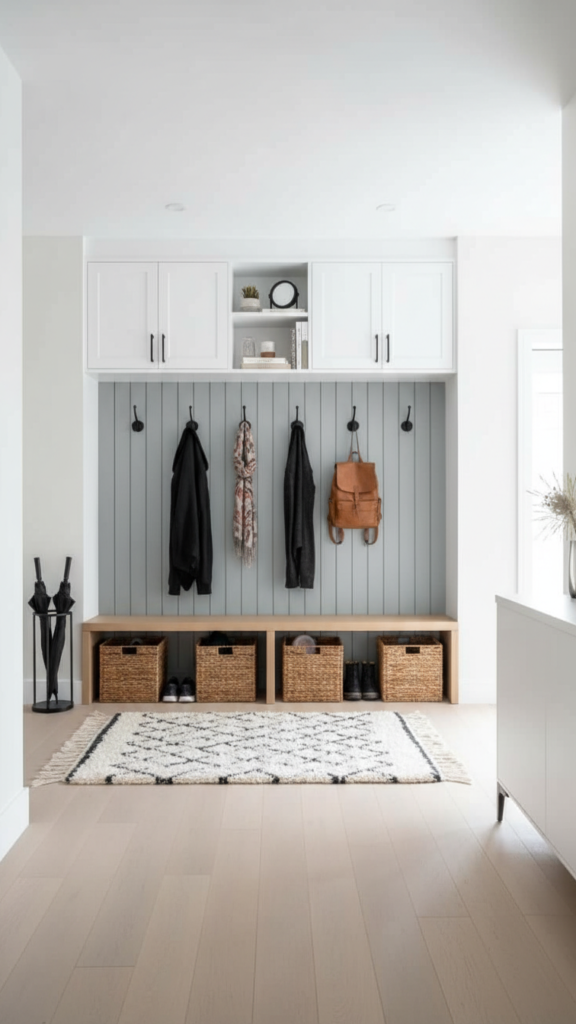
Floor space is precious real estate in a small entry. Traditional console tables with bulky legs can make the area feel crowded. The solution? A wall-mounted, floating console shelf. By keeping the floor underneath visible, you trick the brain into thinking the room is larger than it is. If drilling isn’t an option, a Narrow Console Table (Skinny) is the next best choice, provided it has open legs. This open space also provides a perfect spot to tuck away Small Woven Storage Baskets for shoes, maintaining functionality without sacrificing the airy aesthetic.
Vertical Shiplap for Height
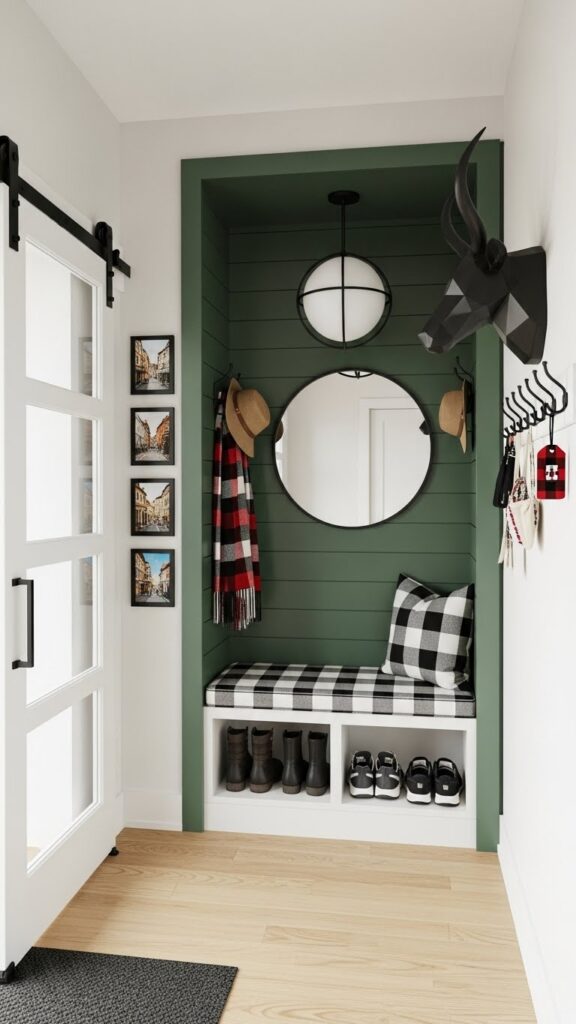
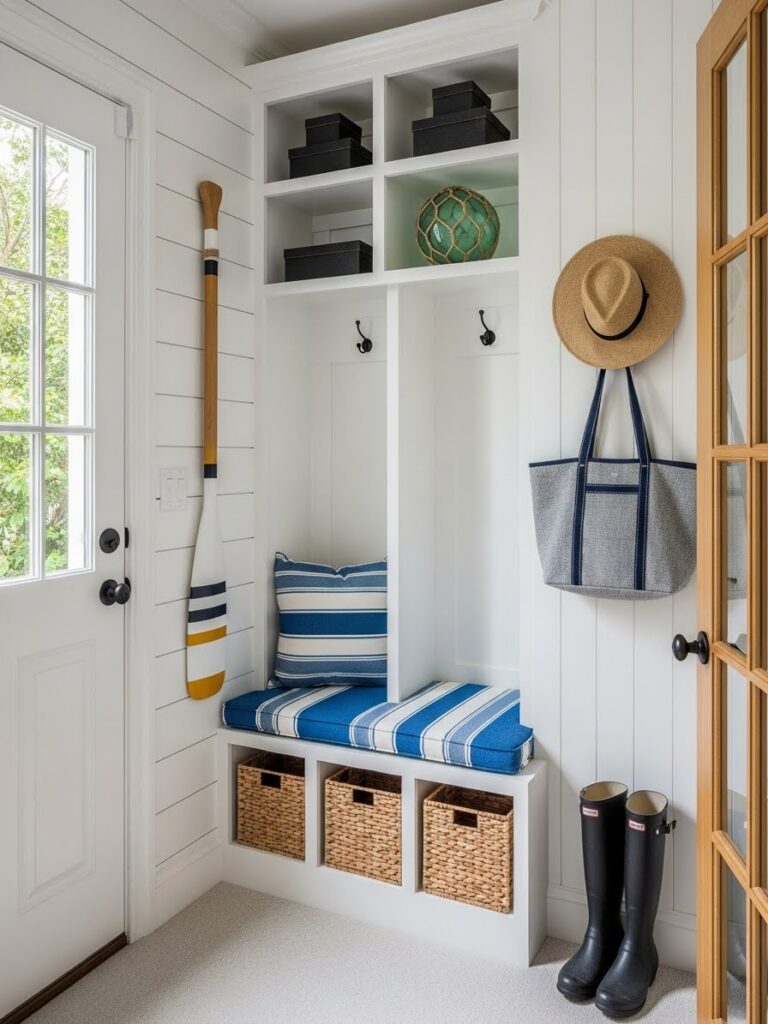
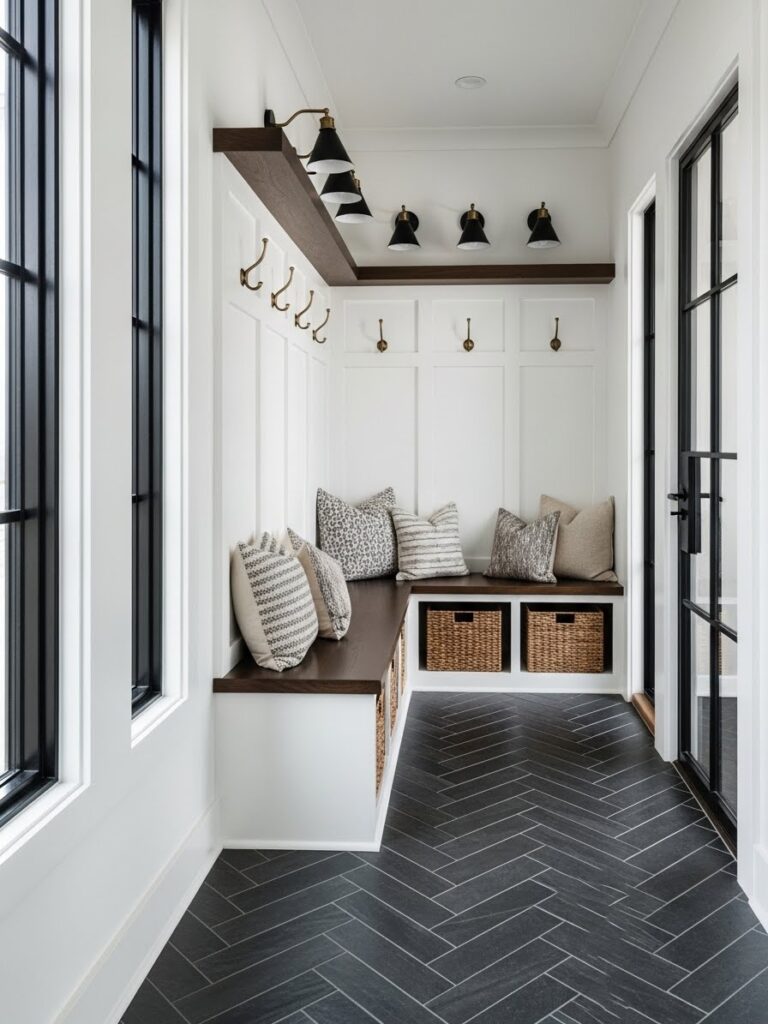
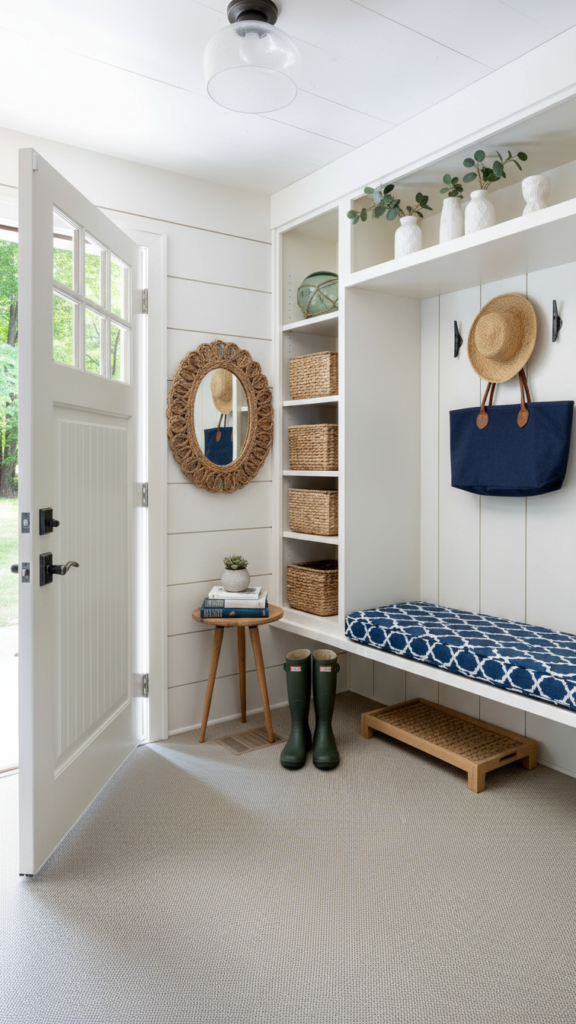
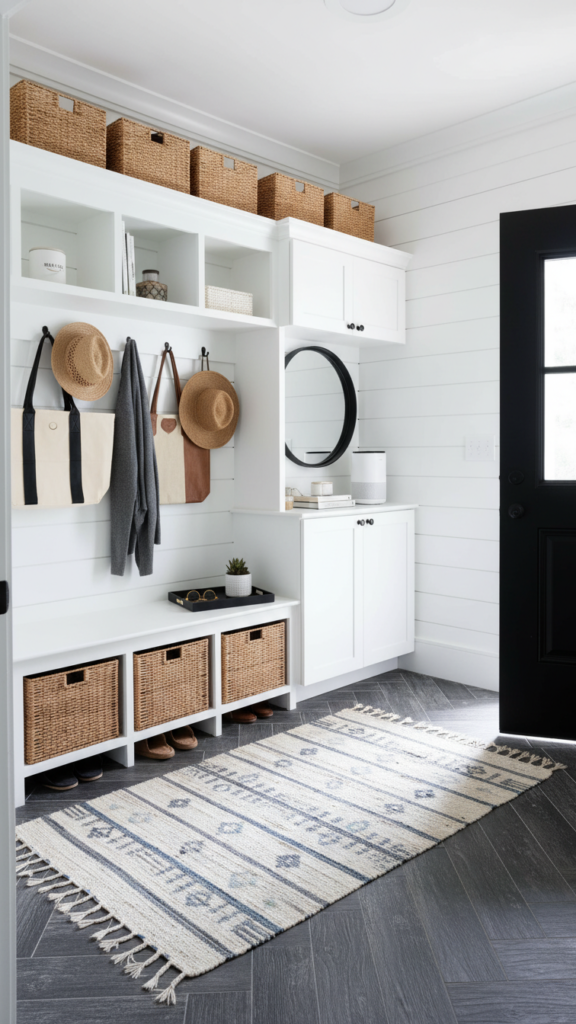
If you can’t expand outward, you must expand upward. Installing vertical shiplap or wood slatting draws the eye up toward the ceiling, emphasizing the height of the room rather than its narrow width. This architectural detailing adds texture and interest without protruding into the physical space. Paint it in a crisp white for a farmhouse look, or a moody charcoal for a modern, dramatic entrance.
Statement Pendant Lighting
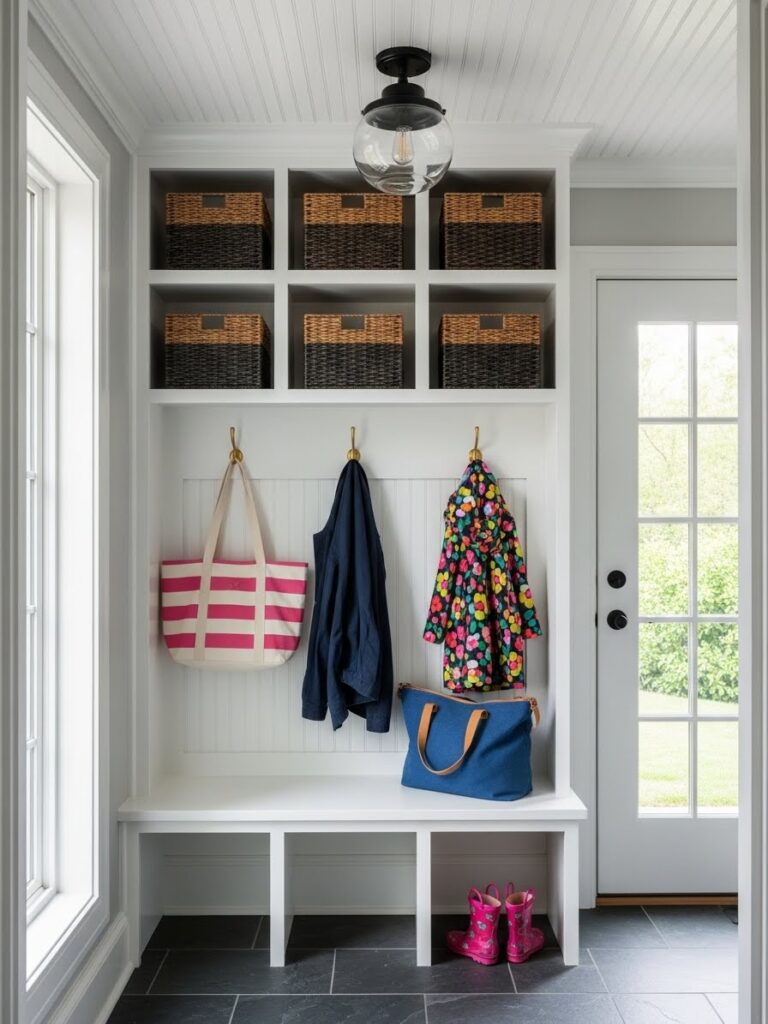
In a small space, you rarely have room for floor lamps. A statement pendant light is your opportunity to add personality without taking up square footage. Choose a fixture with clear glass or an open-weave design (like rattan) to keep the sightlines unobstructed. A bold light fixture acts as the “jewelry” of the entry, drawing attention upwards and setting the tone for the rest of the house immediately.
The Visual Elongation of Runner Rugs
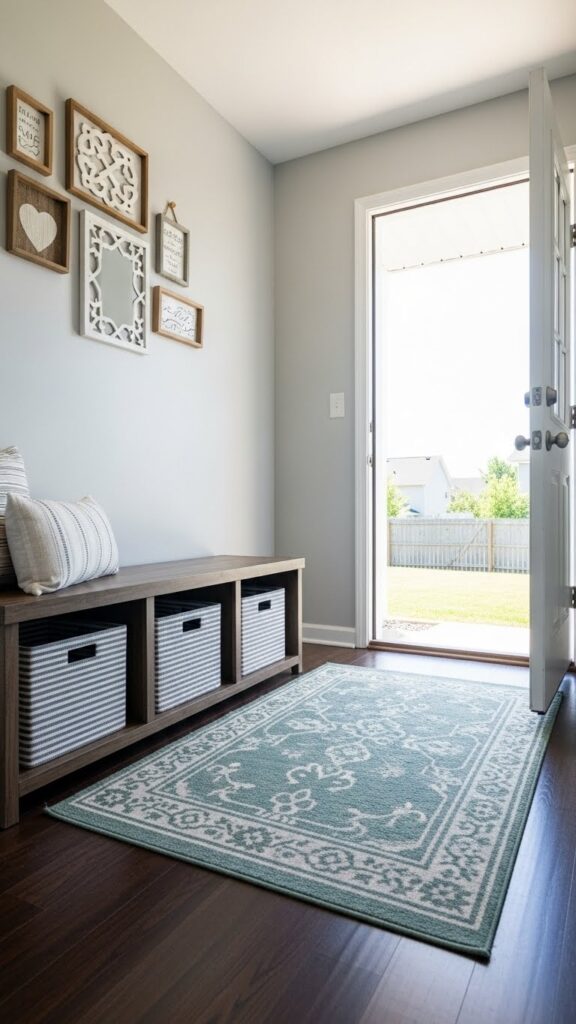
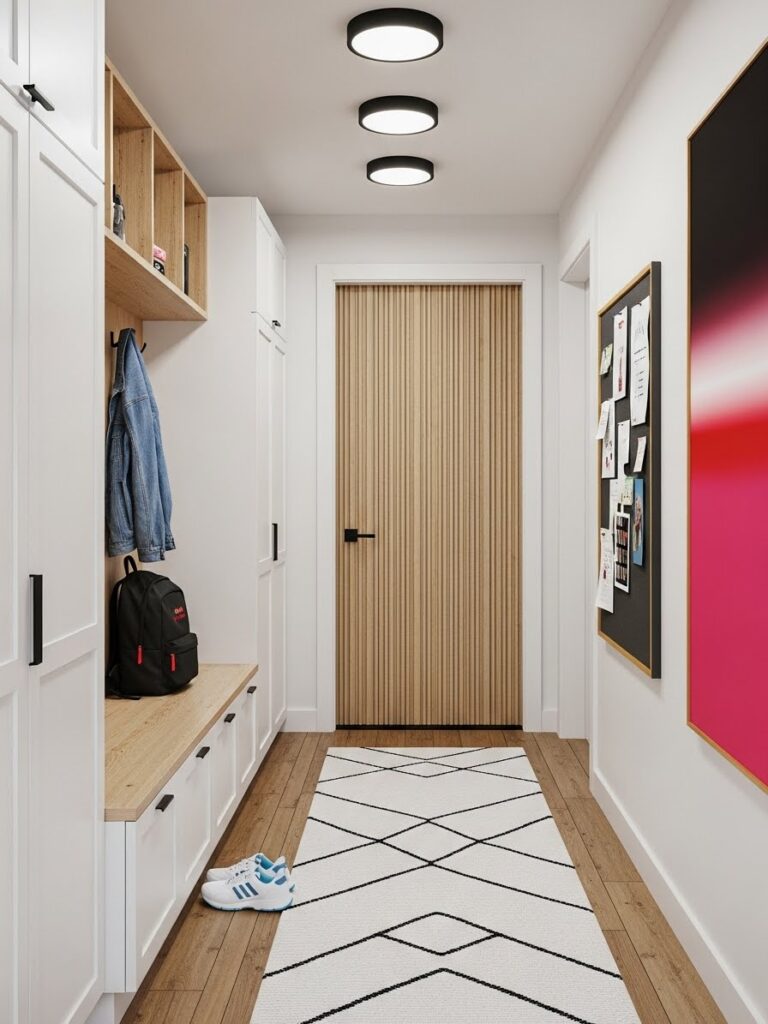
A runner rug is the red carpet of your home. In a short or narrow foyer, a runner rug directs traffic and visually elongates the floor plan. Opt for a Jute Runner Rug with texture to enhance this stretching effect while adding warmth. Beyond aesthetics, a durable rug traps dirt and debris before it enters the main living areas, which is a crucial function in a high-traffic zone.
Slim Tip-Out Shoe Cabinets
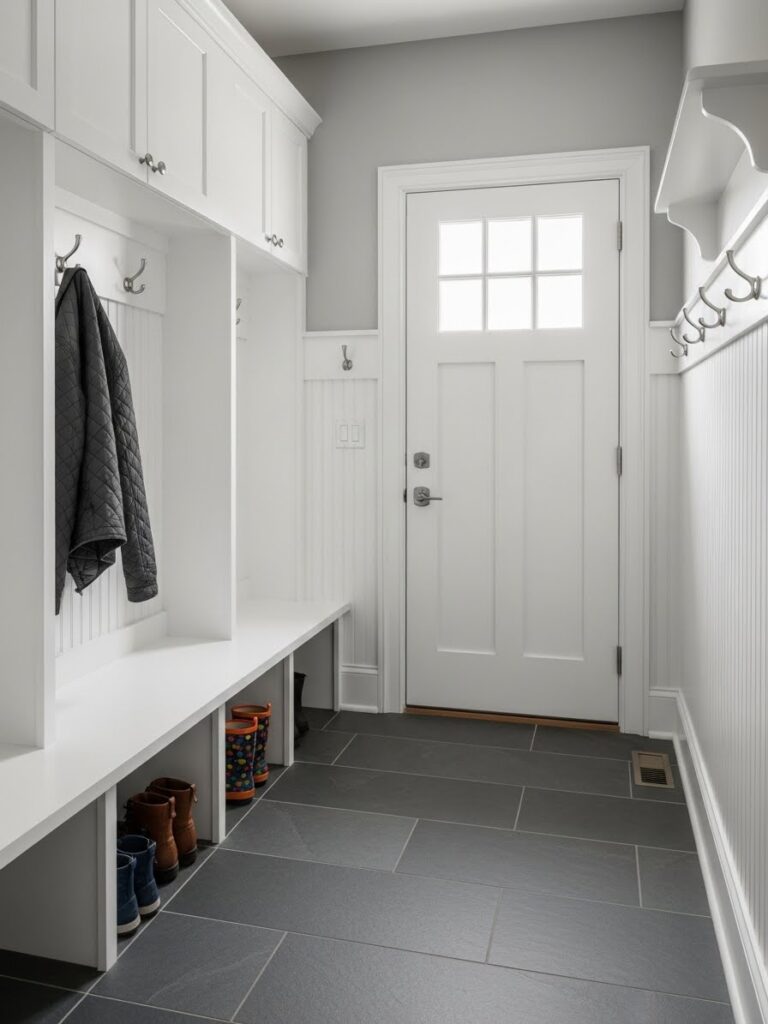
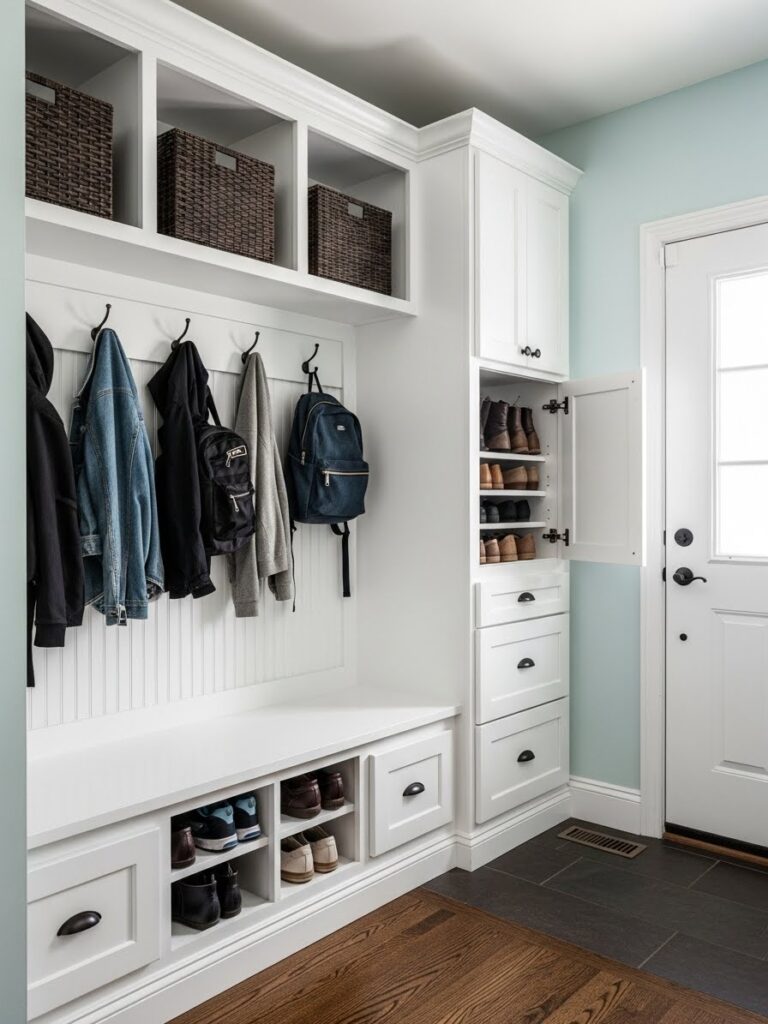
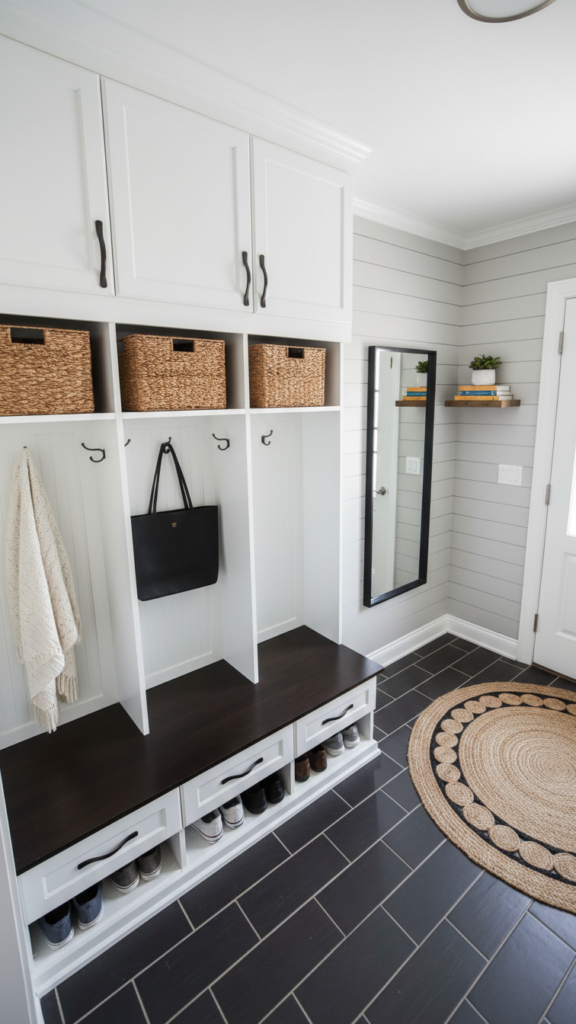
The “pile of shoes” is the enemy of the small entryway. Traditional shoe racks are often bulky and unsightly. The modern solution is the Slim Tip-Out Shoe Cabinet. These units are incredibly shallow—often only 6 to 10 inches deep—yet can hold a dozen pairs of shoes vertically. They hide the clutter completely behind sleek doors, and the top surface doubles as a narrow console for keys and mail. For even more hidden storage, utilize the back of your coat closet door with an Over-The-Door Organizer to keep miscellaneous items off the floor.
Wall Hooks Over Coat Racks
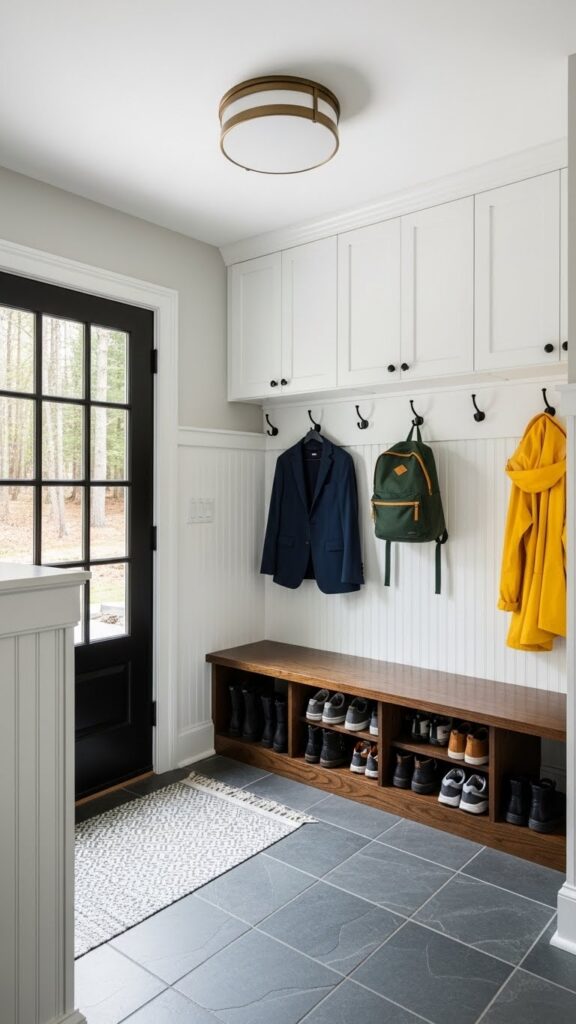
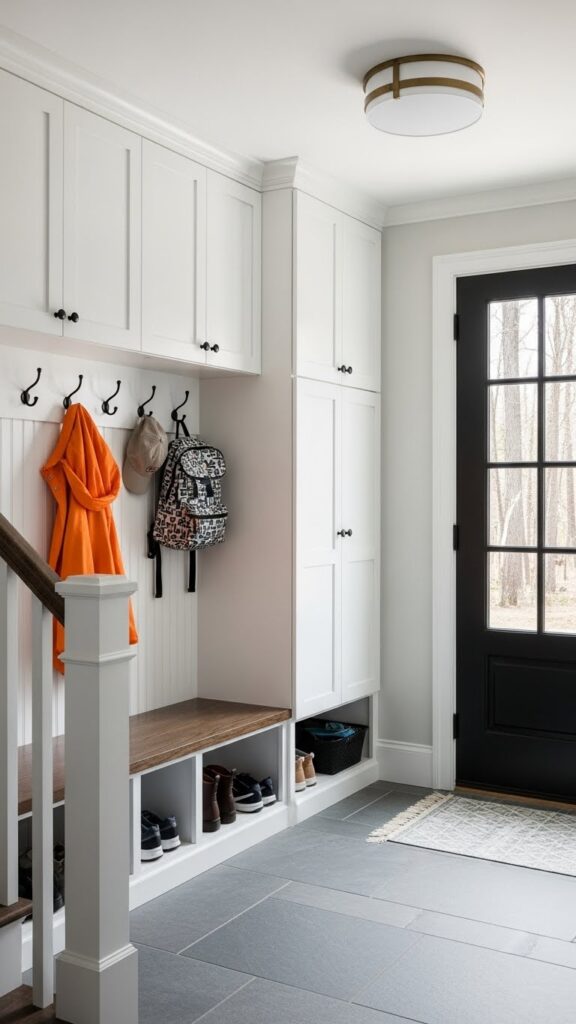
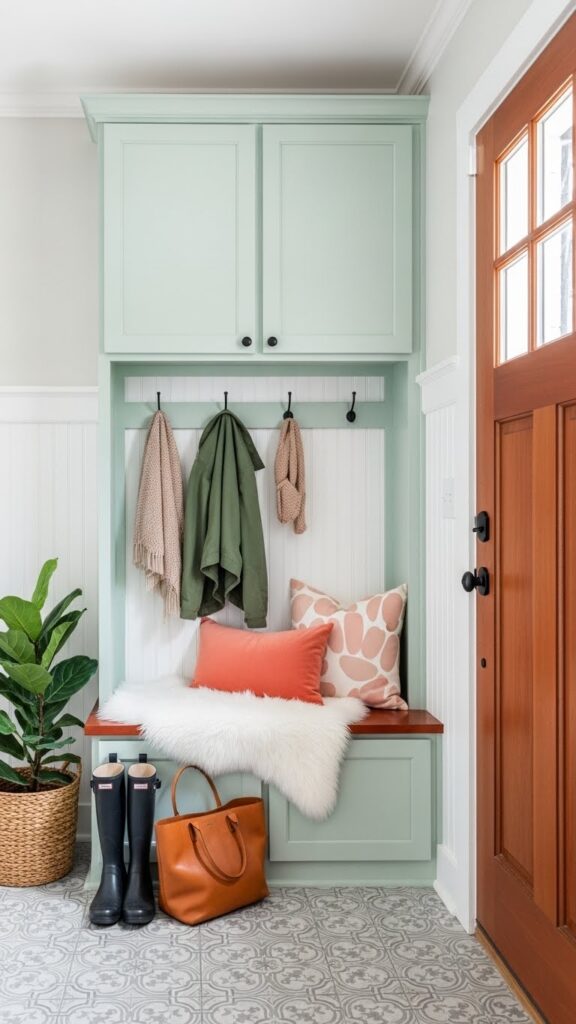
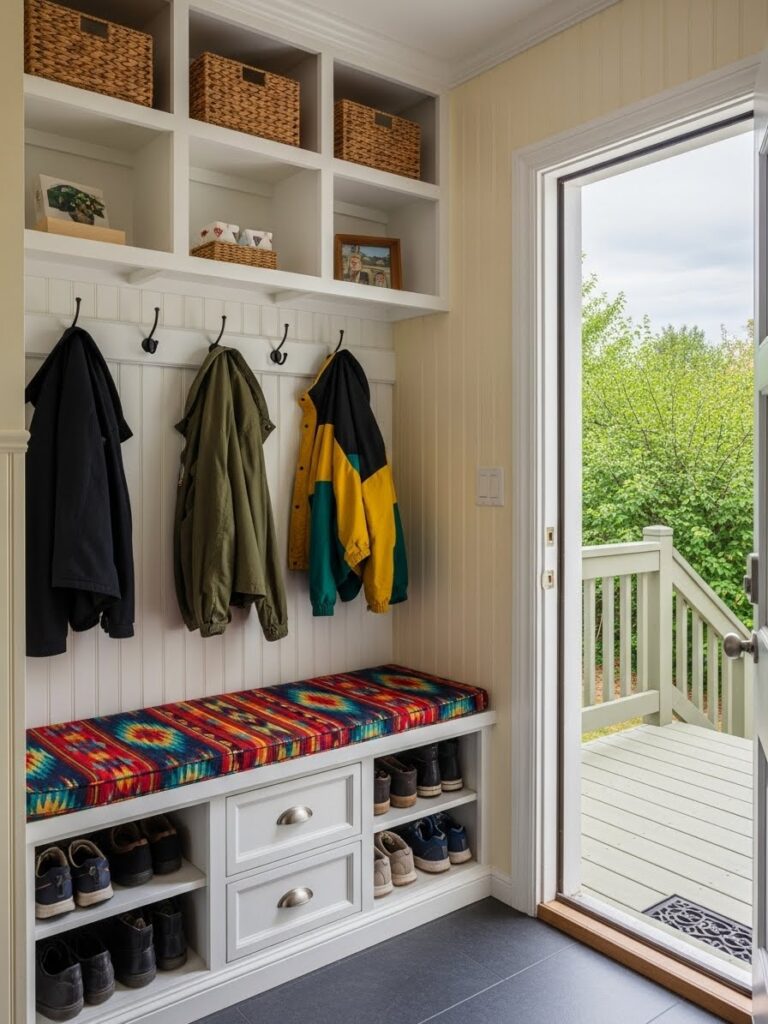
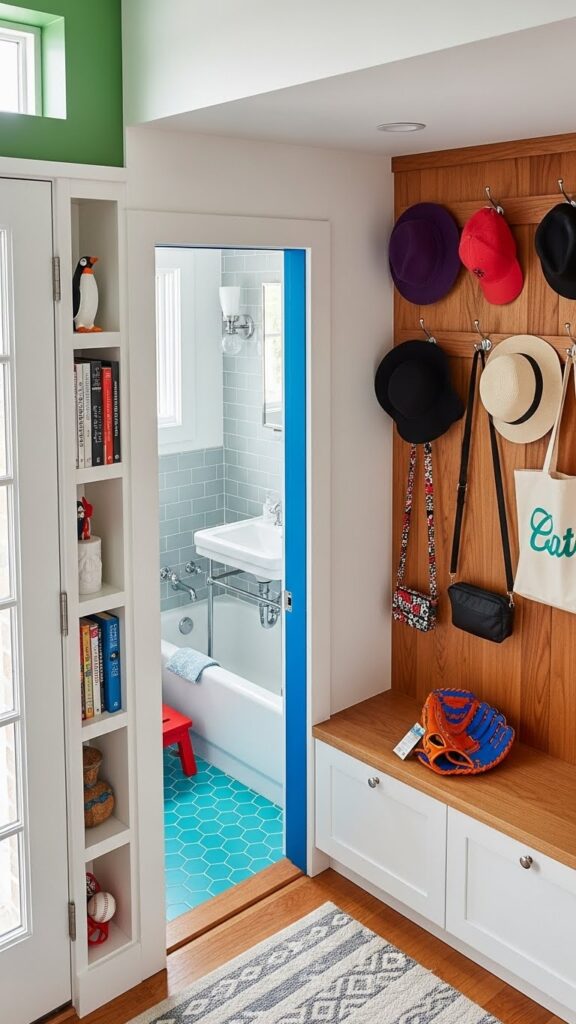
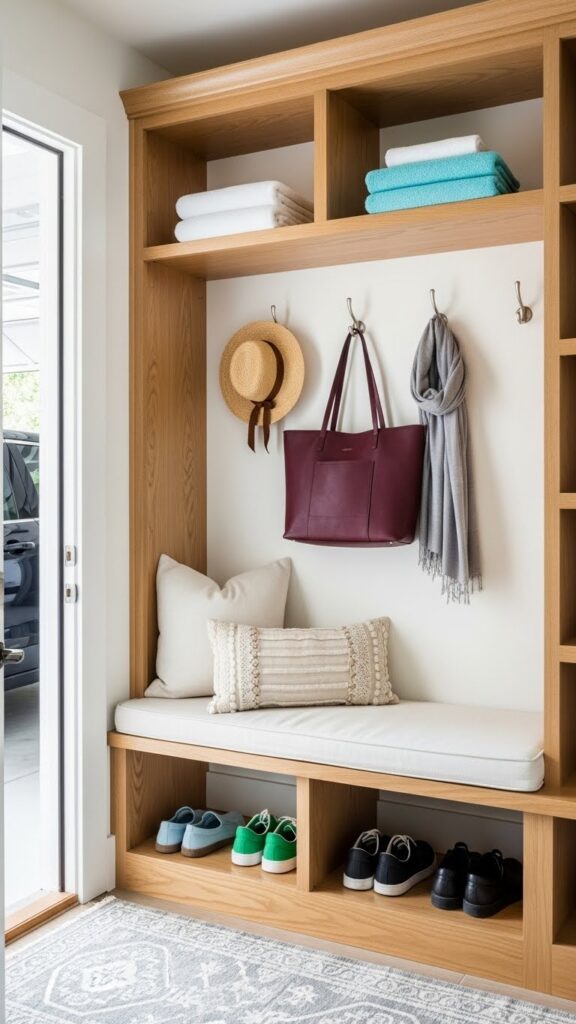
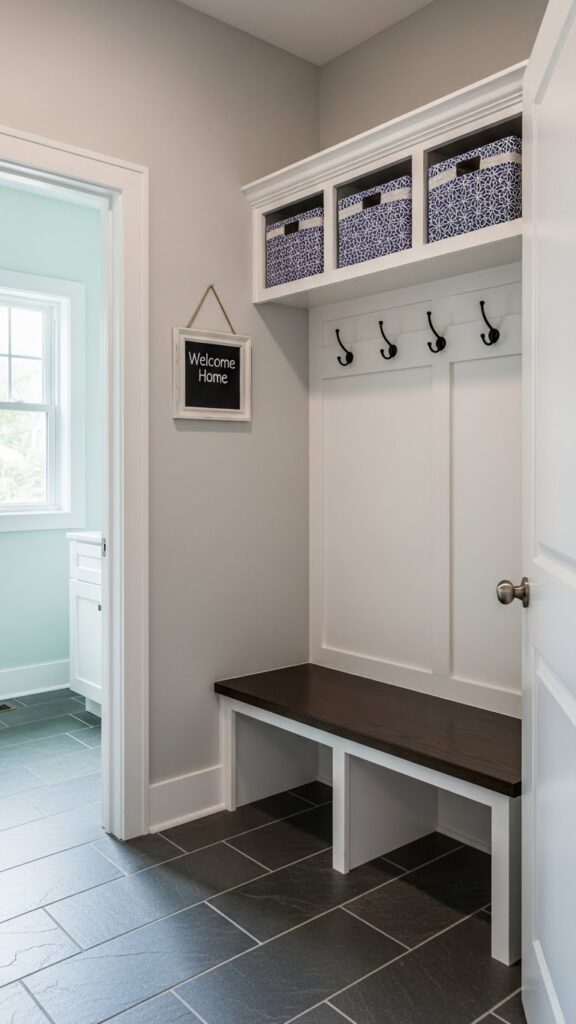
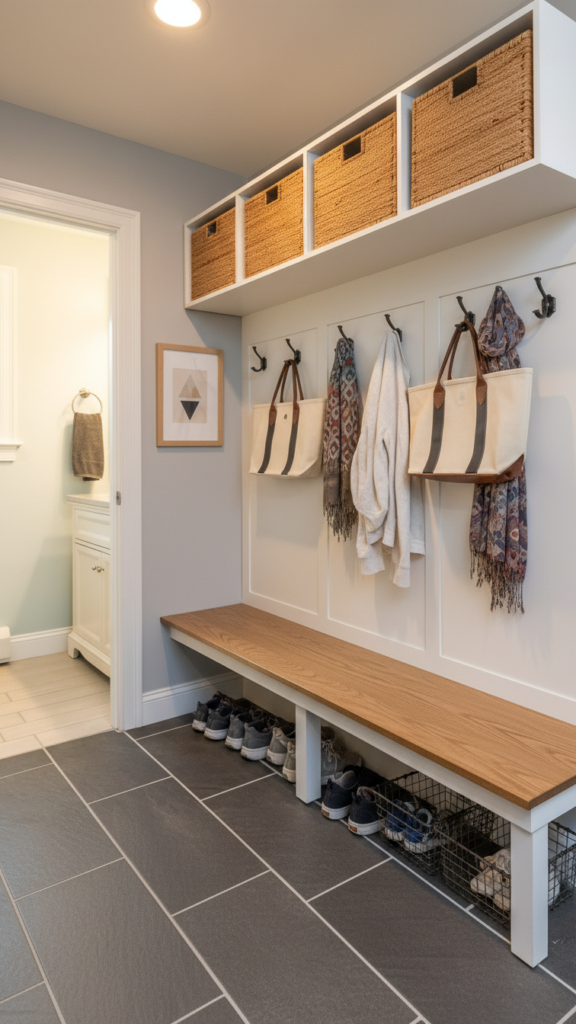
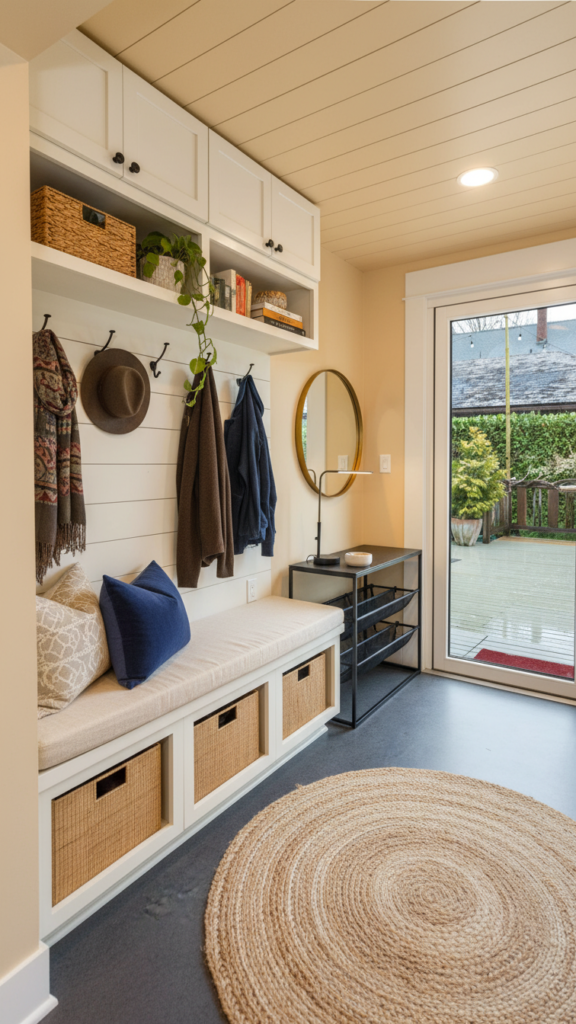
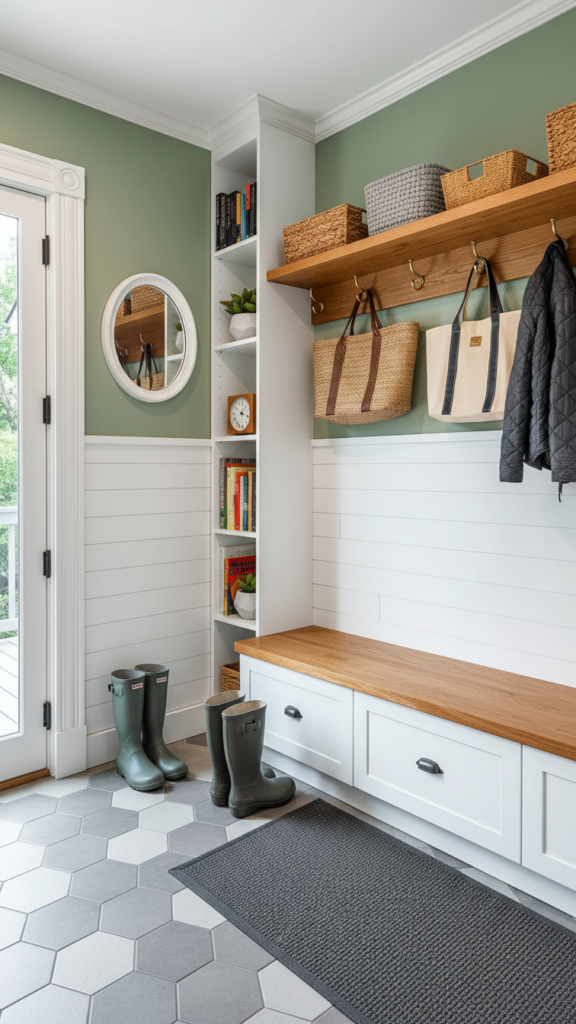
Standing coat trees are notorious for toppling over and taking up valuable corner space. Eliminate the footprint entirely by installing robust wall hooks or a vintage-style Wall-Mounted Coat Rack (Accordion). Create a “hook rail” at varying heights: a higher row for adults’ coats and a lower row for bags or kids’ jackets. This utilizes the vertical wall plane and keeps the floor clear for walking.
The “Defined Zone” with Paint
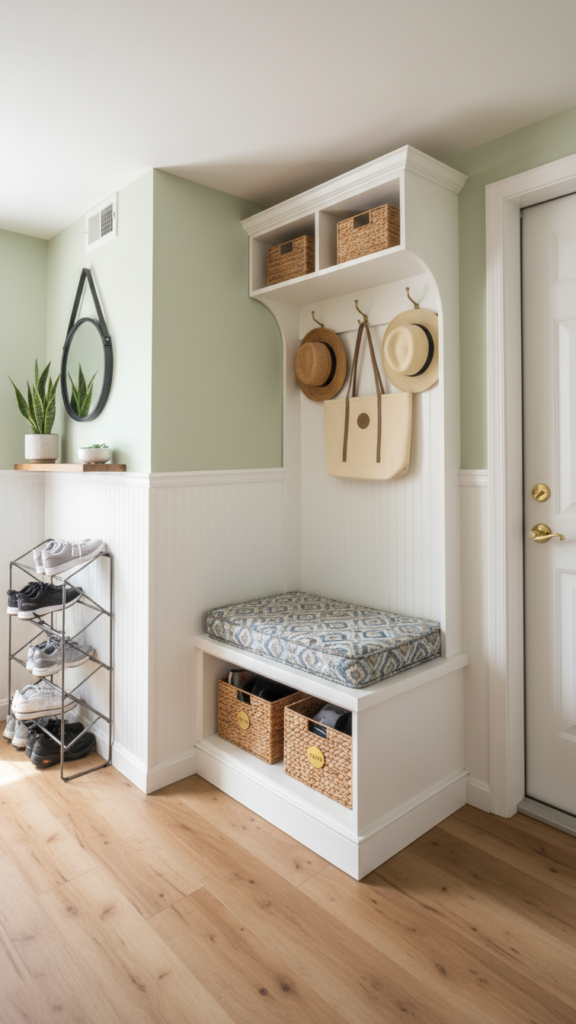
If your front door opens directly into your living room with no architectural separation, create a “phantom” entryway using paint. Color-block a small section of the wall around the door, or paint an arch shape behind your coat hooks. This visual zoning signals to the brain that this specific area has a distinct function, separating the “arrival” zone from the “relaxing” zone.
Ghost Furniture (Acrylic)
Visual weight is just as important as physical size. Acrylic or Lucite furniture is virtually invisible, meaning it takes up zero visual weight. An Acrylic “Ghost” Console Table provides a surface for your keys and a lamp but allows the eye to travel right through it to the wall behind. It is the ultimate trick for maintaining an uncluttered, minimalist aesthetic in tight quarters.
The Single-Shelf “Drop Zone”
Sometimes, even a slim console is too much. In ultra-narrow hallways, install a single, shallow picture ledge or a Floating Wall Shelf with Hooks at waist height. This is your designated “drop zone.” Pair it with a dedicated Key and Mail Holder Wall Mount to keep surfaces clear. It ensures that the essentials have a home without encroaching on the walkway width.
Sconces to Save Surface Space
Table lamps require a table, which requires floor space. Wall sconces bypass this entirely. Flank your mirror or artwork with a pair of Plug-In Wall Sconces to provide warm, welcoming light at face level. If you don’t want to hire an electrician, install Motion Sensor LED Closet Lights under shelves or inside cabinets for the same high-end look without the hardwiring hassle.
Bold Wallpaper Accent Wall
Small spaces are the perfect canvas for big risks. Because the wall area is small, you can afford to use a high-end, bold wallpaper without breaking the bank. A roll of Peel and Stick Wallpaper (Bold Print) can turn a tiny vestibule into a jewel box. It creates a “wow” factor the moment the door opens, distracting guests from the size of the space.
The Bench with Hidden Storage
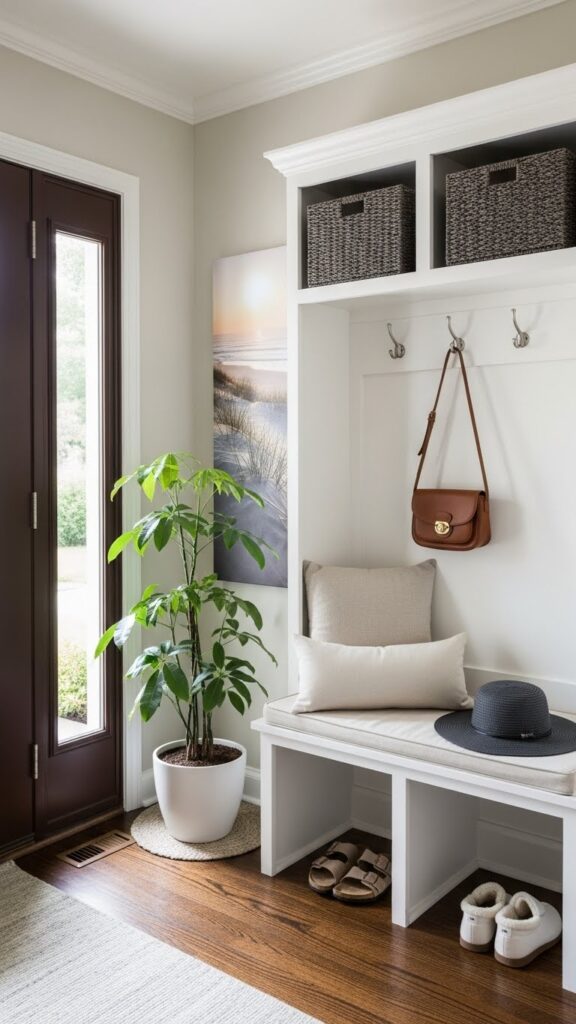
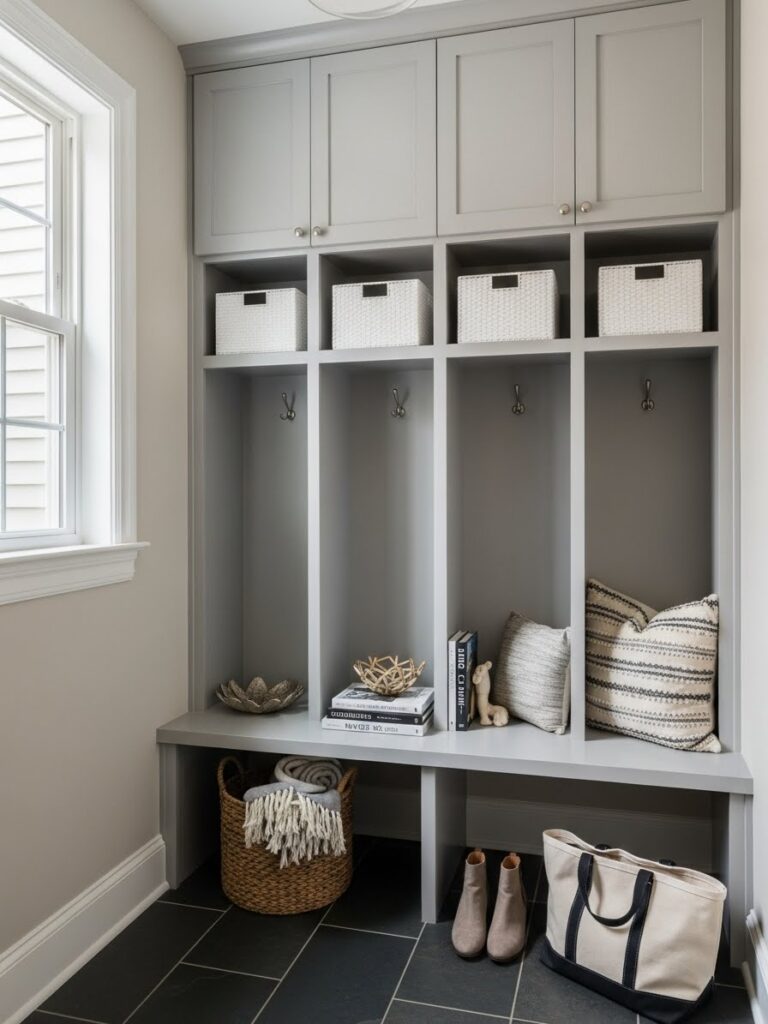
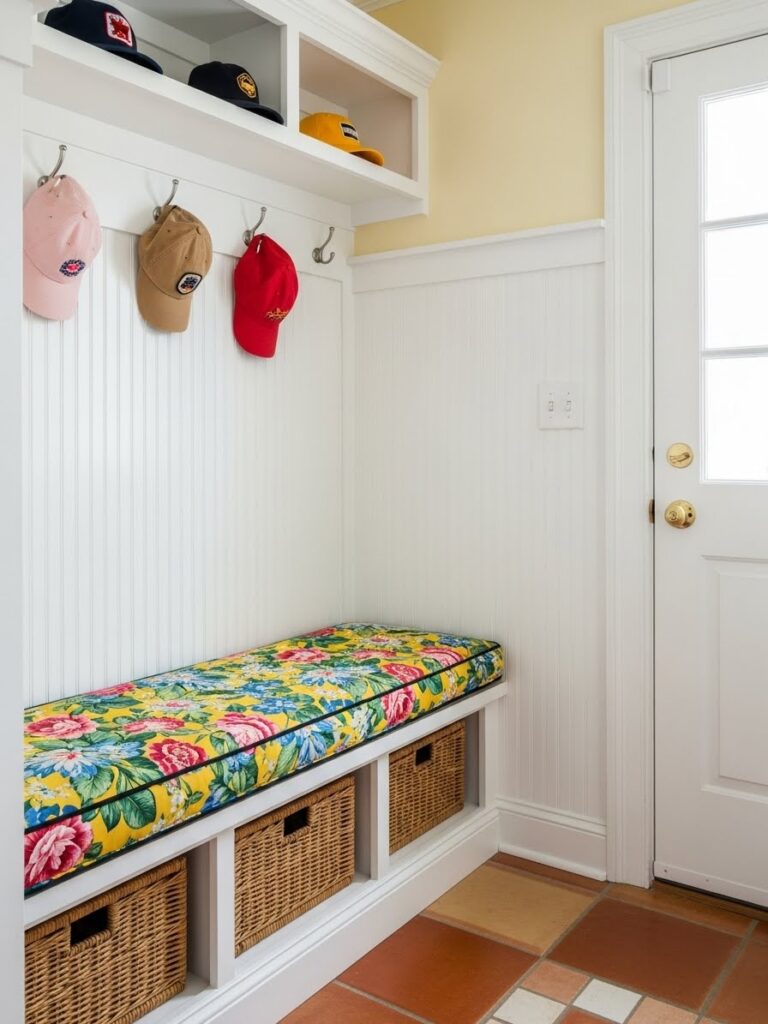
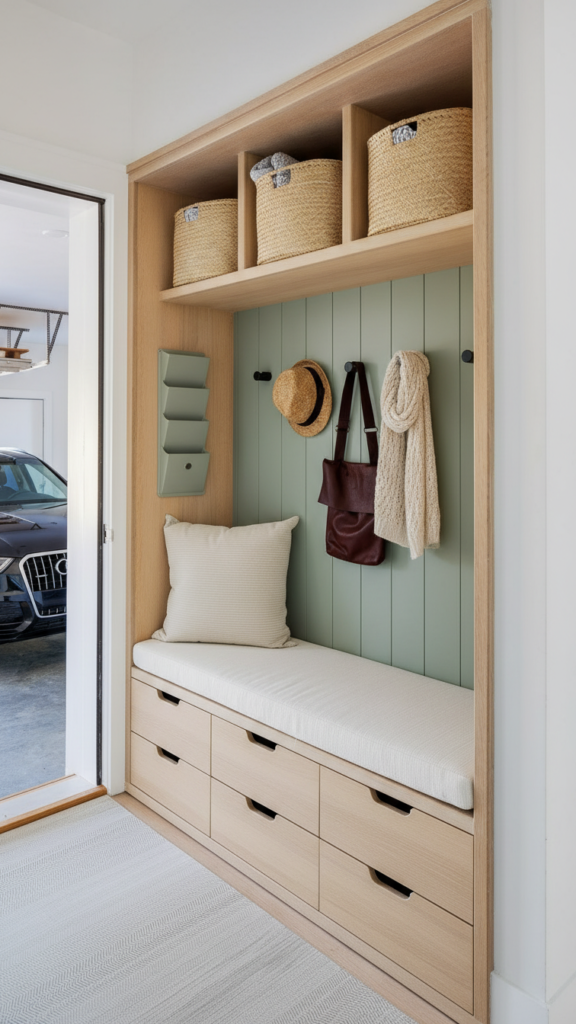
Functionality is key. If you have room for a bench, make sure it works double-time. Choose a Narrow Bench with Shoe Storage. This allows you to sit while putting on shoes, but also provides a hidden cavern for winter hats, dog leashes, or seasonal items that usually clutter the surface.
Vertical Greenery with Wall Planters
Plants breathe life into a home, but floor pots can be tripping hazards in a small entry. Move the garden to the wall. Wall-mounted planters or a vertical propagation station add lush greenery and air-purifying benefits without consuming an inch of floor space. It sets a fresh, organic tone for the home immediately.
The “Landing Strip” Gallery Wall
A long, narrow hallway entry can feel like a tunnel. Break up the tunnel effect with a linear gallery wall. Arranging art in a horizontal line draws the eye down the hall, inviting guests into the home. Stick to thin frames and light-colored mats to keep the installation feeling airy rather than heavy.
Painting the Interior Door
Often, the door itself is the largest design element in a small entryway. Don’t leave it standard white. Painting the interior side of your front door a bold color—like deep navy, sage green, or even black—turns the door into a feature wall. It anchors the space and adds character without requiring any furniture or accessories.
Pegboard Modular Systems
For the ultimate in customizable organization, borrow a trick from the garage: the pegboard. A Modern Pegboard System allows you to move shelves, hooks, and baskets around as your needs change. It is a flat, vertical storage system that can hold everything from coats to keys to sunglasses, all in a graphic, organized display.
Corner Shelving Units
Corners are often dead zones in interior design. In a small entryway, a corner is a missed opportunity. Install floating corner shelves or a tall, skinny corner unit. This utilizes the “nook” space that is otherwise wasted, providing a perfect spot for an Artificial Potted Snake Plant, a candle, or a small catch-all tray.
Sleek Umbrella Stands
Wet umbrellas are a nuisance. A sleek, modern Umbrella Stand (Slim Metal) keeps them contained and prevents water damage to your floors. Look for a slim, rectangular design that can slide into the narrow gap between a console and the wall, disappearing when not in use.
Wainscoting for Architectural Depth
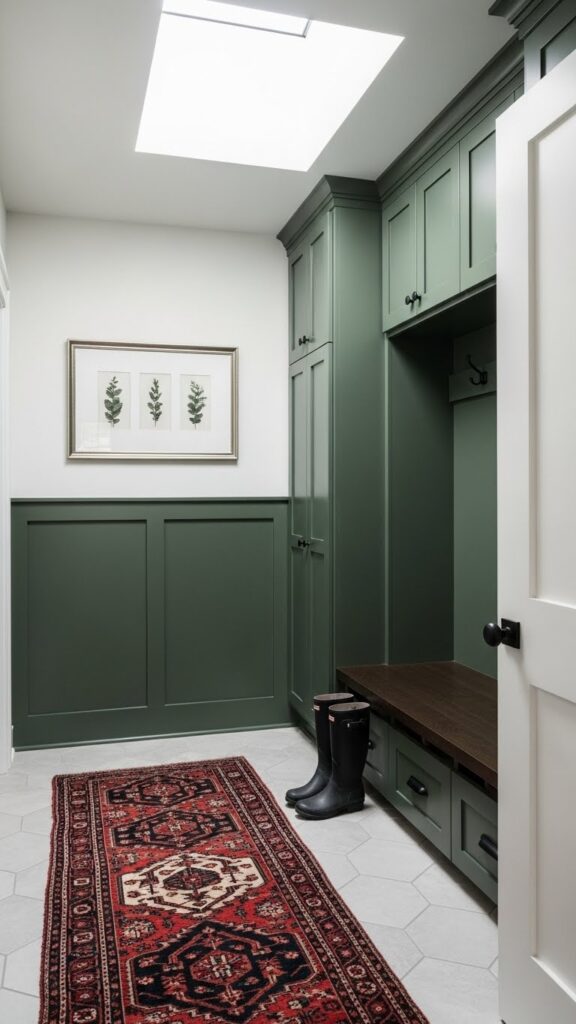
Adding wainscoting or beadboard to the lower half of the wall does two things: it protects the walls from scuffs in a high-traffic area, and it adds architectural depth. Painting the wainscoting a darker color than the upper wall grounds the space, while keeping the upper half light makes the ceiling feel higher.
Tile Transition Zoning
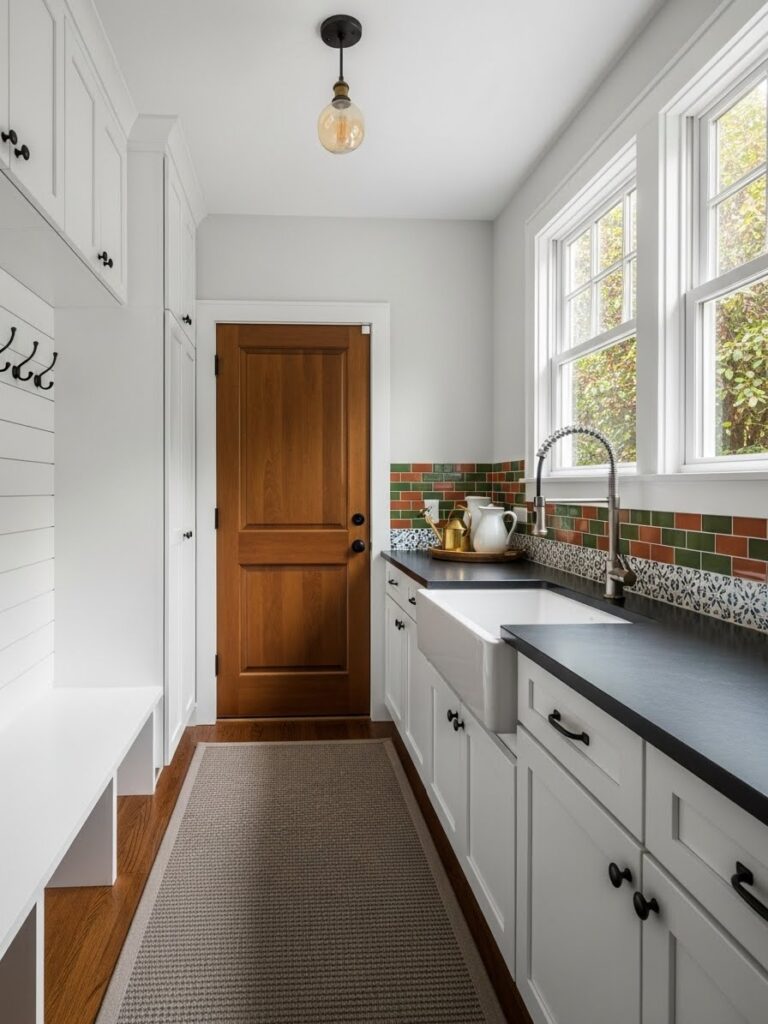
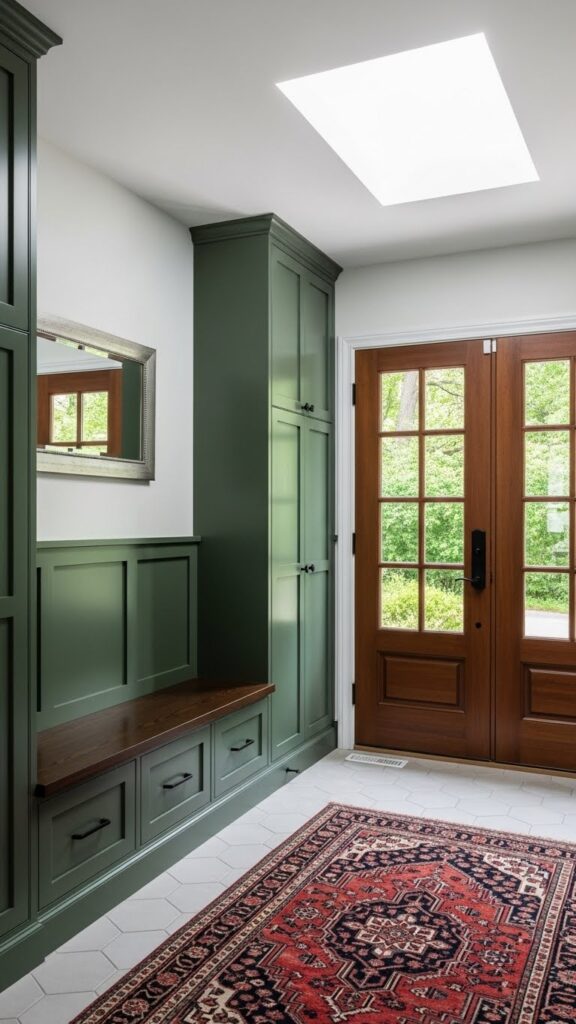
If you are renovating, consider using a different flooring material for the entryway “pad.” A hexagon tile or a bold patterned ceramic creates a designated “mudroom” area that is durable and easy to clean. This visual break from the living room’s hardwood or carpet defines the entry zone without the need for walls.
Sliding Barn Doors
If your entryway has a coat closet, the swing of a traditional door can eat up 3 feet of usable space. Replace it with a sliding barn door or a bi-fold door. This allows you to place furniture closer to the closet entrance and eliminates the awkward “door dance” when guests arrive.
Minimalist “Negative Space” Styling
In a small space, clutter is magnified. Practice the art of negative space. Do not fill every shelf. Leave empty space on your console table. This “breathing room” is essential for making a small entryway feel calm and sophisticated rather than chaotic and cramped.
Radiator Covers as Consoles
In older homes, a radiator often occupies the prime spot for an entryway table. Don’t fight it—cover it. A custom radiator cover with a flat top serves as a console table while hiding the industrial mechanics of the heater. It turns an eyesore into a functional design feature.
Full-Wall Mirror Paneling
For the bold, cover an entire wall of the entryway in mirror paneling. This is an old interior design trick used in grand lobbies, but it works wonders in tiny apartments. It effectively “erases” one wall, doubling the visual width of the hallway and bouncing maximum light.
Layered Rugs for Texture
Layering a durable, natural fiber rug (like jute) underneath a smaller, patterned vintage rug adds texture and interest. The bottom rug handles the dirt and wear, while the top rug adds color and softness. This layered look feels curated and expensive, elevating the status of the entryway.
Ceiling Paint Tricks
Draw the eye upward by painting the ceiling a color other than white. A soft sky blue or a subtle gray on the ceiling can make the room feel taller. Alternatively, using a high-gloss finish on the ceiling reflects light, adding a shimmering, airy quality to the foyer.
Multi-Functional Decor
Every item must earn its keep. A Decorative Ceramic Bowl isn’t just decor; it’s a key holder. A basket isn’t just texture; it’s shoe storage. A mirror isn’t just for checking your lipstick; it’s for lighting the room. When shopping for small entryway ideas, always ask: “What else does this do?”
Scentscaping: The Invisible Decor
Finally, design is not just visual. The smell of your home is the first thing to greet you. Use a reed diffuser or a small essential oil nebulizer on a shelf. A fresh scent like linen, citrus, or eucalyptus makes a small space feel clean and airy, while a heavy scent can make it feel smaller and stuffy. It’s the finishing touch that says “Welcome home.”
The Psychology of Small Spaces
Successfully designing a small entryway is less about buying the right furniture and more about understanding spatial perception. By controlling light, line, and clutter, you can manipulate how the brain perceives volume. For a deeper understanding of how color choices specifically impact the perception of size in tight quarters, this guide on Color Psychology in Small Spaces by The Spruce is an excellent resource for choosing your paint palette wisely.
Conclusion: Small Space, Big Impact
Your entryway may be small, but its impact is mighty. It sets the tone for your entire home and your daily life. By implementing these strategies—from vertical storage hacks to clever lighting solutions—you can transform a cramped corridor into a functional, stylish foyer that welcomes you with open arms. Remember, in small space design, every inch counts, so make every inch beautiful.


 Thenna Andersen