Thenna Andersen
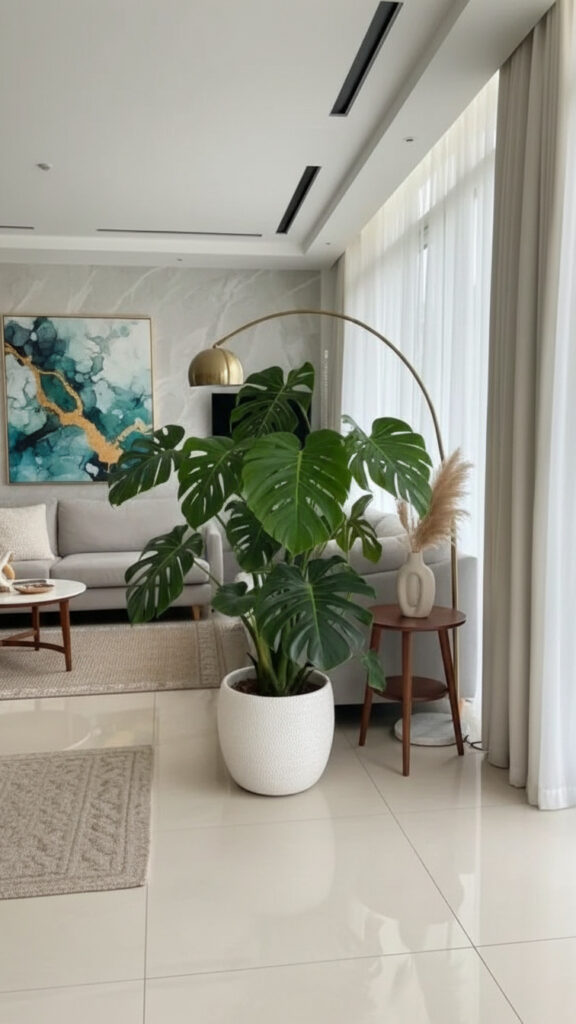
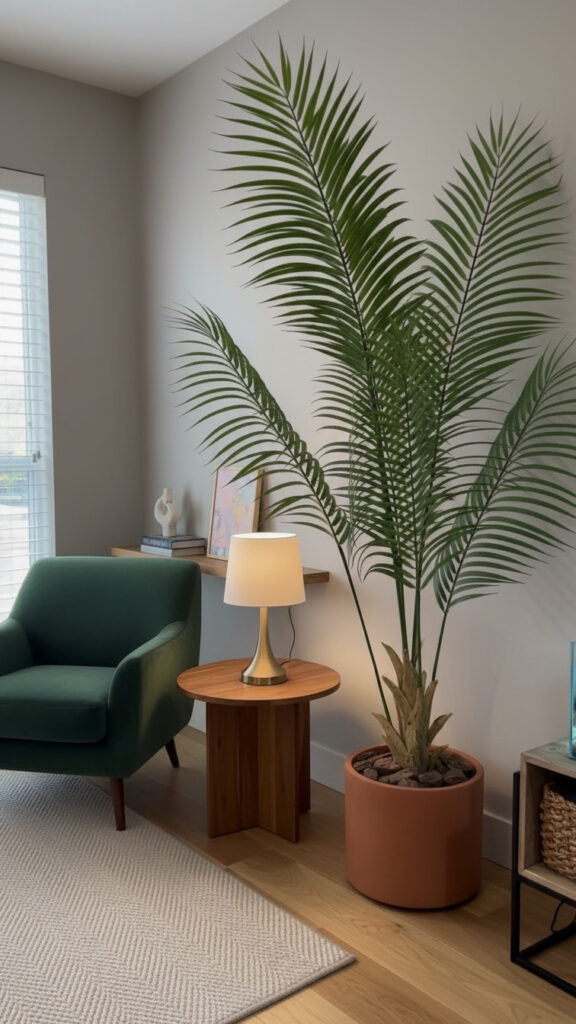
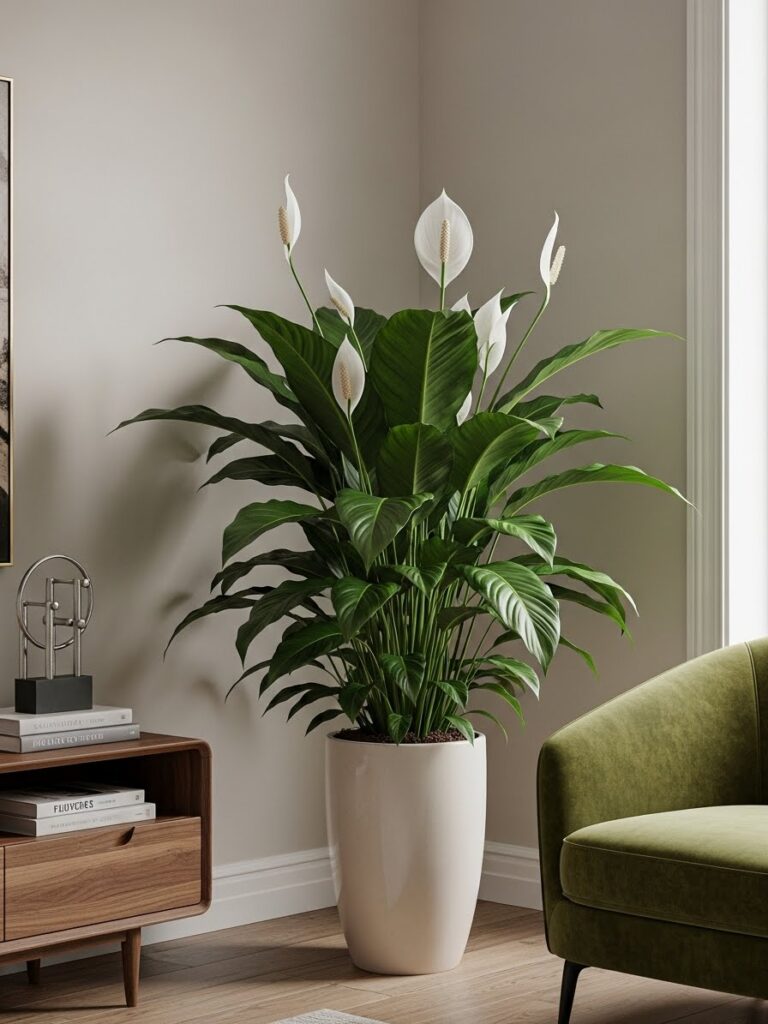
Large indoor plants are the interior design equivalent of a statement piece of furniture, instantly transforming the scale and energy of a room. For years, we settled for small succulents on windowsills.
However, the trend has shifted vertically. We crave the canopy. We want the feeling of a living tree inside our homes.
Introducing a massive botanical element changes the architecture of a space. It softens sharp corners. It bridges the gap between the high ceilings and low furniture.
In this comprehensive guide, we will explore the best architectural plants. We will discuss lighting requirements. We will teach you how to keep these green giants alive and thriving.
Contents
The Impact of Scale and Drama
Why go big? Because scale matters. Large indoor plants act as living sculptures. They command attention.
Visual Anchors:
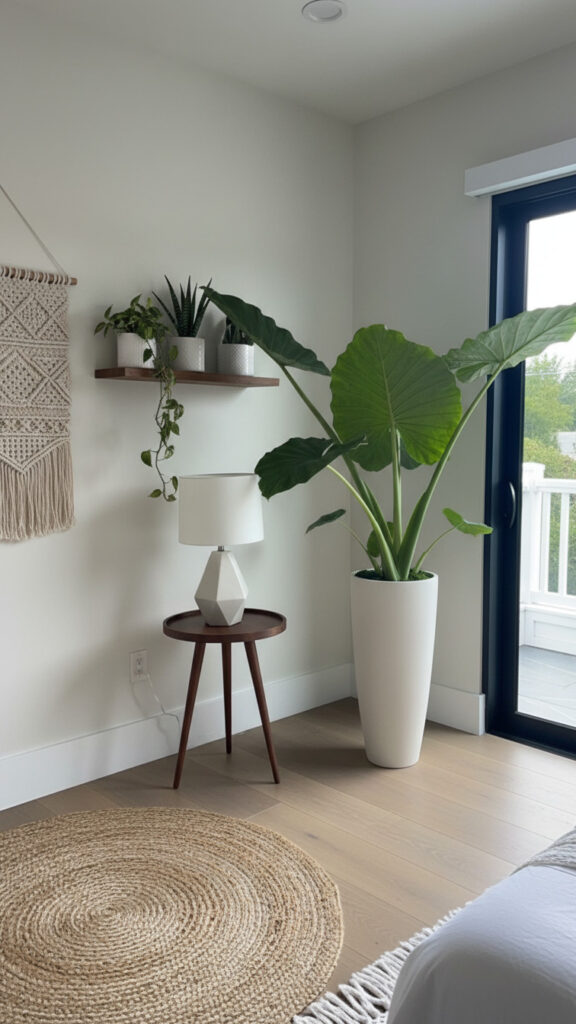
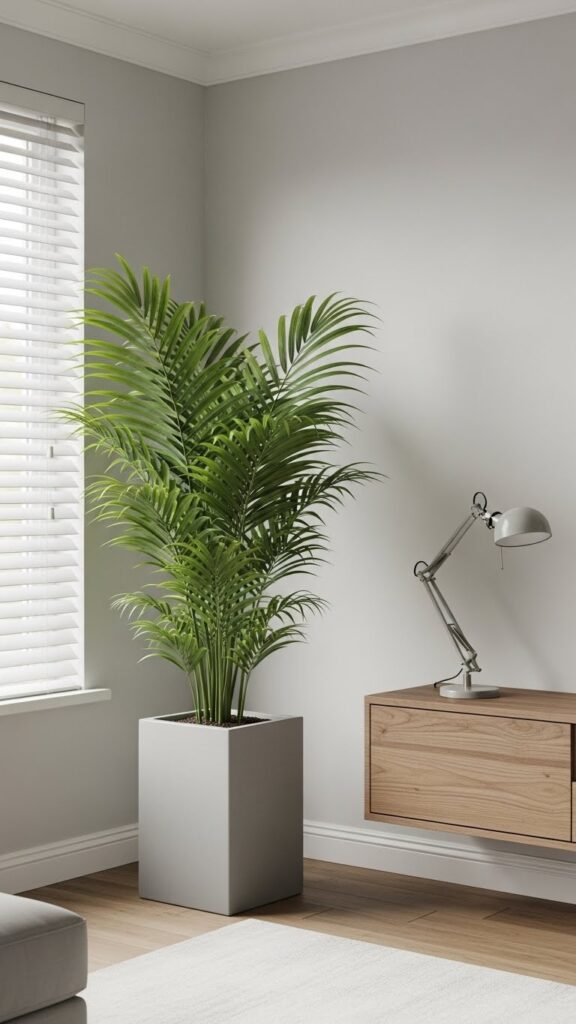
A tall plant draws the eye upward. It makes a room feel taller. It fills the “dead space” in corners that furniture cannot fill.
Biophilic Connection:
A small plant is cute. A tree is immersive. Sitting under the leaves of a six-foot Monstera mimics the sensation of being in a forest. It lowers cortisol levels effectively.
How to Choose the Right Plant
Buying a mature plant is an investment. You must choose wisely. Do not buy based on looks alone.
1. Assess Your Light:
This is the most critical factor. No amount of love will save a sun-loving olive tree in a dark corner. Be honest about your windows.
2. Check Your Ceiling Height:
Some plants, like the Bird of Paradise, grow rapidly. Ensure you have the vertical clearance. Leave at least a foot between the top leaf and the ceiling.
3. Commitment Level:
Are you a helicopter parent or a neglectful one? Fiddle Leaf Figs need constant attention. Dracaenas thrive on neglect.
The Diva: Fiddle Leaf Fig (Ficus Lyrata)
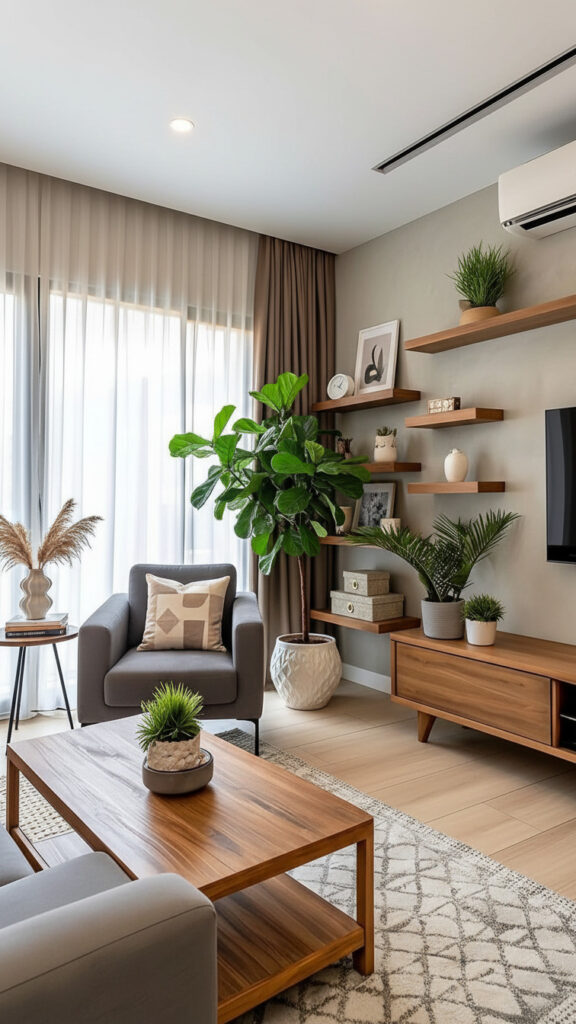
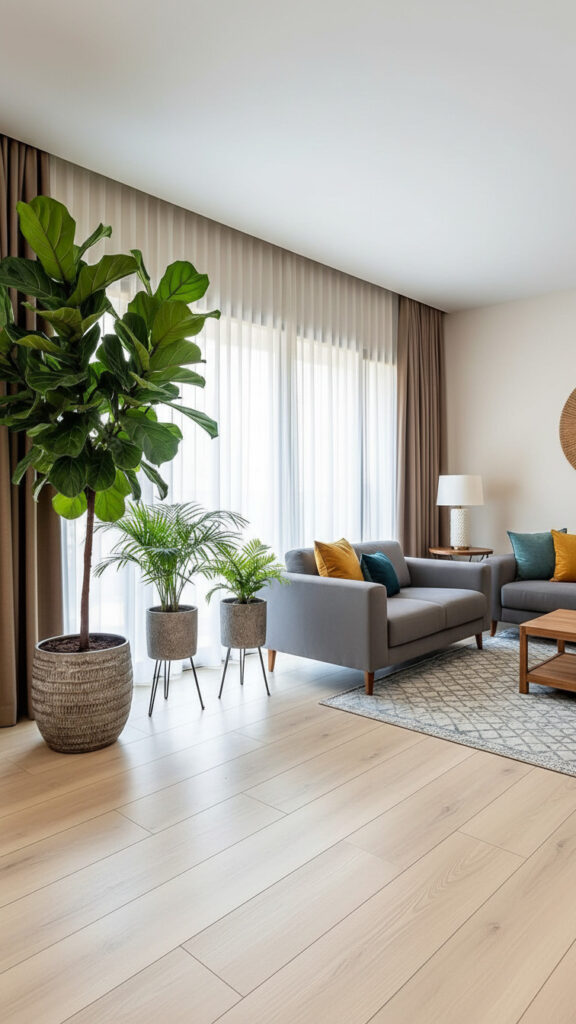
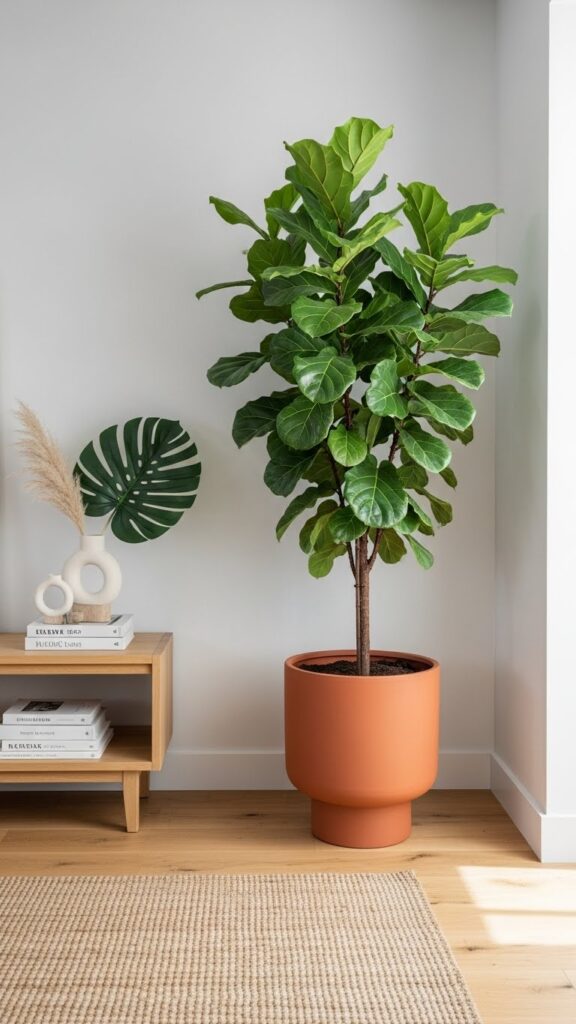
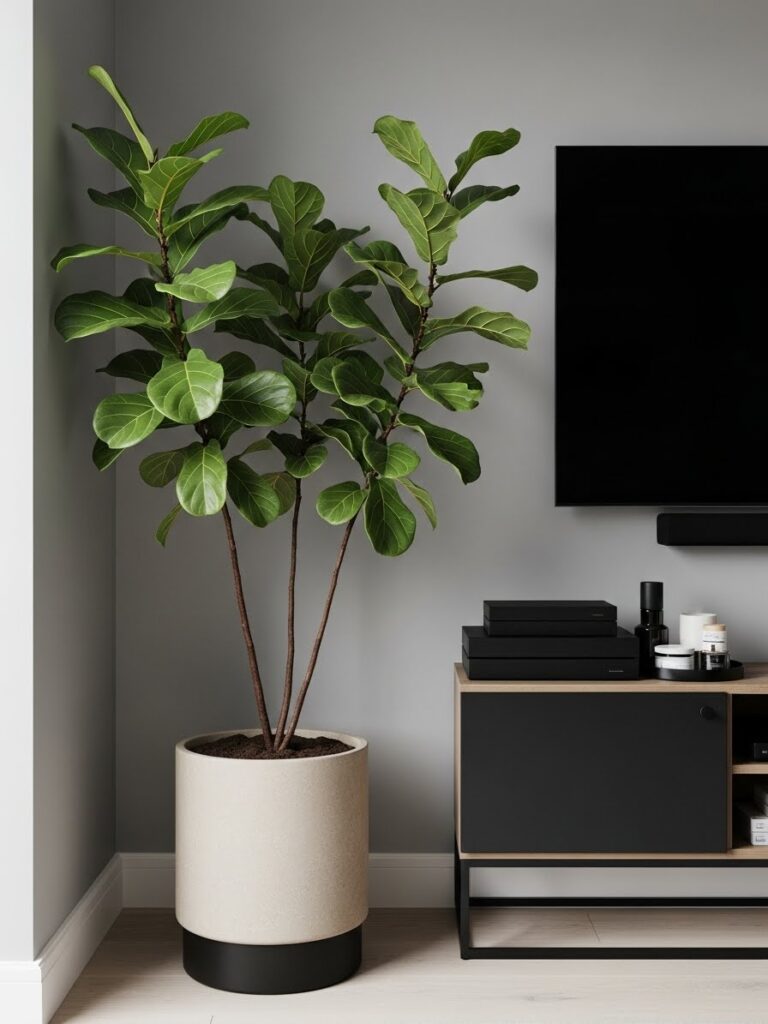
This is the poster child of large indoor plants. It features massive, violin-shaped leaves. It is architectural and dramatic.
The Vibe:
High-end editorial. It looks great in modern and Scandinavian homes. It provides a heavy, dense canopy.
Care Requirements:
It is finicky. It hates drafts. It hates being moved. It needs bright, indirect light. Water only when the top two inches of soil are dry.
Expert Tip:
Dust the leaves weekly. The large surface area collects dust, which blocks photosynthesis. A clean leaf is a healthy leaf.
The Tropical Giant: Bird of Paradise
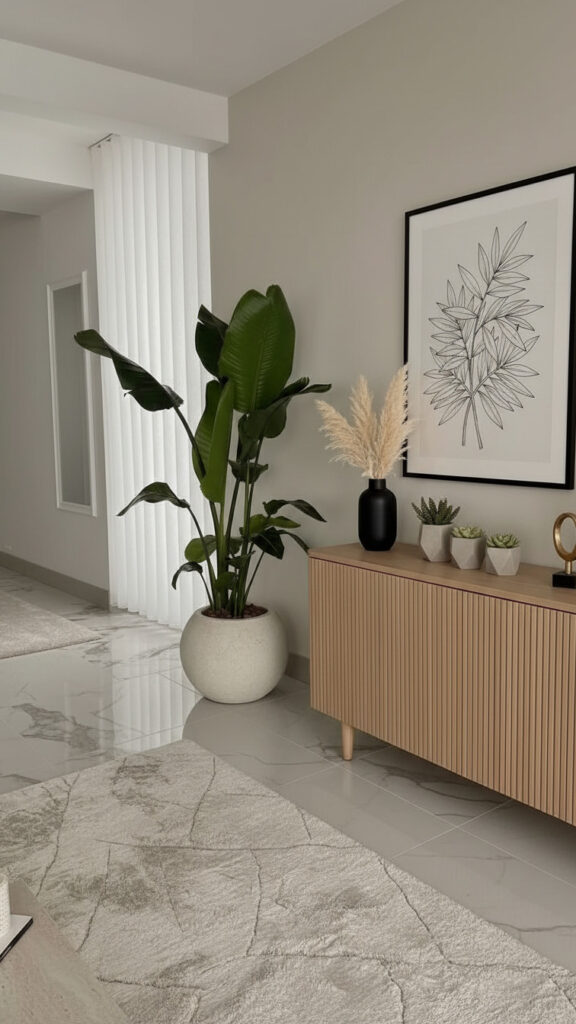
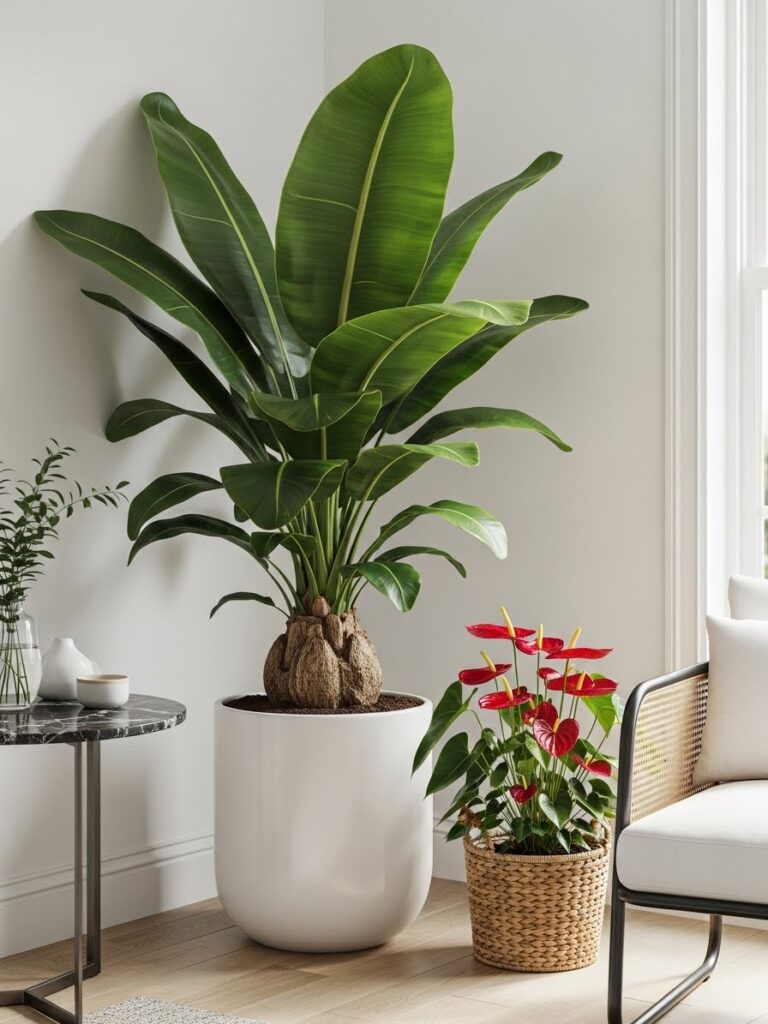
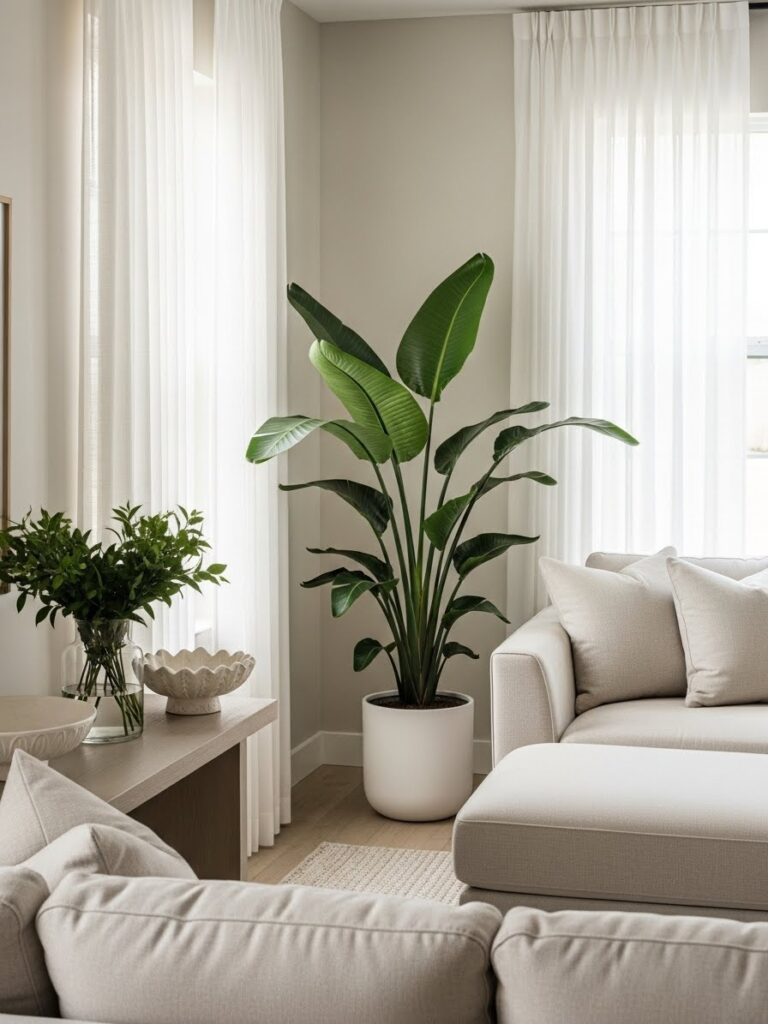
If you want a jungle vibe, this is the one. The Strelitzia features huge, paddle-like leaves. It grows fast and wide.
The Vibe:
Resort luxury. It feels like a vacation. It adds lushness and volume to empty corners.
Care Requirements:
It loves sun. It can tolerate some direct sunlight. It is thirsty. Keep the soil moist but not soggy.
Note on Splits:
The leaves will split naturally as they age. This is not damage. It is an adaptation to let wind pass through. Embrace the texture.
The Dark Horse: Rubber Tree (Ficus Elastica)
For a moodier aesthetic, choose the Rubber Tree. The “Burgundy” variety has deep, almost black leaves.
The Vibe:
Gothic chic. It works beautifully in industrial or minimalist spaces. The glossy leaves reflect light.
Care Requirements:
It is easier than its cousin, the Fiddle Leaf. It tolerates lower light. It prefers to dry out between waterings.
The Classic: Monstera Deliciosa
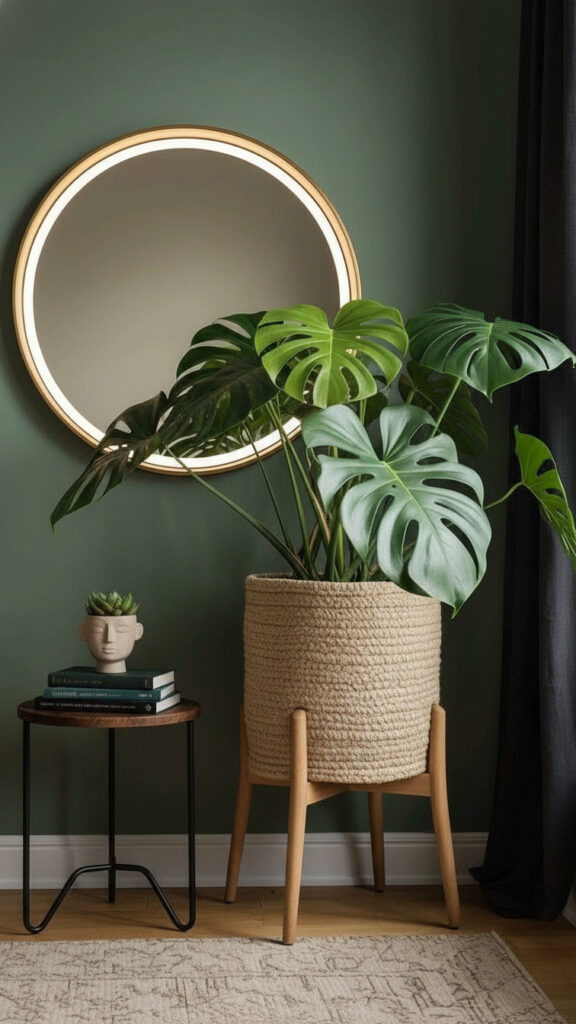
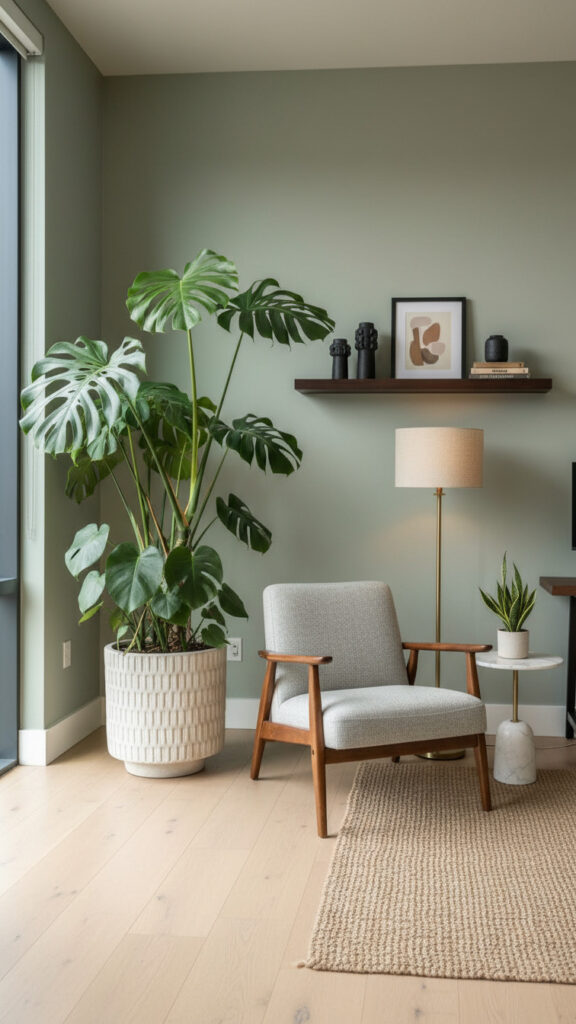
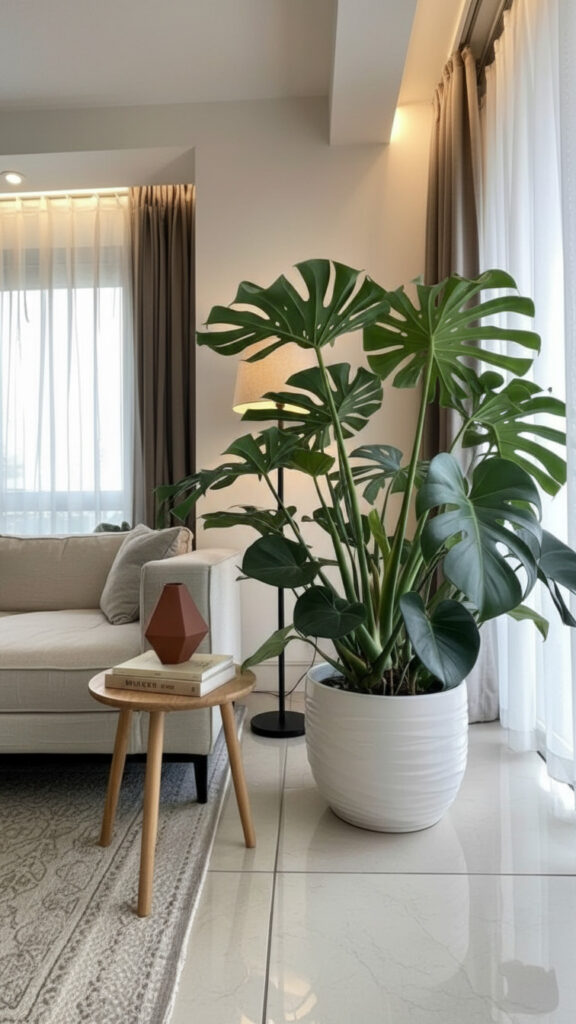
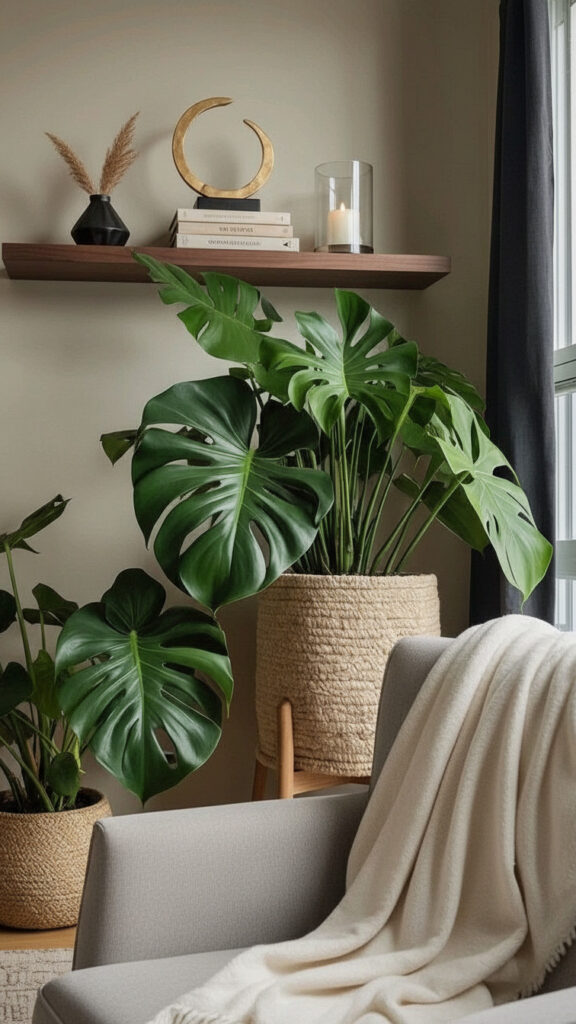
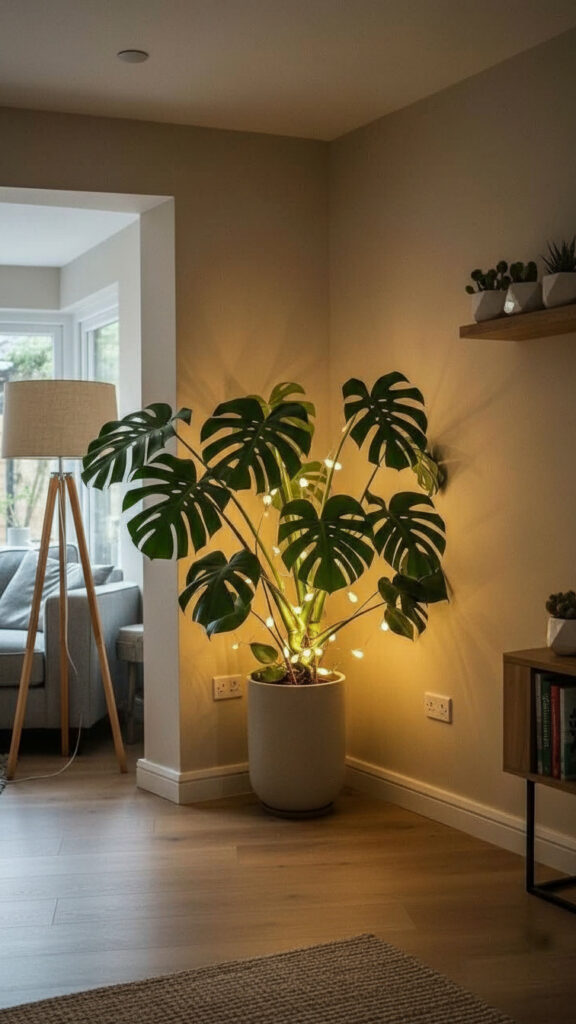
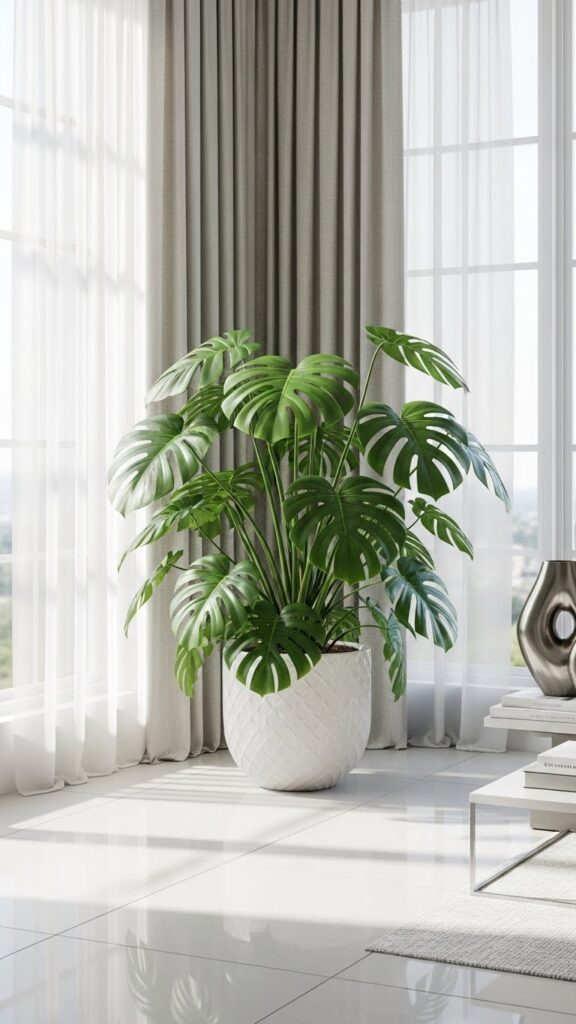
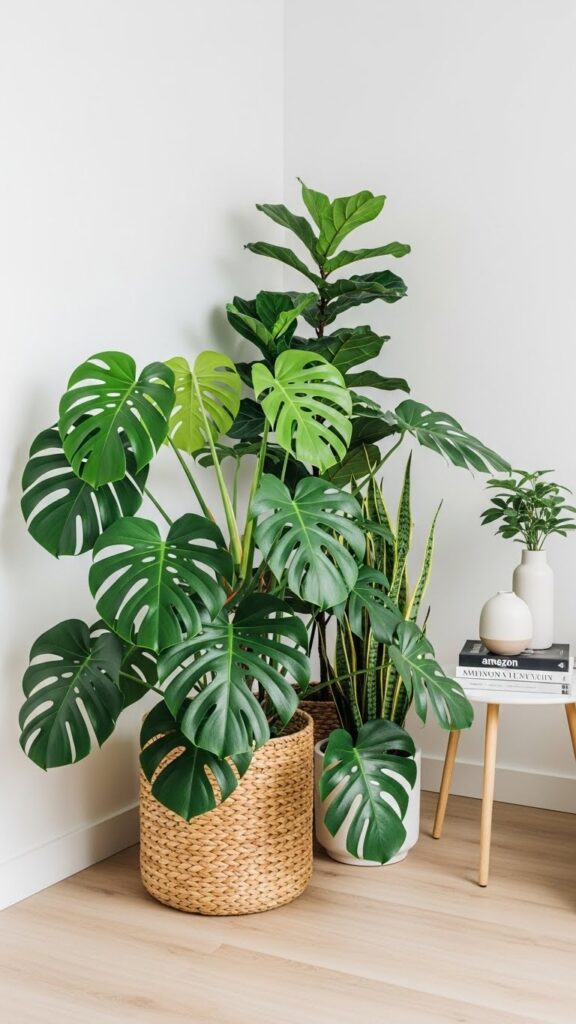
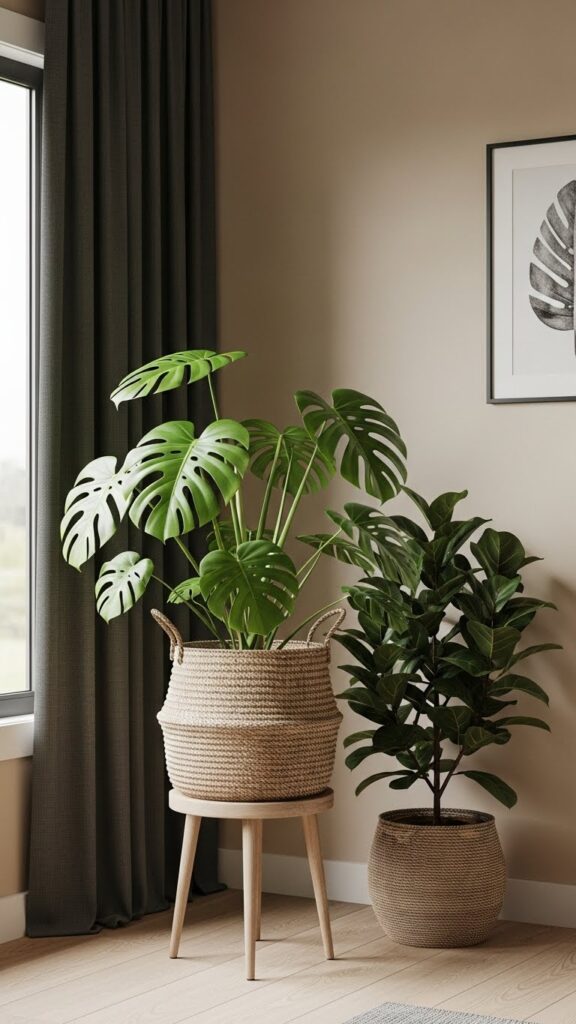
The “Swiss Cheese Plant” is iconic. While it is a vine, it can be trained to grow vertically on a moss pole.
The Vibe:
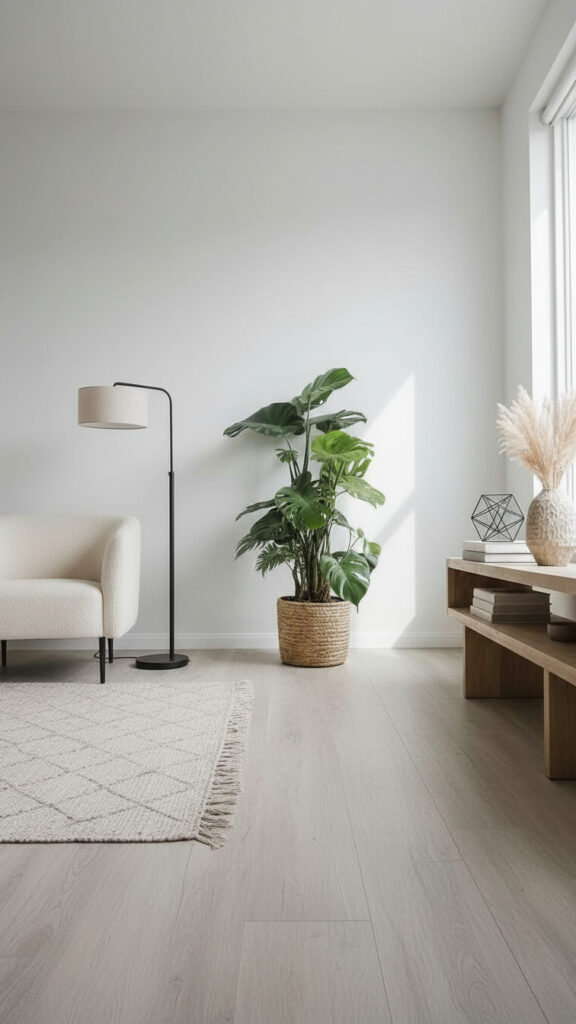
Retro 70s cool. It is playful and organic. The fenestrated leaves create interesting shadow patterns on the wall.
Support Systems:
To make it one of your large indoor plants, you must stake it. Use a sturdy moss pole. Tie the aerial roots to the pole. This encourages massive leaf growth.
The Mediterranean: Olive Tree
The Olive Tree is trendy, sophisticated, and delicate. It has small, silvery-green leaves.
The Vibe:
Old World charm. It feels airy and light. It does not block the view. It is perfect for neutral, earth-tone palettes.
The Warning:
It needs direct sun. It will drop leaves in a dark corner. It is best suited for a south-facing window or a sunroom.
Low Light Warrior: Dracaena Lisa
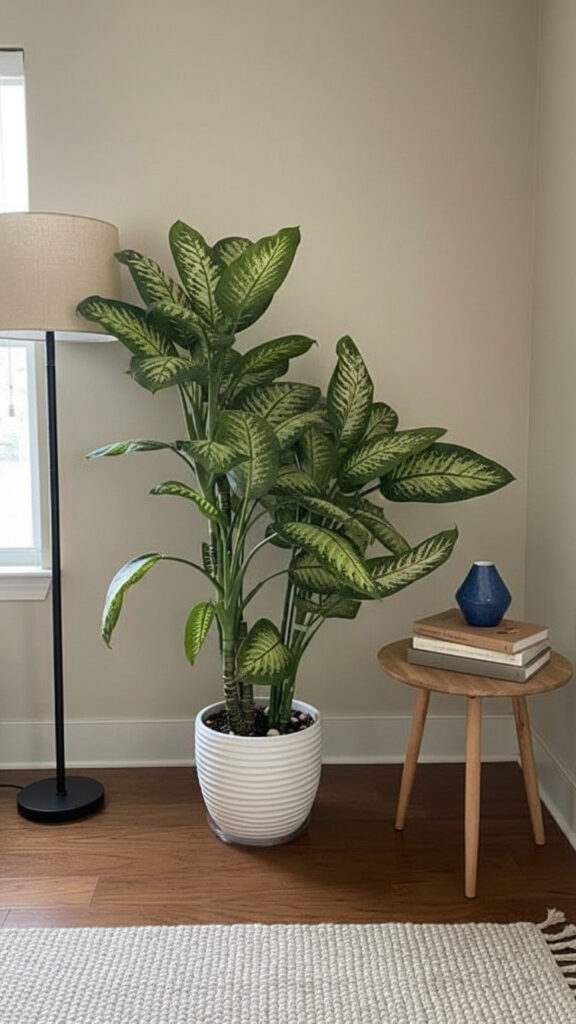
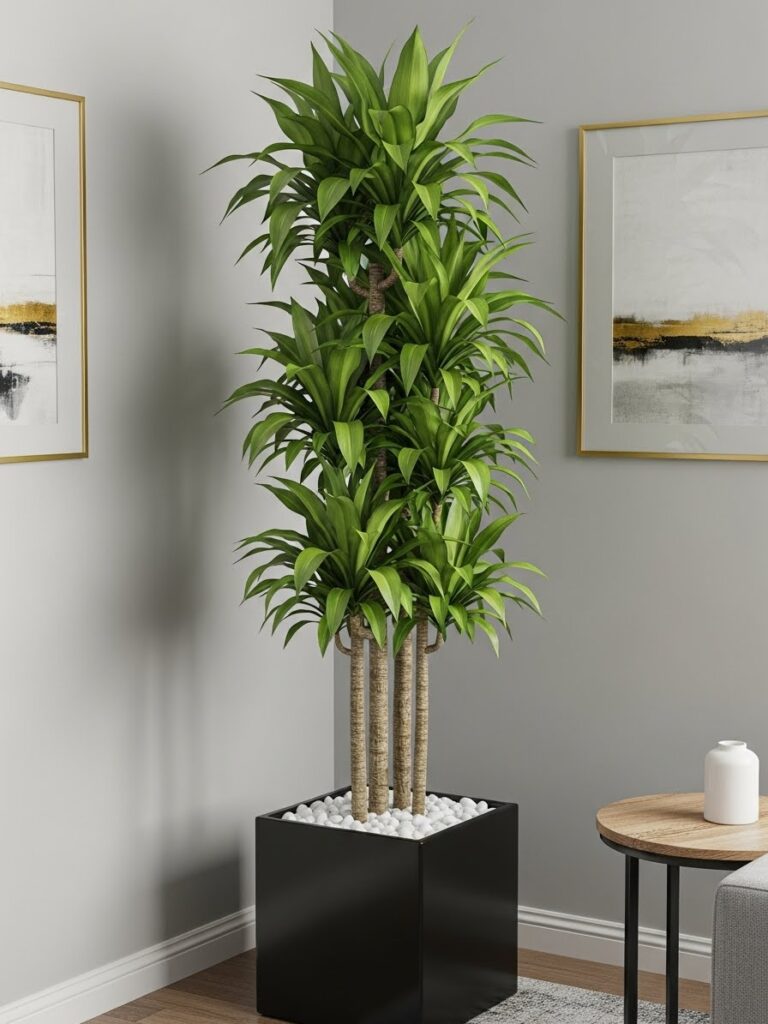
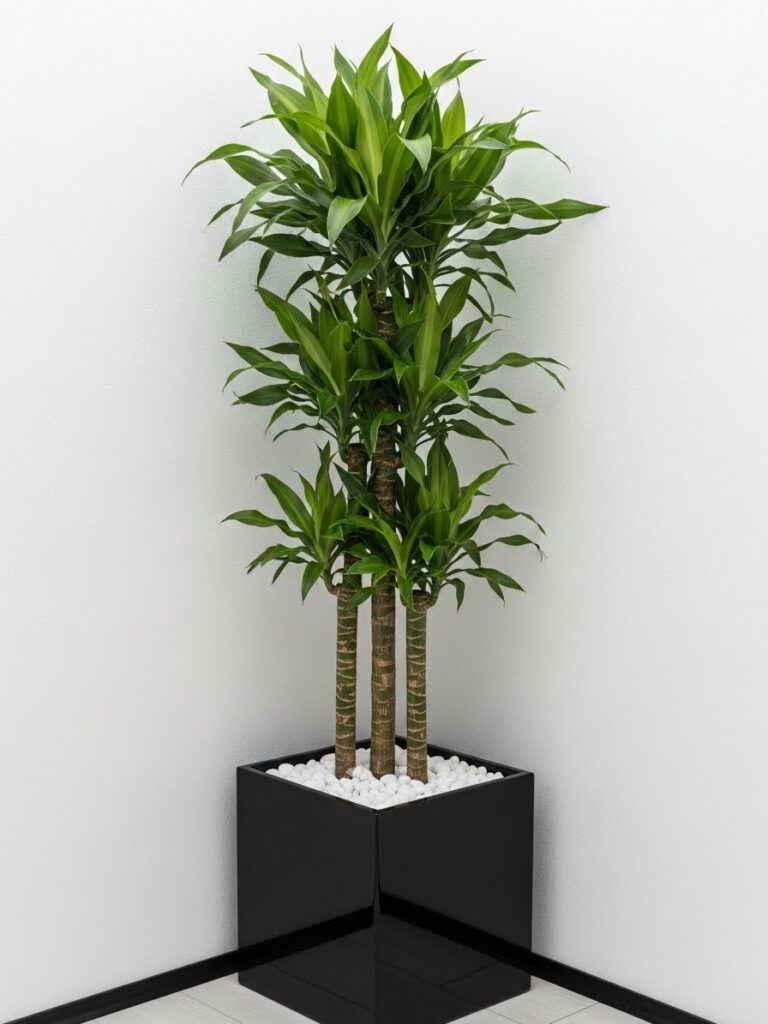
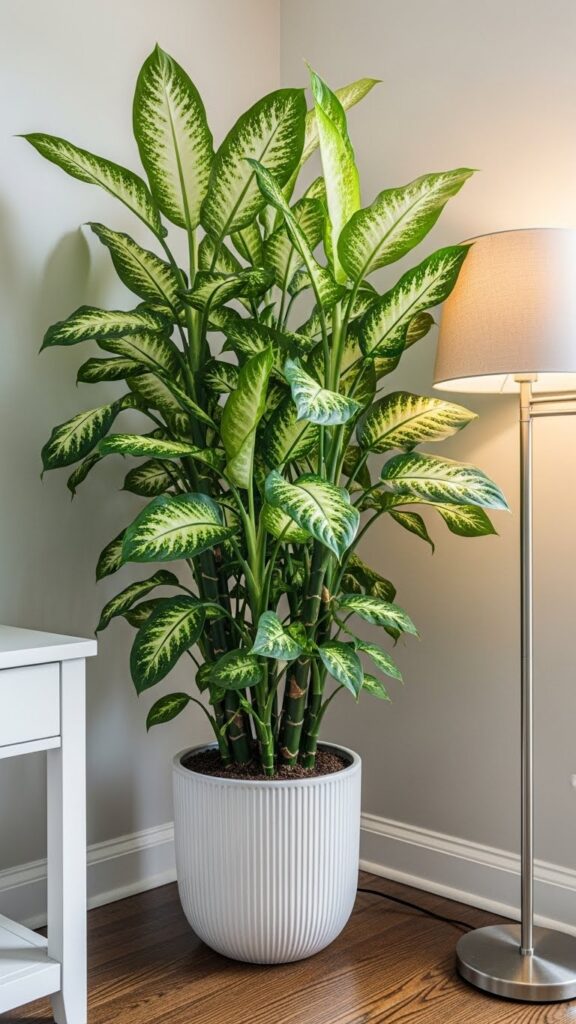
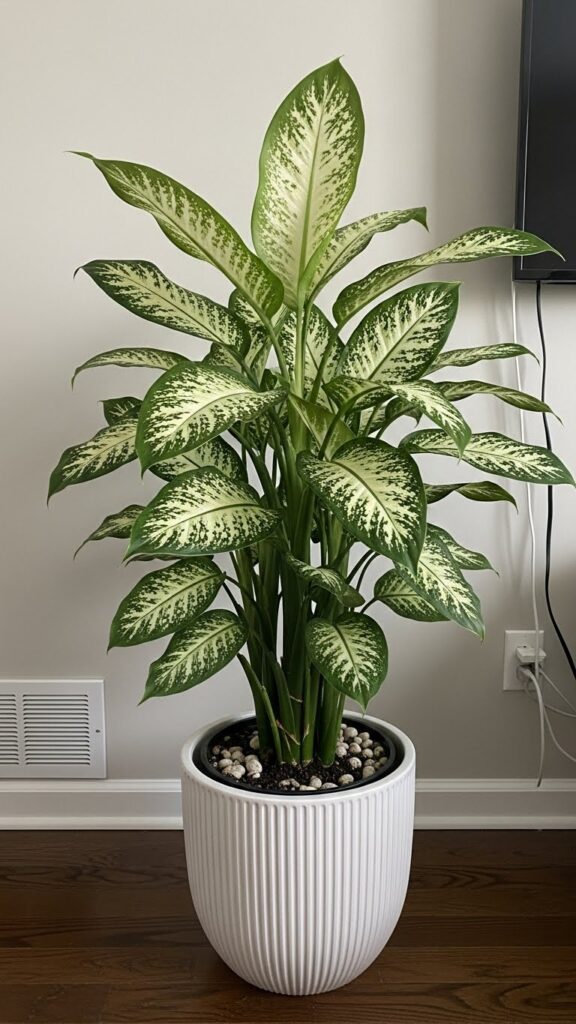
Not everyone has floor-to-ceiling windows. The Dracaena is the savior of dark apartments. It grows tall and narrow.
The Vibe:
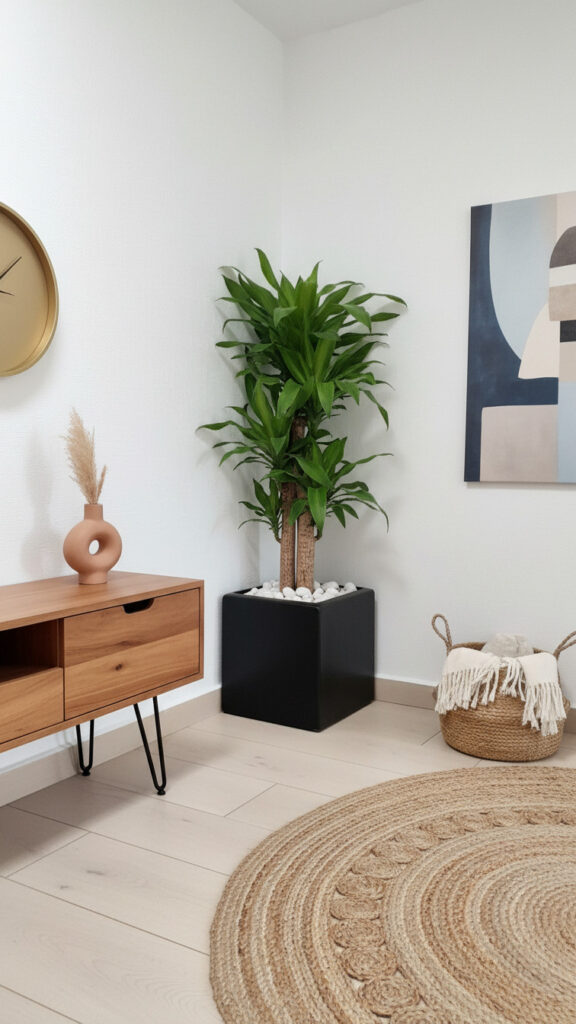
Architectural and sculptural. It has a slender trunk with a burst of green at the top. It fits in tight spaces.
Care Requirements:
It thrives on neglect. It can survive in low light. Water it sparingly. Overwatering is the only way to kill it.
Planter Selection: The Vessel Matters
A cheap plastic pot ruins the look. The planter is the outfit. It must match the decor.
Ceramic Cylinders:
White or black ceramic cylinders are timeless. They look modern and clean. They let the plant be the star.
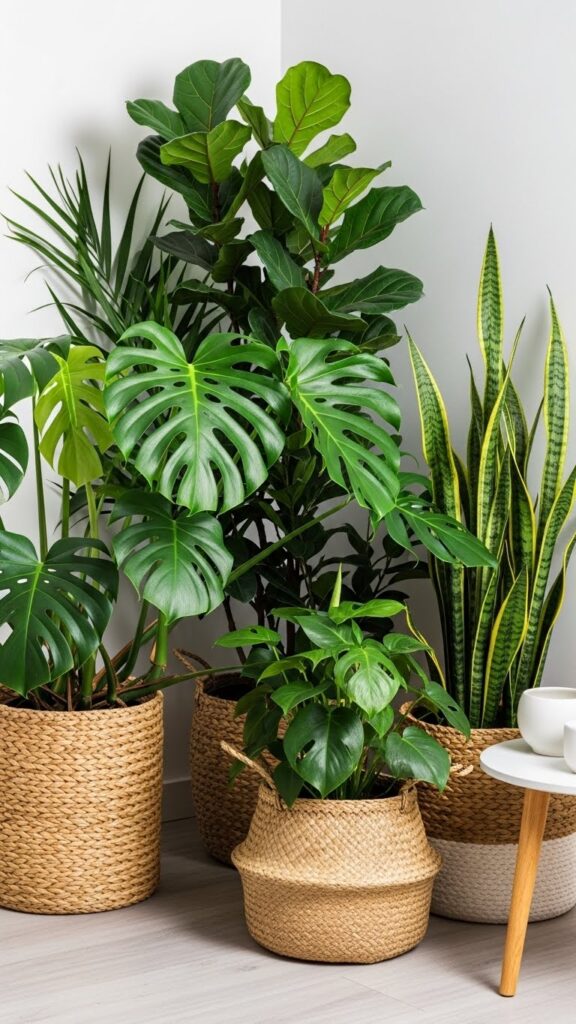
Woven Baskets:
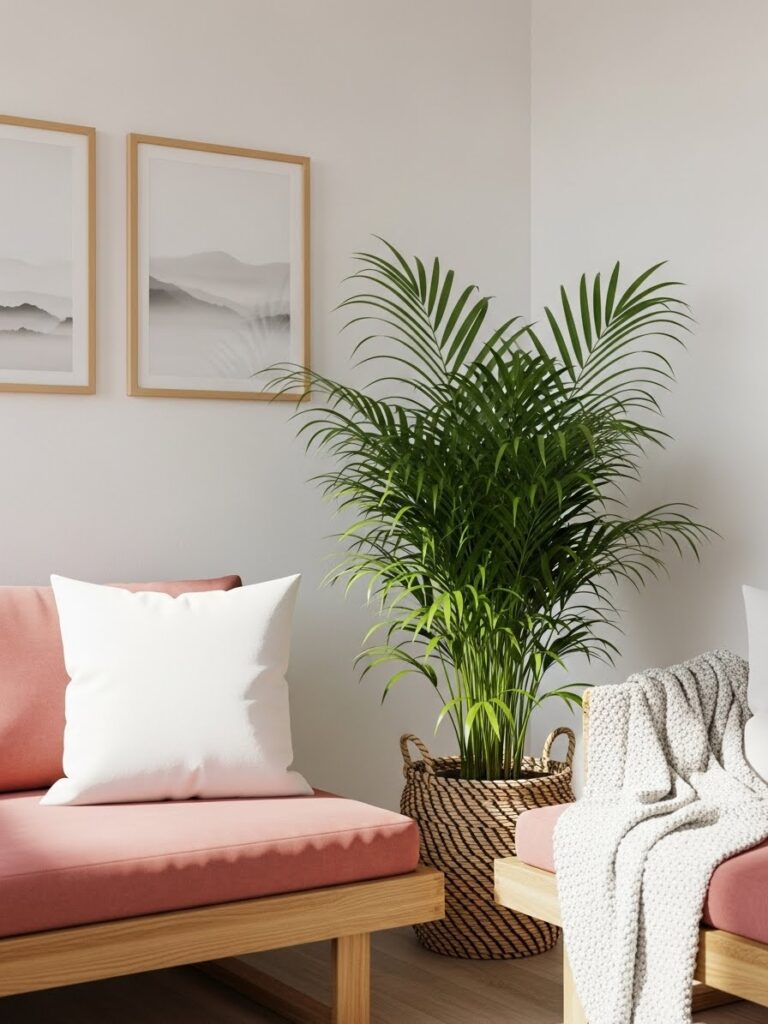
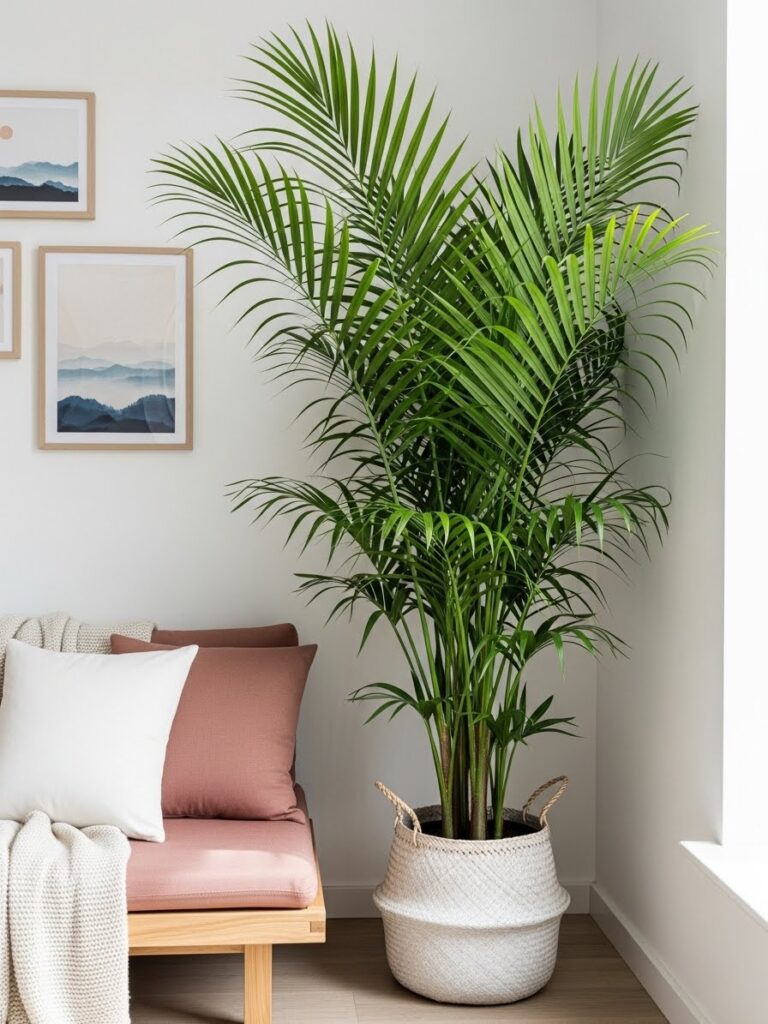
For a bohemian look, place the nursery pot inside a seagrass basket. It adds texture and warmth.
The “Pot-in-Pot” Method:
Do not plant directly into a decorative pot without holes. Keep the plant in its plastic nursery pot. Place that inside the decorative planter.
This ensures proper drainage. You can take the plant to the shower to water it, then put it back.
Styling: The Rule of Thirds
Designing with large indoor plants requires composition skills. Do not just plop it anywhere.
Corner Softening:
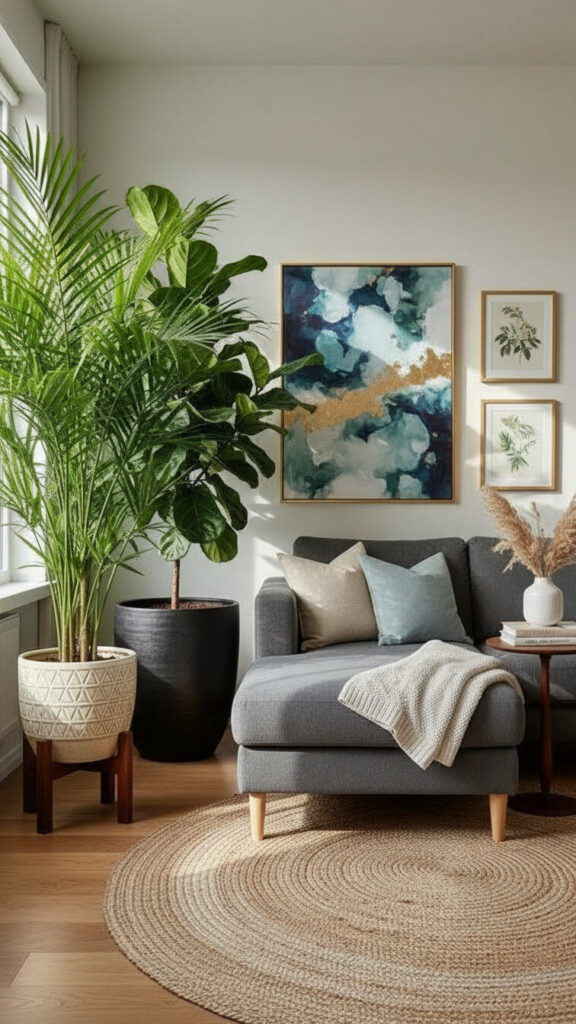
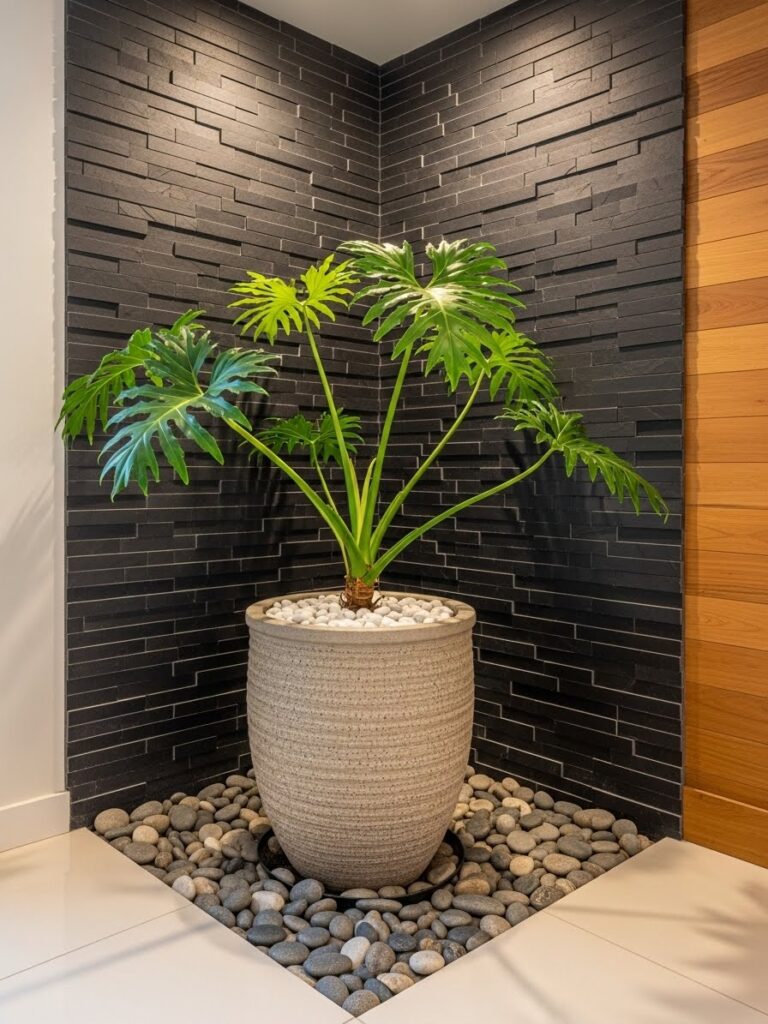
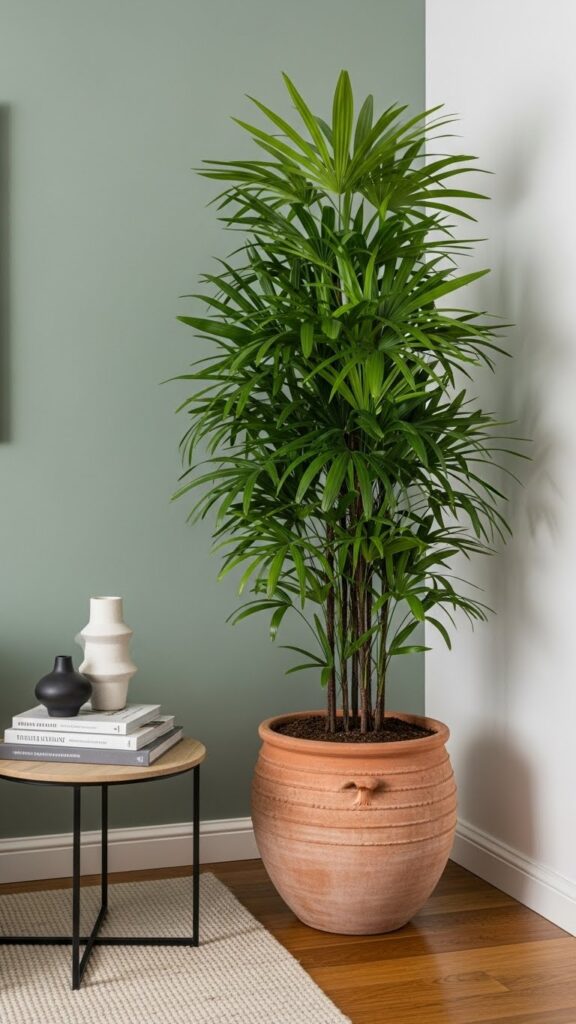
Rooms are boxes. Corners are sharp. Placing a tall tree in a corner blurs the line. It makes the room feel organic.
Visual Balance:
If you have a heavy sofa on one side, place a large tree on the other. This balances the visual weight.
The Importance of Acclimatization
When you bring a tree home, it goes into shock. It moves from a perfect greenhouse to your dry living room.
Expect some leaf drop. This is normal. Do not panic and overwater.
Give it time to adjust. Keep it in a stable spot. Do not move it around for the first month.
Watering: The Golden Rules
Most people kill plants with kindness. Overwatering leads to root rot. Root rot is fatal.
The Finger Test:
Stick your finger two inches into the soil. If it is dry, water it. If it is damp, wait.
Drainage is Key:
Ensure excess water can escape. If water sits at the bottom of the pot, the roots will suffocate.
Humidity: The Invisible Factor
Our homes are dry, especially in winter. Tropical plants crave humidity. Brown crispy tips are a sign of dry air.
The Humidifier:
Place a small humidifier near your tropical trees. It keeps the foliage lush.
Misting:
Misting helps temporarily, but it is not a cure. Grouping plants together creates a microclimate of humidity.
Fertilizing for Growth
Big plants need food. The soil in the pot has limited nutrients. You must replenish them.
Spring and Summer:
Fertilize once a month during the growing season. Use a balanced liquid fertilizer diluted to half strength.
Winter Rest:
Do not fertilize in winter. The plant is dormant. Feeding it now can burn the roots.
Pest Prevention
Pests are a reality of owning large indoor plants. Spider mites and scale are common enemies.
Inspect Regularly:
Check the undersides of leaves. Look for sticky residue or fine webbing.
Neem Oil:
Keep a bottle of Neem oil handy. It is a natural pesticide. Wipe the leaves down monthly as a preventative measure.
Pruning and Shaping
You are the architect of the tree. Don’t be afraid to prune. Pruning encourages new growth.
Remove Dead Leaves:
Yellow or brown leaves drain energy. Cut them off. This directs energy to healthy leaves.
Shape the Canopy:
If a branch is growing awkwardly, trim it. Cut just above a “node” (the bump where a leaf grows). New branches will sprout from there.
The Cost of Greenery
Large plants are expensive. Growing a tree takes years in a nursery. You are paying for time.
Buy Small, Grow Big:
If you are on a budget, buy a younger plant. It will take a few years to reach ceiling height, but it is much cheaper.
Estate Sales:
Sometimes you can find massive mature plants at estate sales or online marketplaces. People moving house often cannot take giant trees with them.
Artificial Alternatives
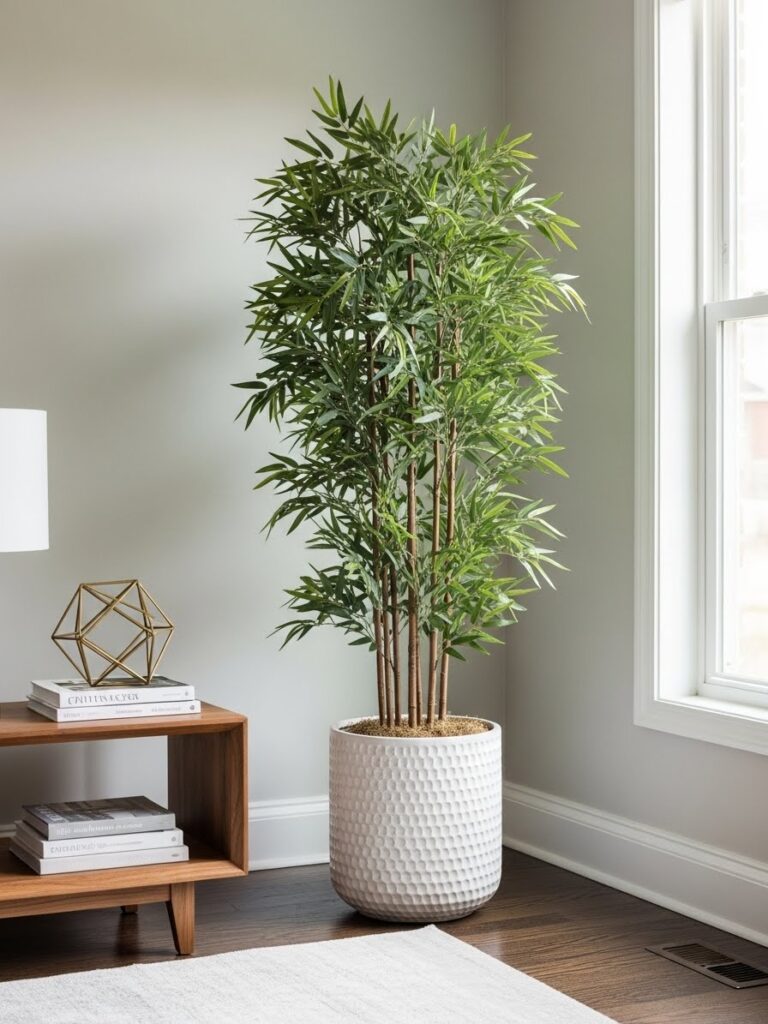
If you have zero light or travel constantly, consider faux plants. Technology has improved. High-end faux trees look incredibly real.
Look for Detail:
Check the trunk. Real wood trunks with faux leaves are the most convincing. Bend the branches to make them look organic, not stiff.
Creating a Plant Corner
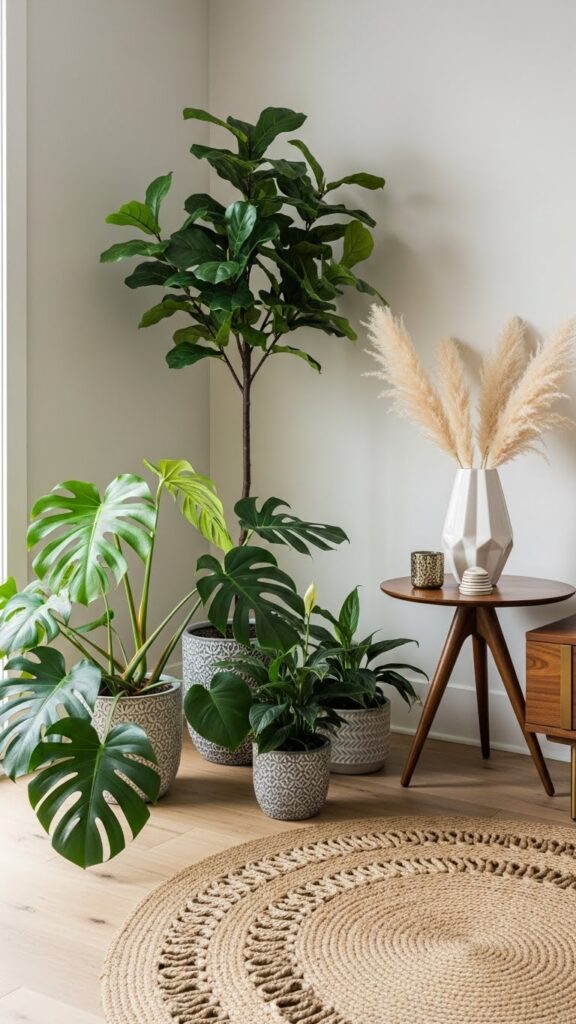
Sometimes one plant isn’t enough. Create a lush sanctuary by grouping plants.
Vary the Heights:
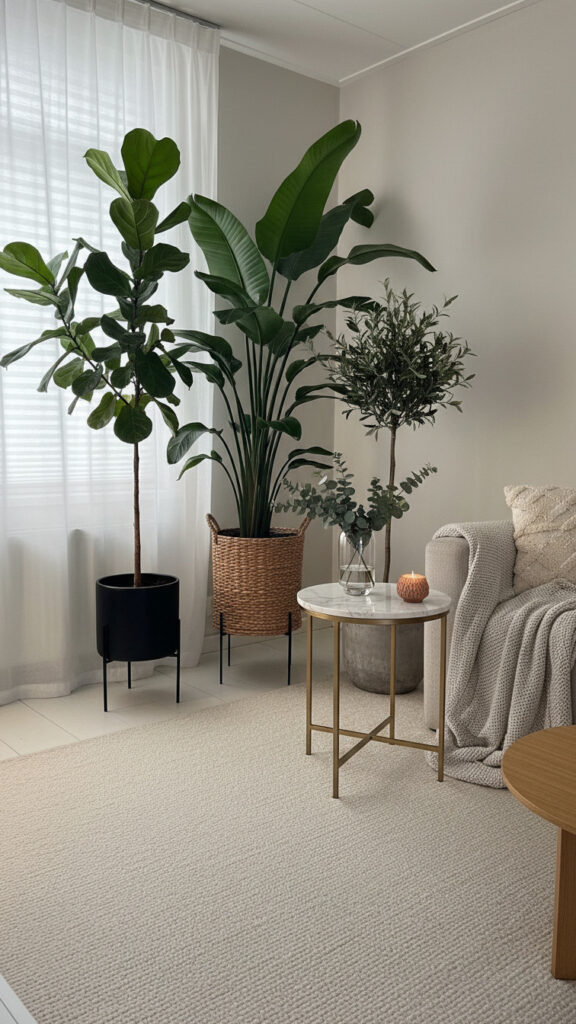
Use a tall tree in the back. Use a medium bush in the middle. Use a trailing plant in the front. This creates depth.
Unified Planters:
Use pots in the same color family. Different shapes are fine, but matching colors keeps the look cohesive and curated.
Expert Advice: Rotation
Plants grow toward the light. If you leave them stationary, they will lean. They will become lopsided.
Rotate your large indoor plants a quarter turn every time you water them. This ensures even growth on all sides.
Safety for Pets and Kids
Many tropical plants are toxic if ingested. This is a serious consideration.
Toxic Plants:
Fiddle Leaf Figs, Monsteras, and Sago Palms are toxic to cats and dogs. Keep them out of reach or choose safer options.
Pet-Safe Giants:
The Kentia Palm and the Money Tree (Pachira Aquatica) are non-toxic. They are safe for curious pets.
Conclusion: Bringing Life Indoors
Incorporating large indoor plants is more than a decor trend. It is a lifestyle enhancement. It connects us to nature.
The presence of living greenery softens our modern environments. It cleans the air. It soothes the soul.
Whether you choose the dramatic Fiddle Leaf or the easy-going Dracaena, make space for nature. Let it grow. Let it transform your home into a living sanctuary.


 Thenna Andersen