Thenna Andersen
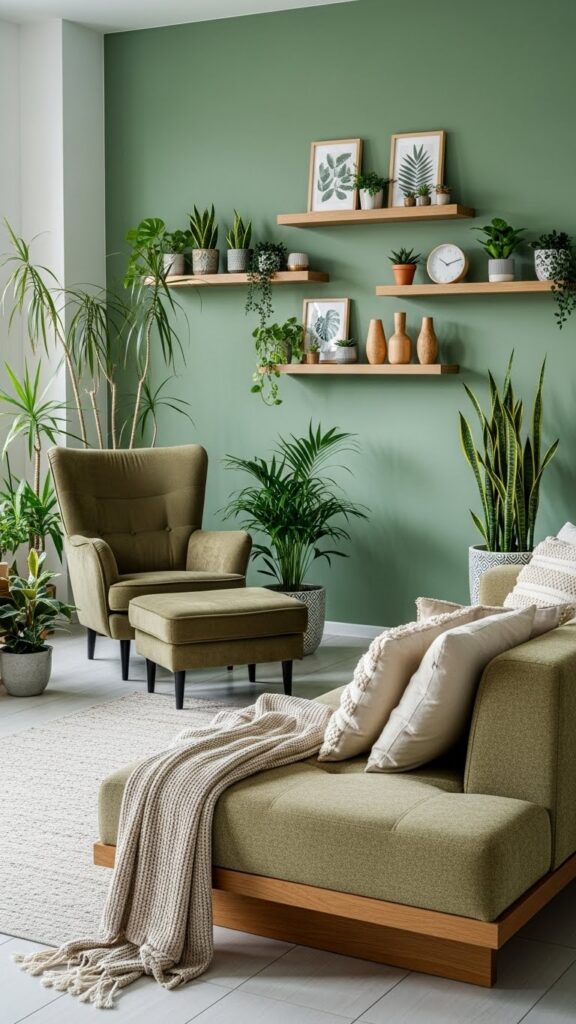
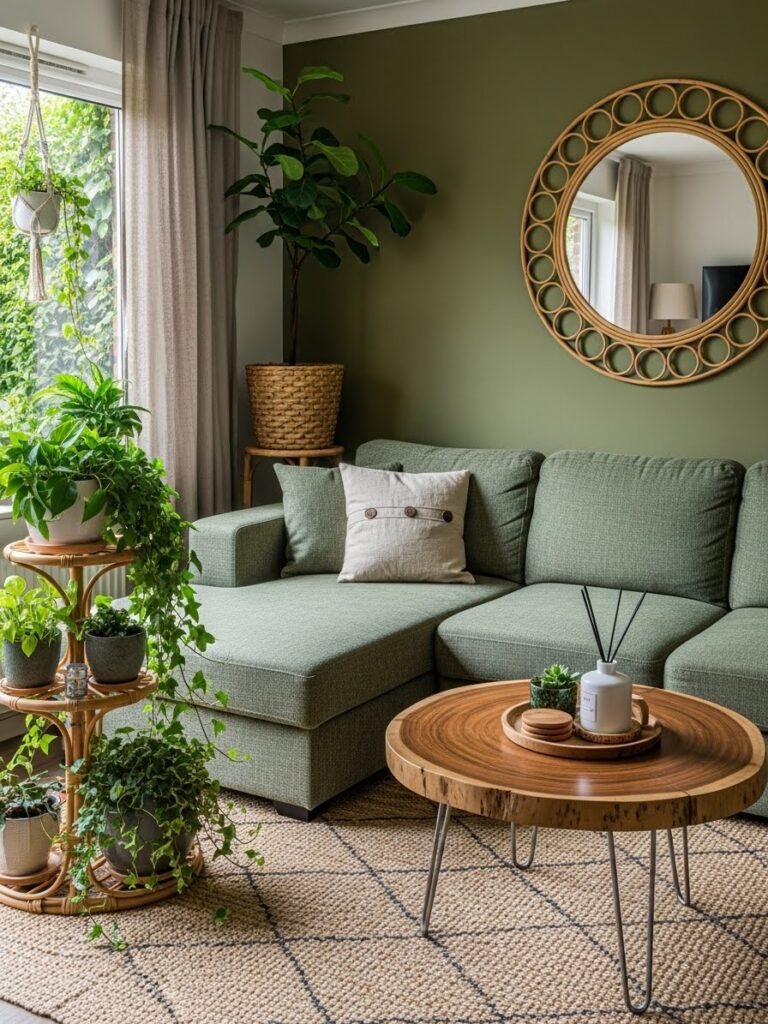
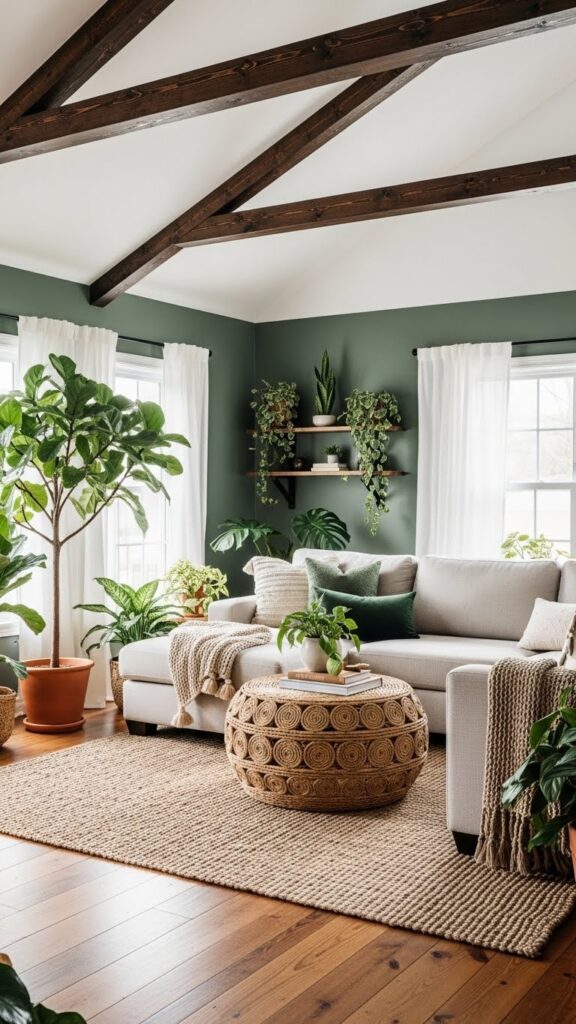
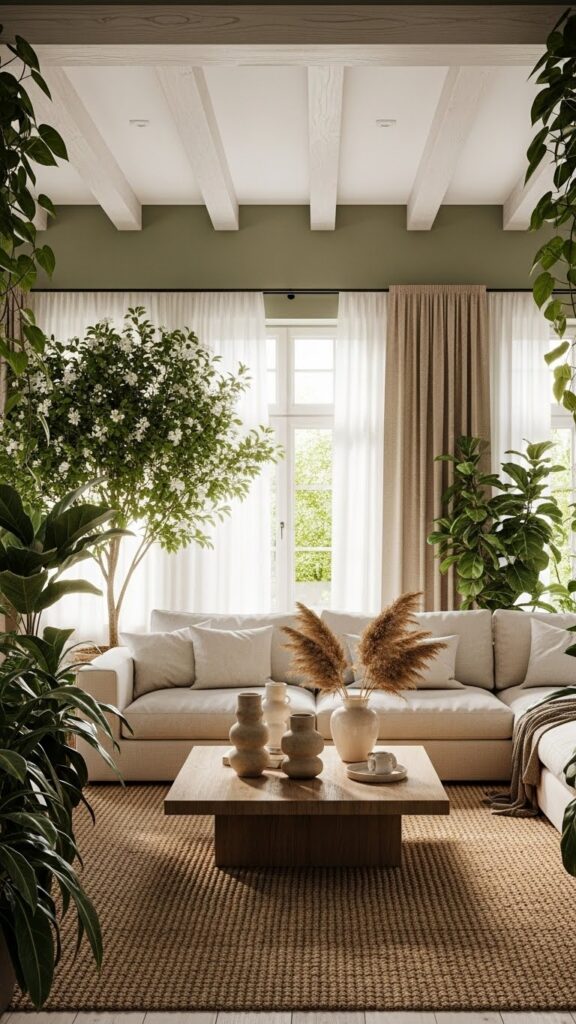
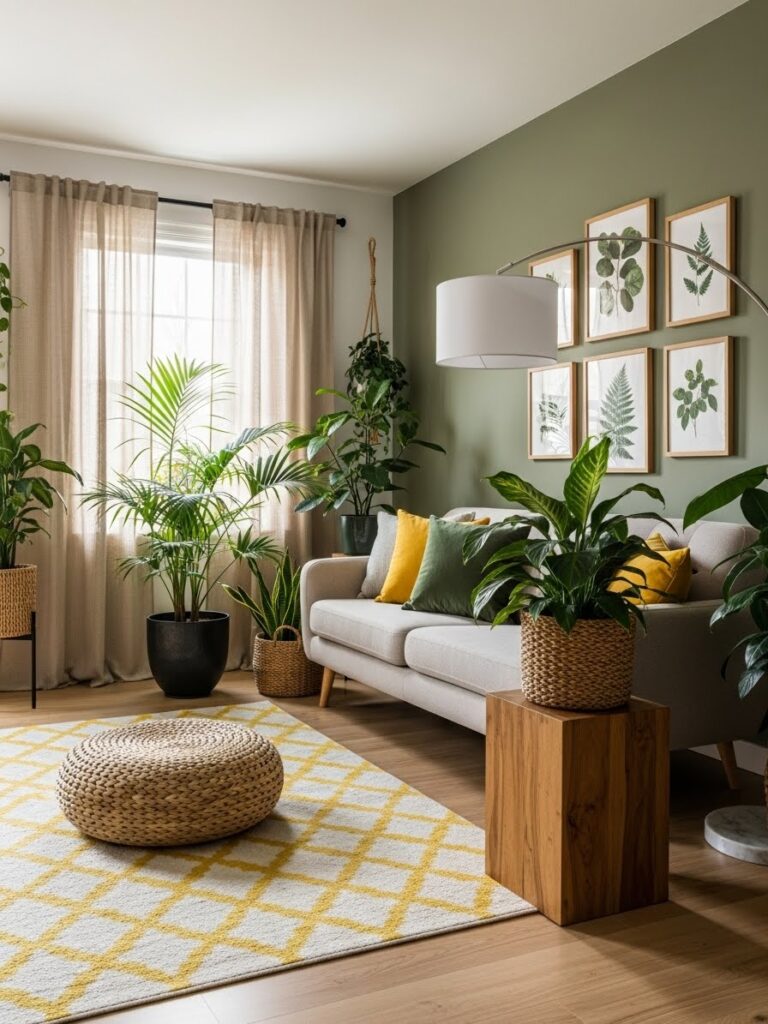
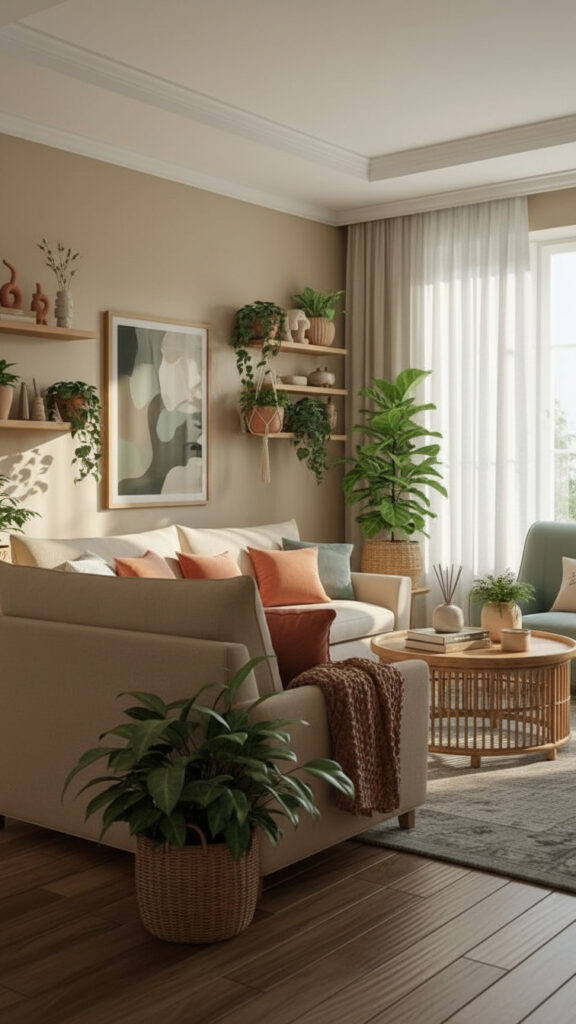
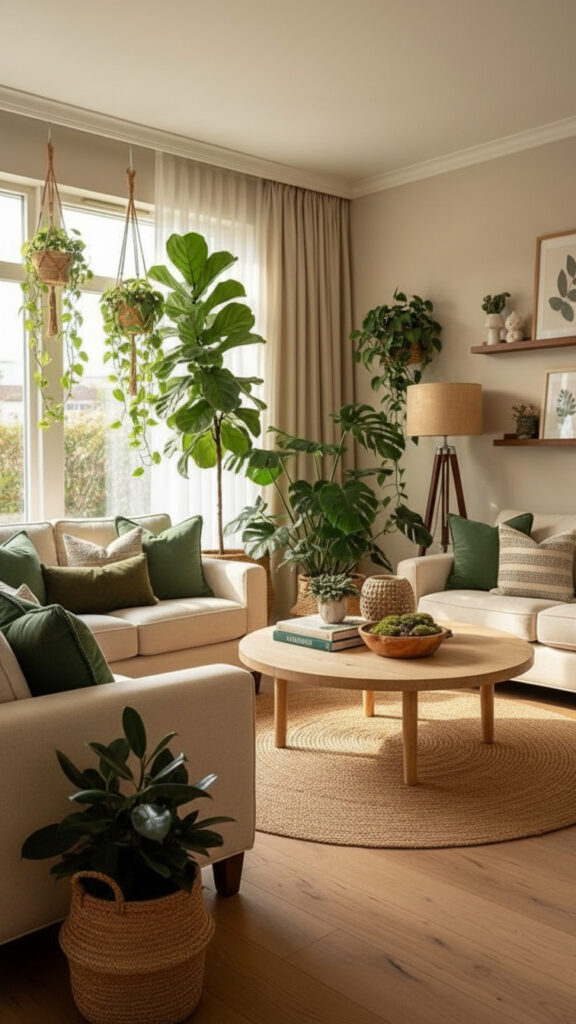
Biophilic living room designs represent a fundamental shift in how we inhabit our homes, moving from sterile boxes to living ecosystems. We are spending ninety percent of our time indoors.
This disconnection from nature has consequences. It affects our mood. It impacts our sleep and stress levels.
Biophilia is the innate human tendency to seek connections with nature. Integrating this into interior design is not a trend. It is a necessity for modern wellness.
In this guide, we will explore the architectural and decorative principles of this movement. We will discuss living walls, organic geometry, and circadian lighting. Prepare to breathe life into your space.
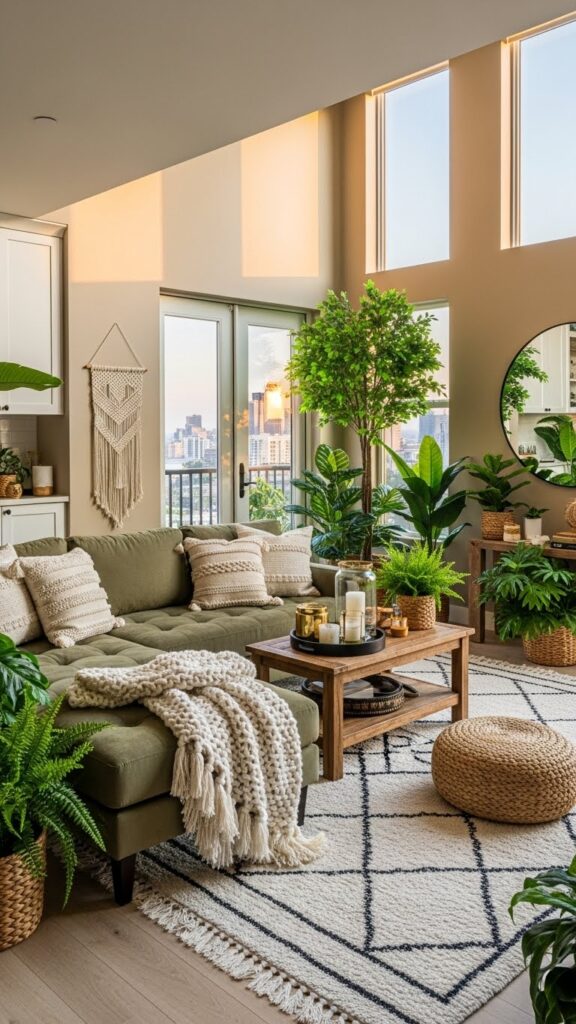
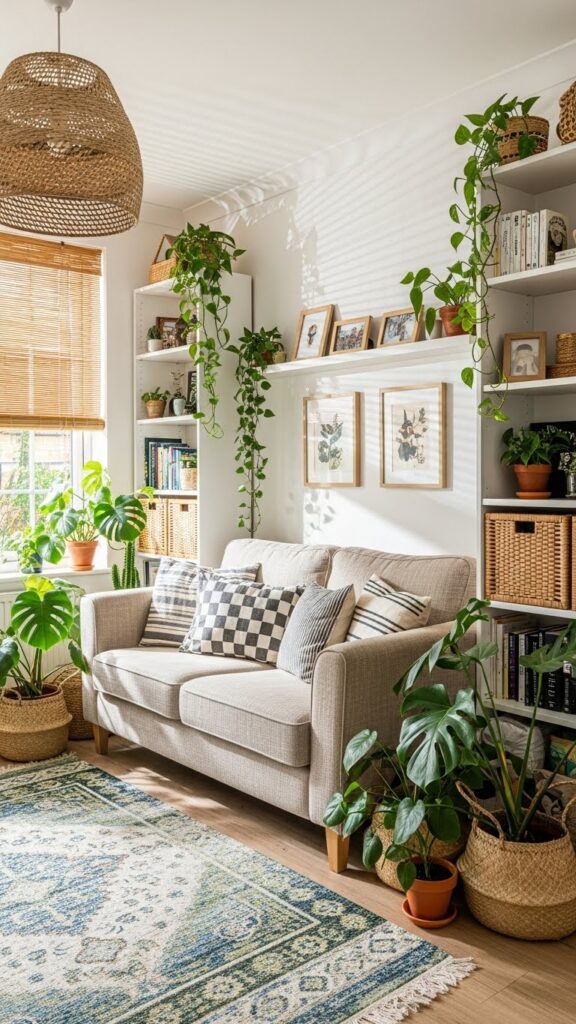
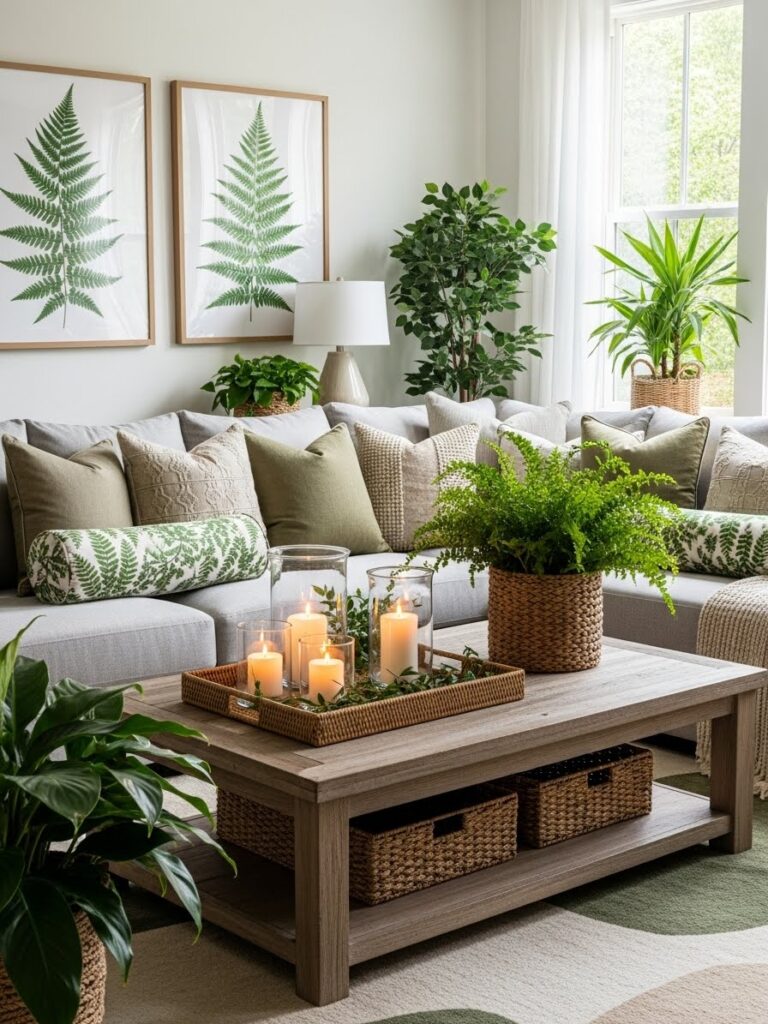
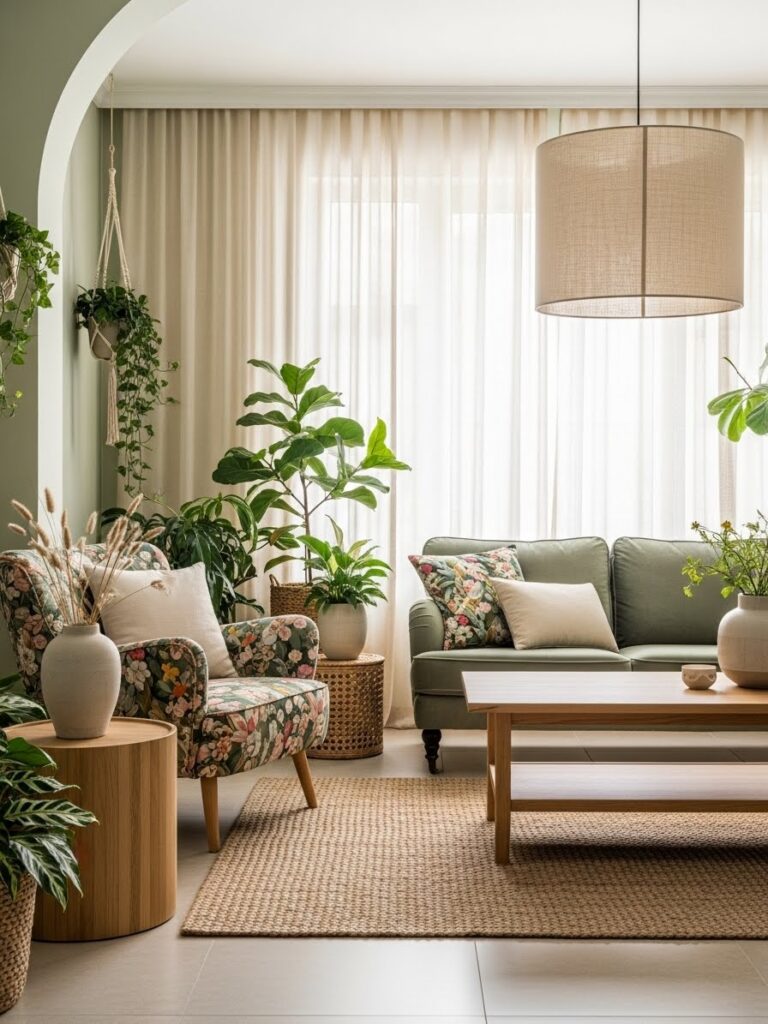
Contents
The Architecture of Life
True biophilic living room designs go beyond placing a fern on a shelf. It is about the structural DNA of the room. We must mimic the complexity of the outdoors.
Visual Connection:
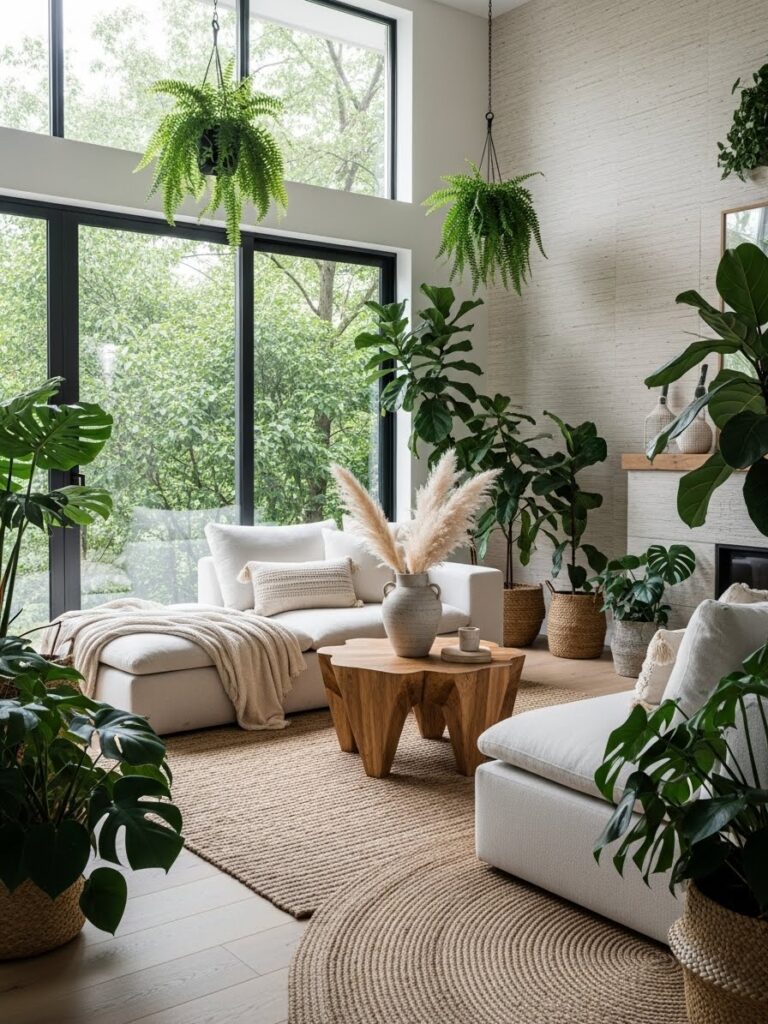
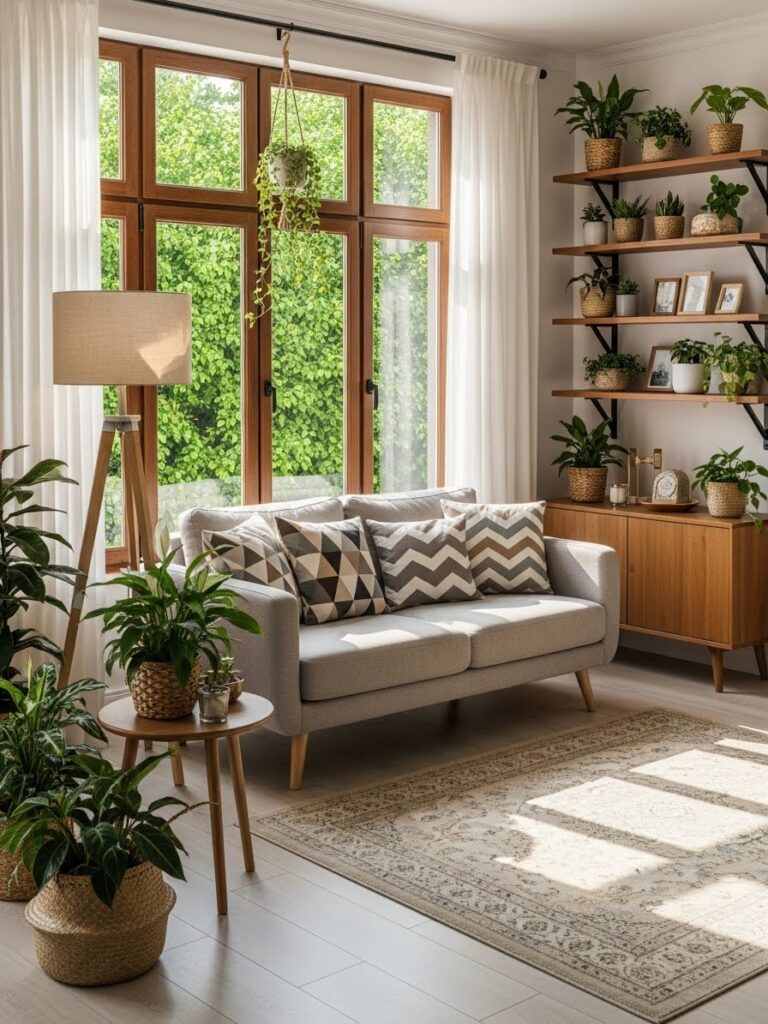
The primary goal is a direct line of sight to nature. If you have large windows, orient your furniture toward them. Do not block the view with heavy curtains.
Non-Visual Connection:
Nature is multisensory. We must engage the ears and the nose. The sound of water or the scent of pine creates a subconscious link to the forest.
The Science of Wellness Interiors
Why should you invest in this? The data is clear. Biophilic environments reduce cortisol, the stress hormone.
Cognitive Restoration:
Our brains get tired from “directed attention” (screens). Nature provides “soft fascination.” This allows the brain to recharge without effort.
Air Quality Improvement:
Indoor air is often more polluted than outdoor air. Plants act as bio-filters. They remove VOCs (Volatile Organic Compounds) emitted by paint and furniture.
Layout Strategy: Flow and Circulation
Nature rarely moves in straight lines. A river meanders. A branch curves. Your layout should reflect this organic fluidity.
The Meandering Path:
Do not create a rigid grid. Arrange furniture to encourage a curved walking path. This slows down movement. It creates a sense of discovery.
Refuge and Prospect:
This is an evolutionary preference. We want a protected back (refuge) and a wide view (prospect). Place your sofa against a solid wall facing the window.
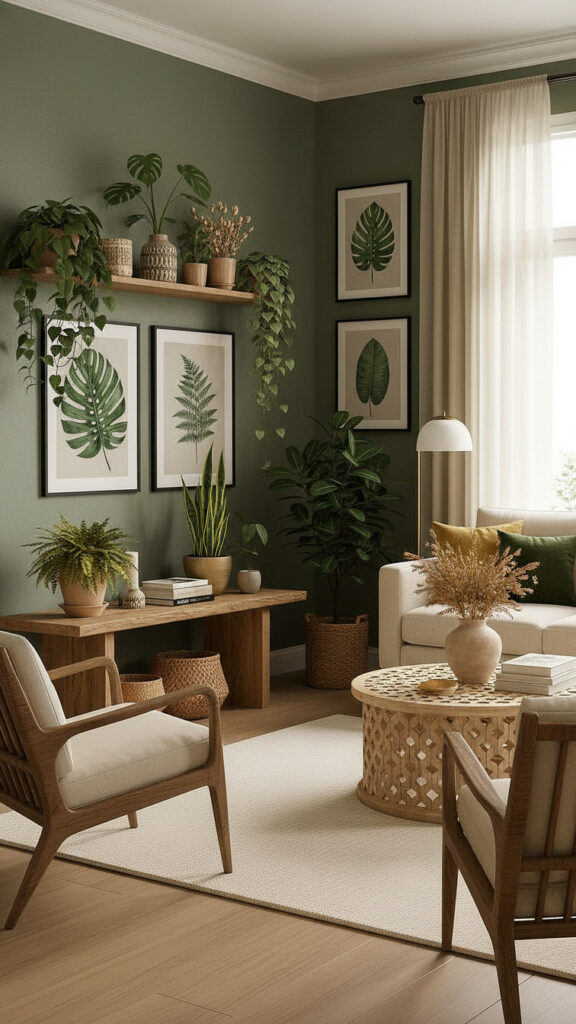
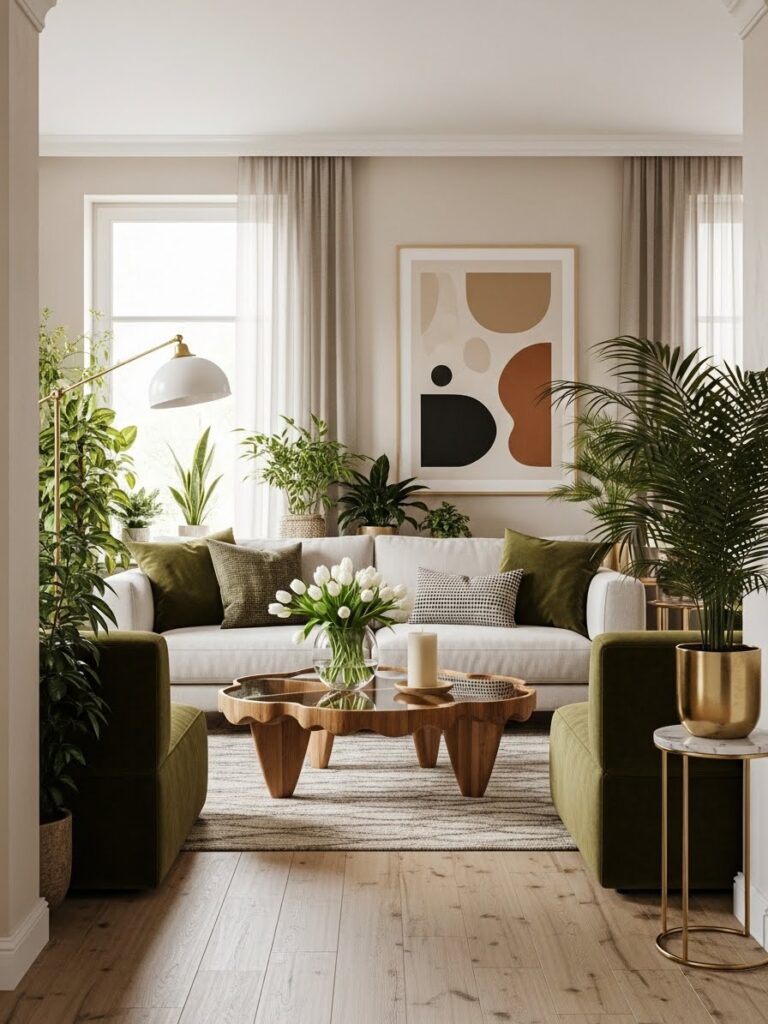
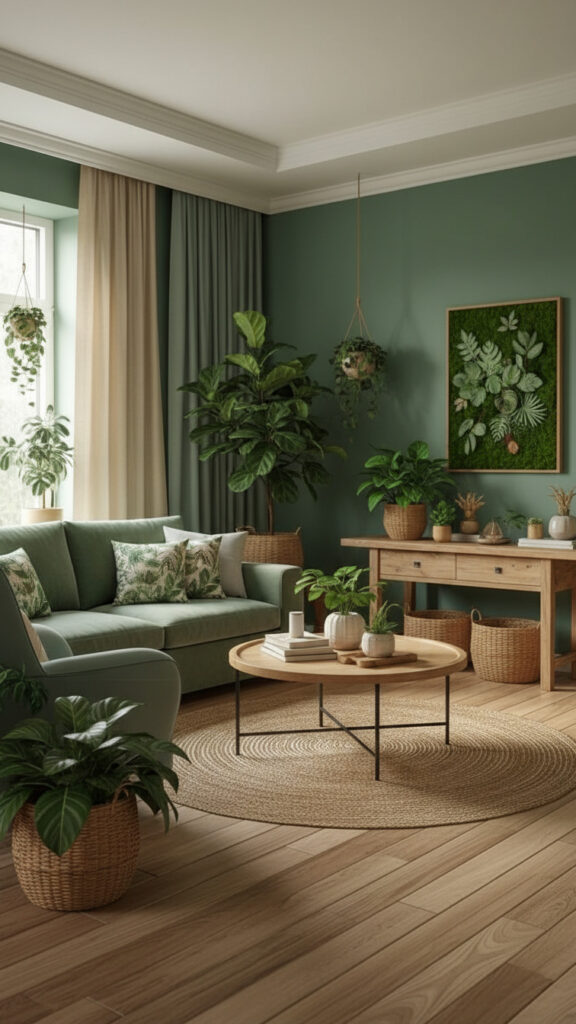
Palette 1: The Rainforest Canopy
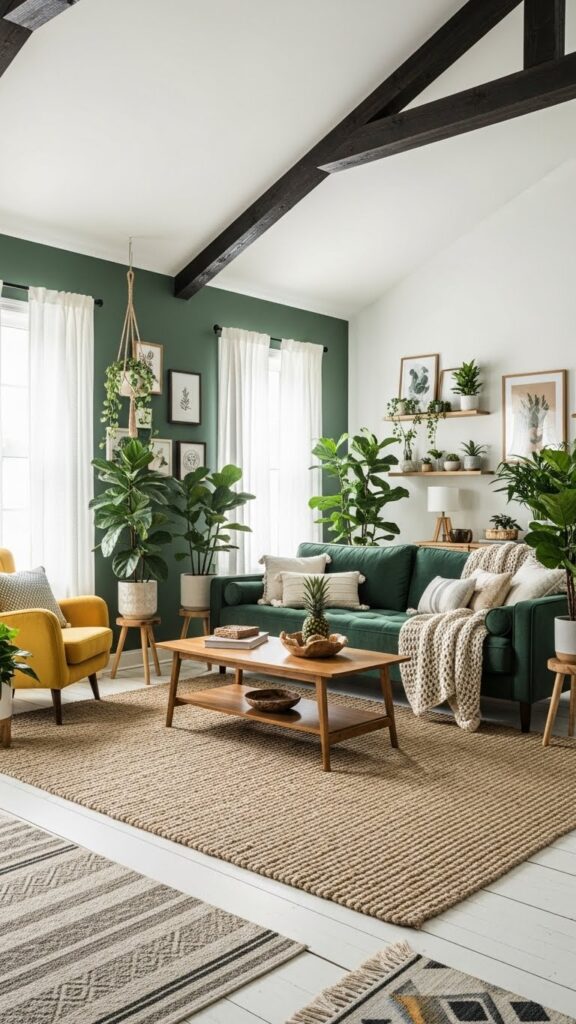
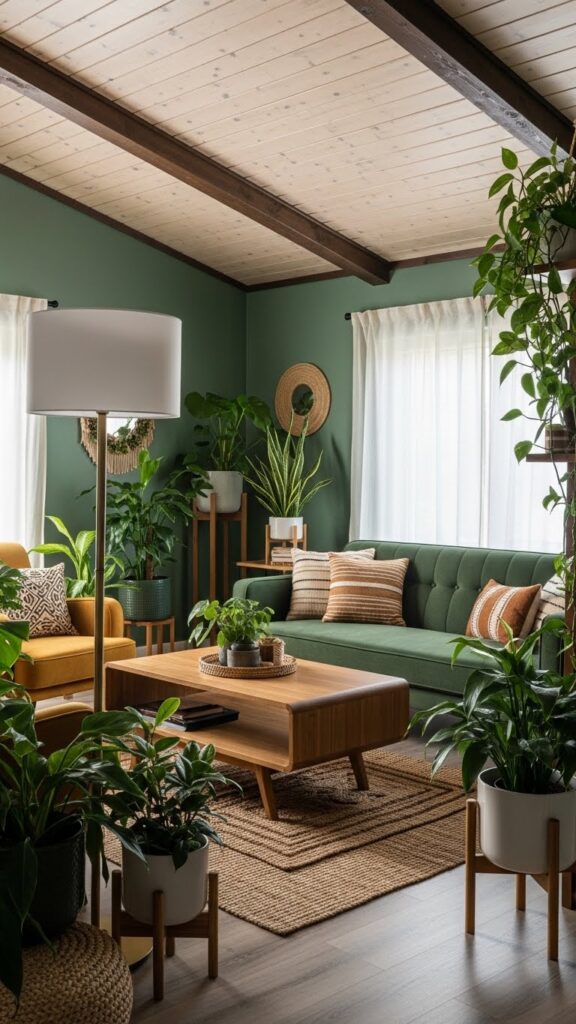
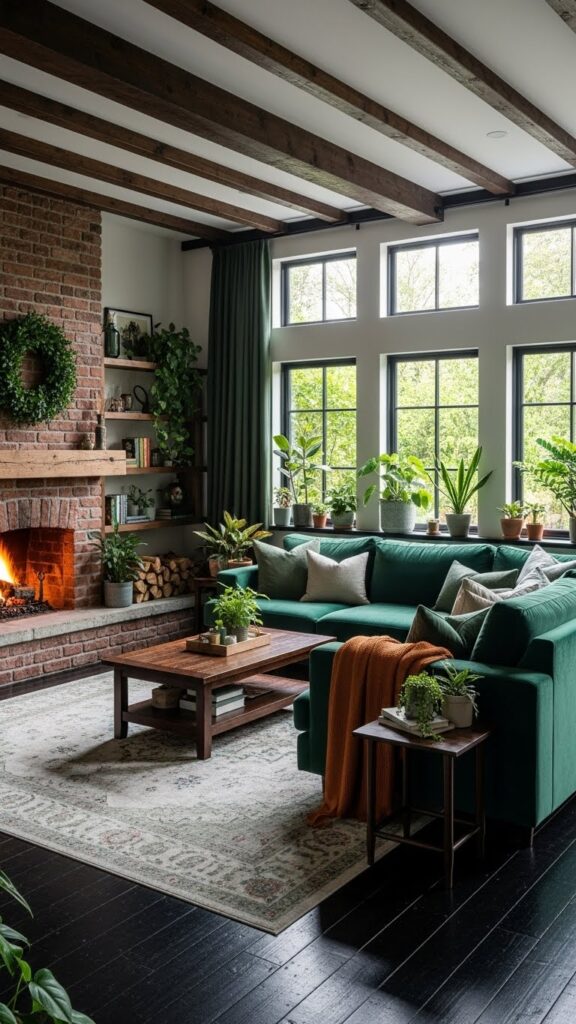
This design is lush, dark, and enveloping. It is perfect for creating a cozy, introspective atmosphere.
The Color Story:
- Hunter Green: Deep and restorative.
- Mahogany Wood: reddish-brown timber tones.
- Anthracite: Dark grey stone accents.
- Ochre: A pop of yellow, like sunlight hitting a leaf.
Execution Strategy:
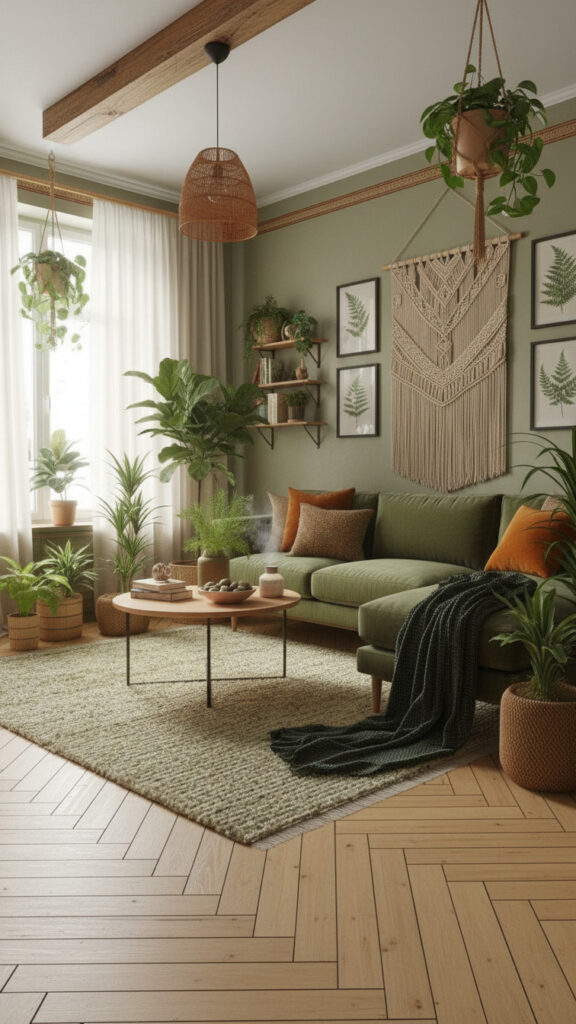
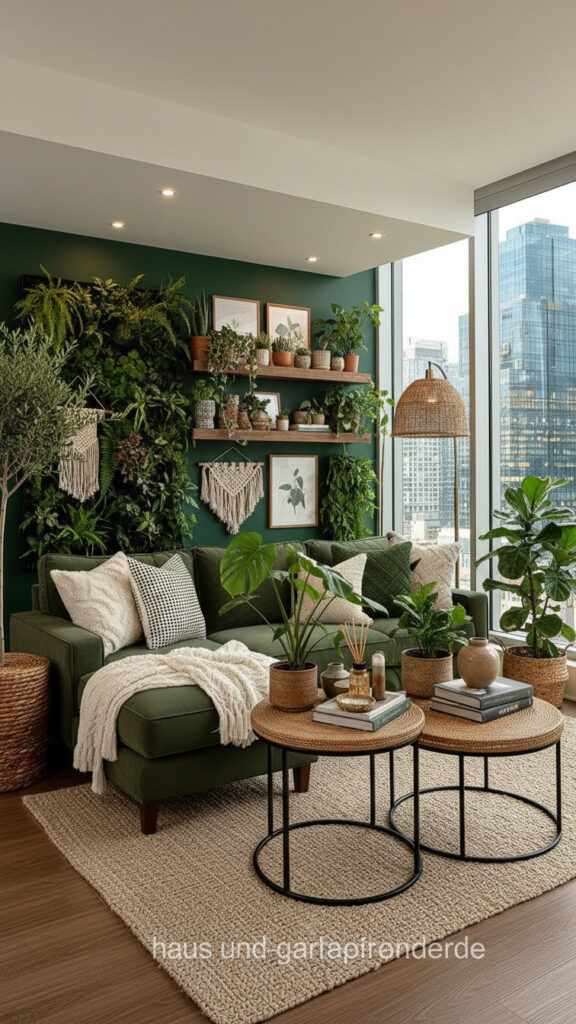
Paint the walls dark green. Use velvet upholstery to mimic the softness of moss. Layer tall plants like Palms and Ficus to create a “canopy” overhead.
This palette works best in rooms with controlled lighting. It feels like a private den or a library.
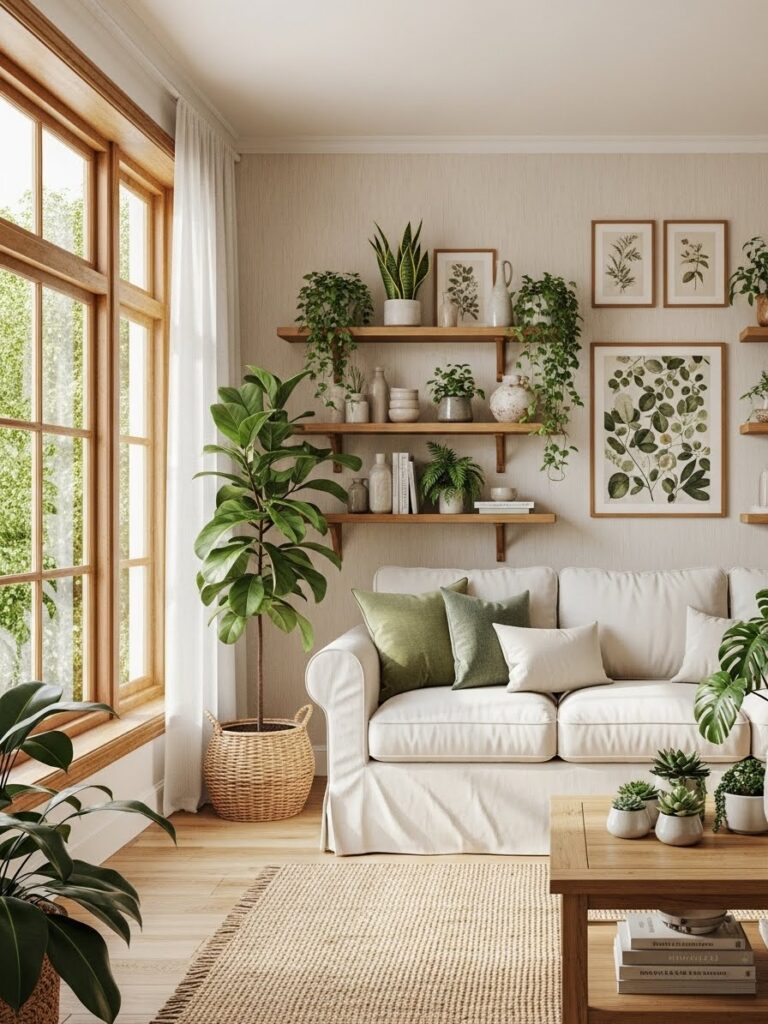
Palette 2: The Scandi-Nature Hybrid
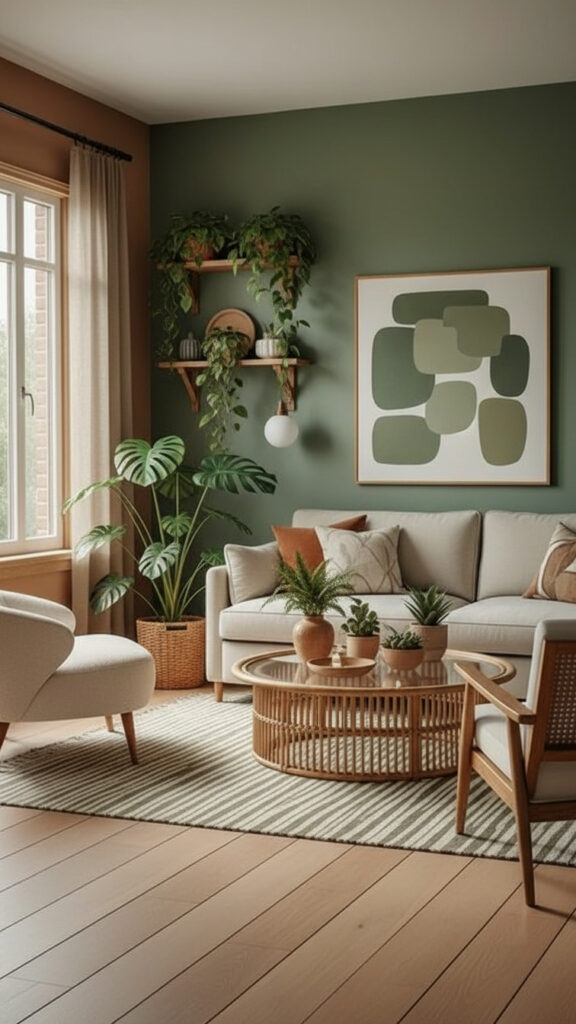
This is lighter and airier. It combines Nordic minimalism with biophilic elements. It focuses on light and wood.
The Color Story:
- Blonde Ash: Pale wood tones.
- Chalk White: Matte wall finishes.
- Sage Green: Soft, muted accents.
- Slate Blue: Cool, water-inspired tones.
Execution Strategy:
Keep the walls white to maximize light reflection. Use light wood furniture with clean lines. Add plants as sculptural elements rather than a jungle.
This style feels clean and hygienic. It is ideal for smaller living rooms that need to feel expansive.
The Living Wall Revolution
Nothing defines biophilic living room designs quite like a vertical garden. It turns a wall into a living organism.
Preserved Moss Walls:
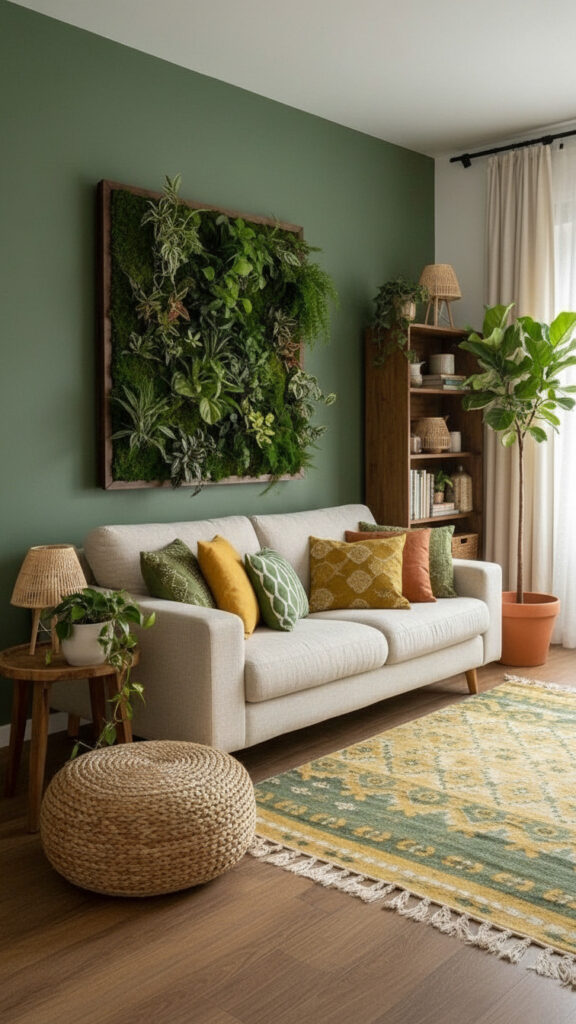
This is the low-maintenance option. Stabilized moss requires no water and no light. It provides incredible acoustic dampening. It is soft to the touch.
Active Green Walls:
These are hydroponic systems. They require plumbing and grow lights. However, they actively clean the air and humidify the room. It is a statement piece.
Lighting: Circadian Rhythm Support
Our biology is regulated by the sun. Standard static lighting confuses our internal clock. We need dynamic lighting.
Tunable White Light:
Use smart bulbs that change color temperature. Bright, cool white (4000K) in the morning alerts the brain. Warm, amber light (2700K) in the evening prepares for sleep.
Dappled Light Effects:
Use pendant lights made of woven rattan or bamboo. The light filters through the gaps. It casts shadows that resemble sunlight filtering through trees.
Materiality: Raw vs. Refined
Biophilia rejects the synthetic. We crave the imperfect textures of nature. This is known as “haptic feedback.”
Stone Surfaces:
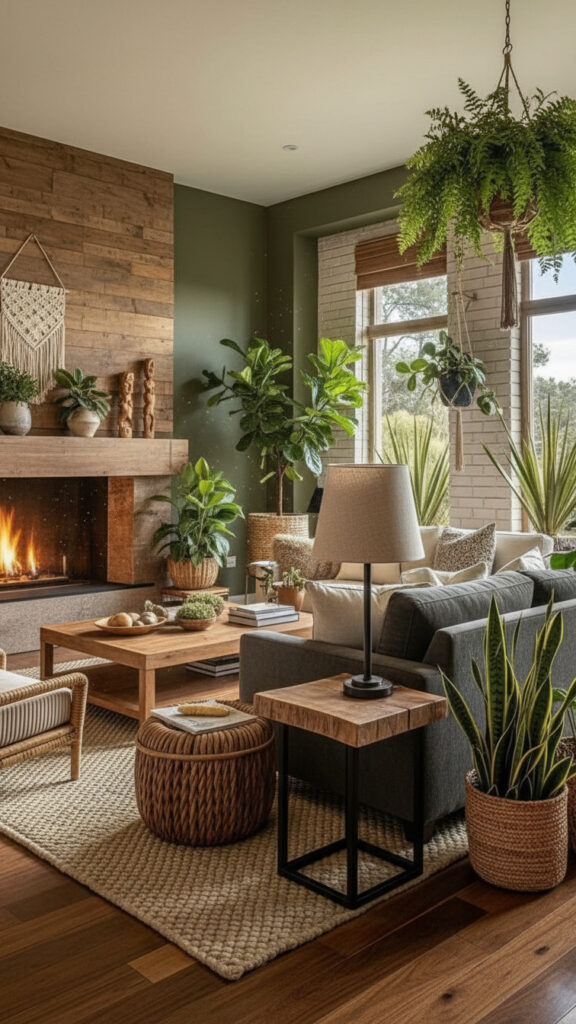
Use rough-hewn stone for a fireplace or a feature wall. The texture should be rugged. It grounds the room with geological weight.
Raw Wood:
Avoid high-gloss lacquer. Choose oil-finished wood where you can feel the grain. Live edge tables are perfect for introducing organic curves.
Furniture with Organic Forms
Rectangles are rare in nature. Biophilic living room designs embrace the curve. It softens the visual impact of the room.
Curved Sofas:
A kidney-shaped or curved sofa encourages social flow. It mimics the bend of a river. It creates a cozy, inclusive seating arrangement.
Nesting Tables:
Use a cluster of round tables at different heights. This resembles a cluster of mushrooms or stones. It creates visual layering.
Water Features: The Sound of Calm
Water is the essence of life. Introducing water adds movement and sound to a static room.
Indoor Fountains:
A wall-mounted water feature or a tabletop fountain creates white noise. This masks the stress of traffic sounds outside.
Planted Aquariums:
Aquascaping is high-level biophilia. A tank filled with live aquatic plants and fish is a mesmerizing focal point. It lowers heart rates immediately.
Flooring: Grounding the Space
The floor is your connection to the earth. It should feel warm and natural underfoot.
Cork Flooring:
Cork is sustainable and soft. It is harvested from the bark of oak trees without killing them. It is warm and acoustic-absorbent.
Natural Rugs:
Layer sisal, jute, or wool rugs. The rough texture stimulates the feet. This sensory input keeps you grounded in the present moment.
Fractal Patterns in Decor
Fractals are self-repeating patterns found in nature (like snowflakes or ferns). Our brains are hardwired to find them pleasing.
Textile Selection:
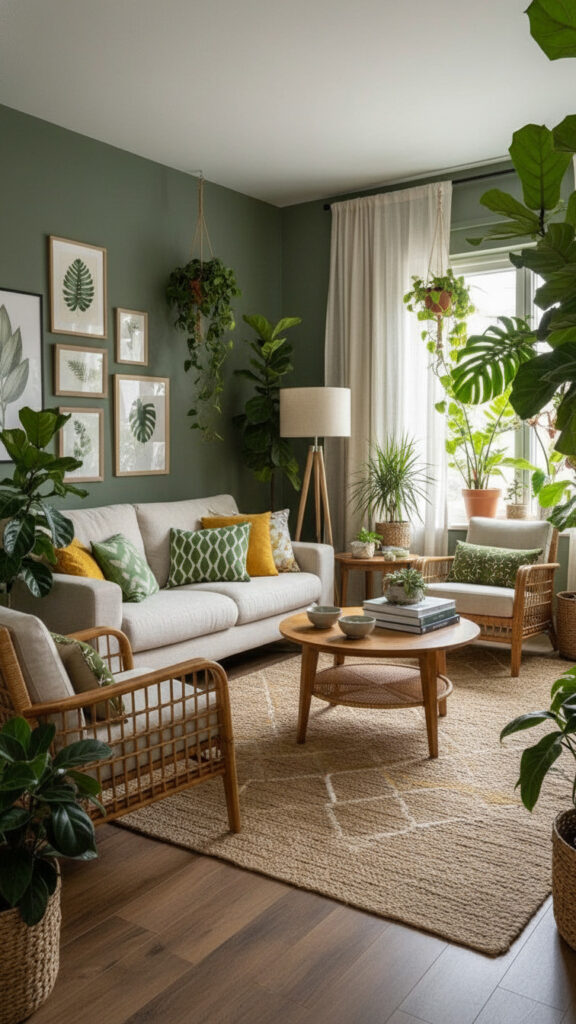
Choose cushions or curtains with botanical prints. Look for complex, repeating leaf patterns. Avoid simple, rigid geometric grids.
Art Selection:
Display macro photography of leaves or wood grain. These images highlight the natural fractals that we often miss.
Window Treatments for Light Optimization
Natural light optimization is non-negotiable. You must maximize the daylight entering the room.
Sheer Linen Curtains:
Heavy drapes block the connection to the outside. Sheer linen provides privacy while diffusing light. It creates a soft, glowing atmosphere.
Skylights and Solar Tubes:
If possible, install a skylight. Top-down light mimics the sun most accurately. It changes the shadows in the room throughout the day.
Plant Selection Strategy
Not all plants work in all rooms. You must match the biology to the environment.
Low Light Heroes:
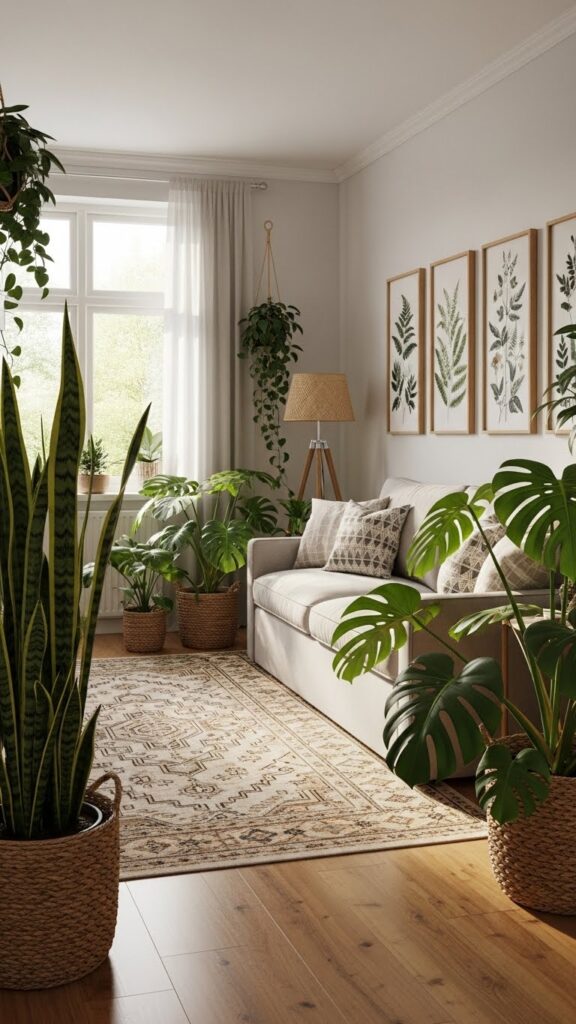
For dark corners, use Snake Plants (Sansevieria) or ZZ Plants. They are sculptural and nearly indestructible.
Statement Trees:
If you have bright light, use a Fiddle Leaf Fig or a Bird of Paradise. Their large leaves create a canopy effect that feels protective.
Small Space Biophilic Hacks
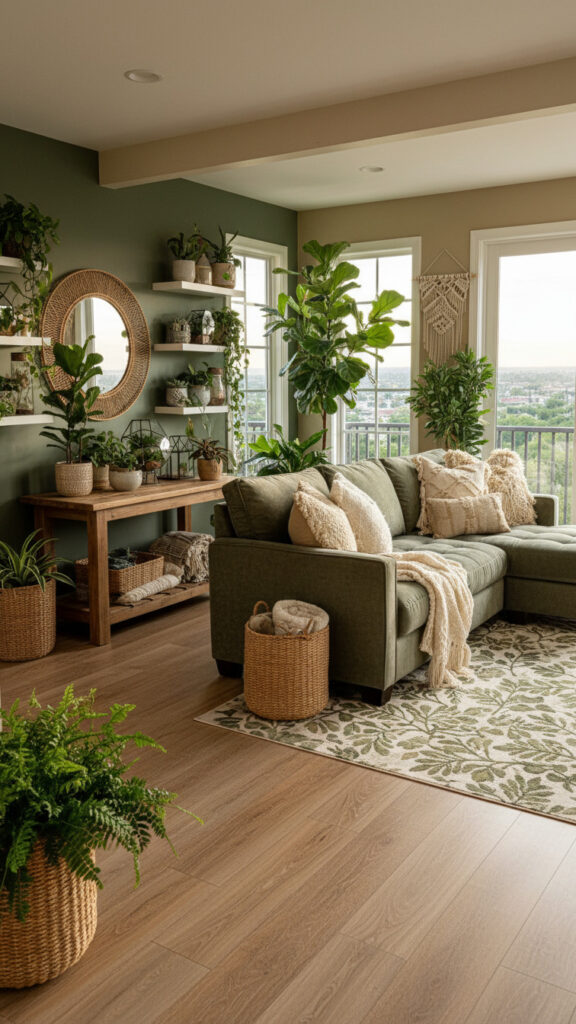
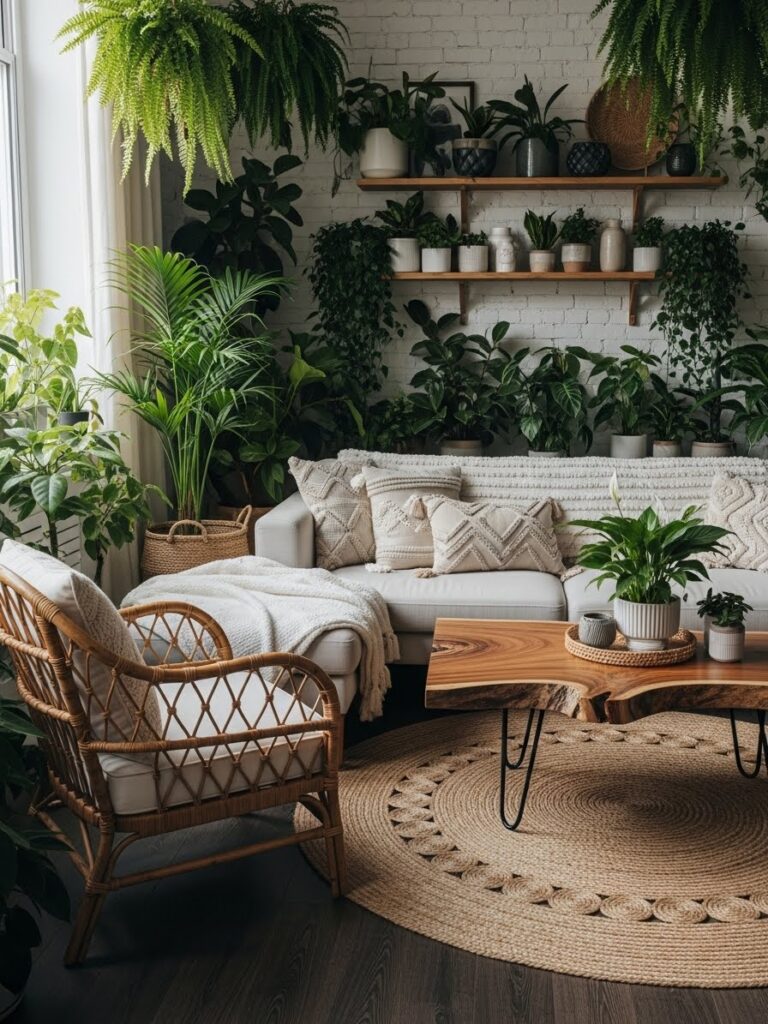
You can achieve biophilic living room designs in an apartment. Use vertical space.
Hanging Gardens:
Suspend macrame planters from the ceiling. This draws the eye up and saves floor space. Use trailing Pothos to create a green curtain.
Window Shelves:
Install glass shelves across your window. Fill them with small succulents. This creates a green filter for the incoming light.
Sustainable Decor Choices
Biophilia implies a love for nature. Therefore, your decor should not harm the planet.
Upcycled Materials:
Choose furniture made from reclaimed wood. Old barn wood has a texture and history that new wood lacks.
Eco-Friendly Fabrics:
Avoid synthetic polyester. Choose organic cotton, hemp, or bamboo silk. These materials are biodegradable and breathable.
Maintenance: The Reality of Life
Living things require care. Dead plants are not biophilic; they are depressing.
Self-Watering Pots:
Invest in technology. Self-watering planters take the guesswork out of maintenance. They ensure your plants thrive even if you travel.
The Ritual of Care:
View plant care as a meditative ritual, not a chore. Wiping dust off leaves connects you to the organism. It slows you down.
Seasonal Adaptability
Nature changes with the seasons. Your biophilic living room designs should evolve too.
Winter Warmth:
Bring in dried branches and pinecones. Use heavier wool throws. Focus on “hygge” and fire elements.
Summer Breeze:
Switch to cotton textiles. Bring in fresh cut flowers. Open the windows to allow cross-ventilation.
The Importance of Negative Space
A forest has clearings. Your living room needs them too. Do not clutter every surface with plants.
Negative space allows the eye to rest. It highlights the beauty of the plants you do have. It creates a sense of calm.
Common Design Mistakes
1. The Fake Plant Trap:
Plastic plants collect dust. They do not clean the air. Our brains can subconsciously tell they are artificial. They do not offer the same stress-reduction benefits.
2. Ignoring Pests:
Indoor gardens can attract gnats. Use preventative measures like Neem oil. A bug-infested room is not relaxing.
3. Poor Lighting Planning:
Putting a sun-loving plant in a dark corner is a death sentence. Always match the plant to the light conditions of the specific spot.
Expert Advice: Blurring the Boundaries
The ultimate goal is to erase the line between inside and outside. Use the same flooring material on your patio as your living room.
This visual continuity expands the space. When the doors are open, the living room effectively doubles in size.
Conclusion: A Sanctuary for the Soul
Biophilic design is not just aesthetic. It is biological. It is a return to our roots.
By implementing biophilic living room designs, you are prioritizing your health. You are creating a space that restores you.
In a high-tech world, we need high-nature homes. Start small. Add a plant. Open a window. Let the healing power of nature in.