Thenna Andersen
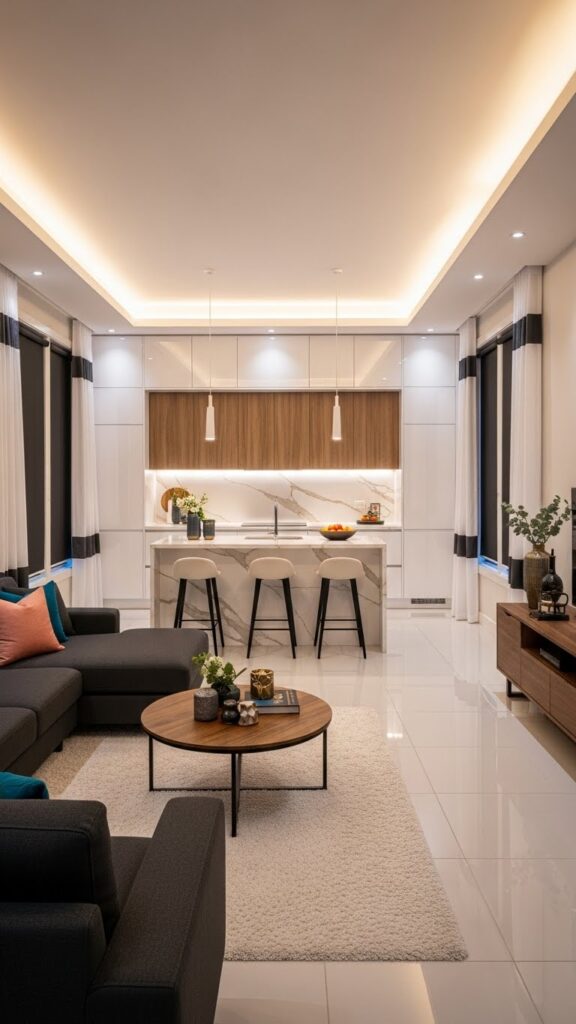
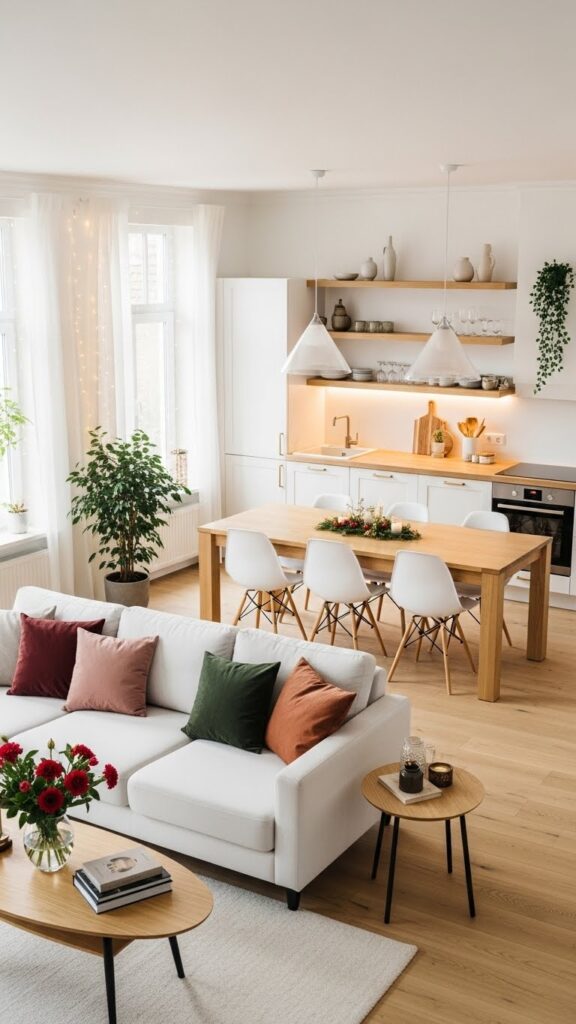
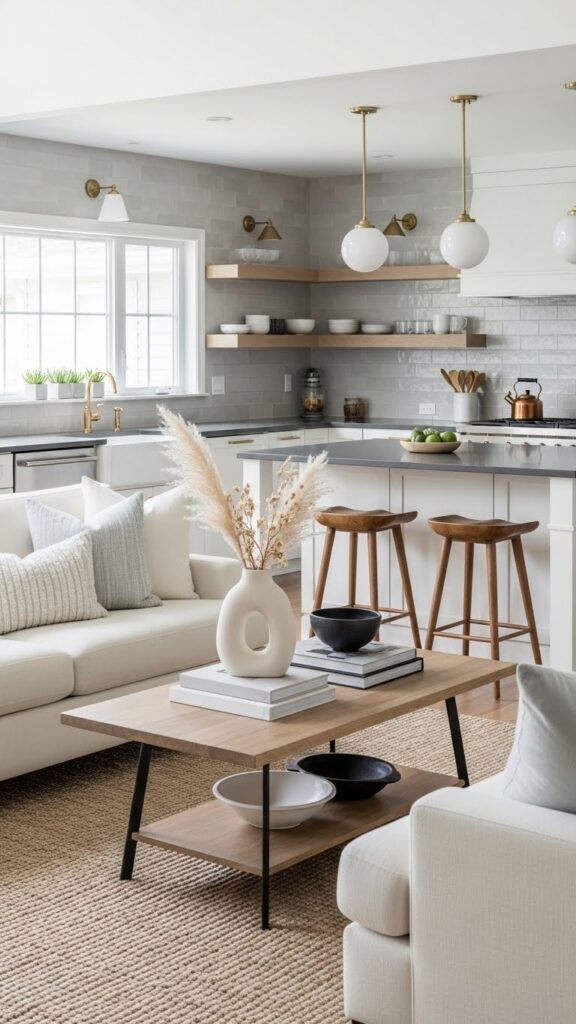
Exploring open kitchen ideas is the best way to transform a cramped house into a modern sanctuary. This layout removes barriers between the cook and the guests. It creates a seamless flow that enhances social interaction.
An open plan makes your home feel significantly larger. It floods the space with natural light. You can keep an eye on kids while preparing meals.
This guide delves into over 25 creative design concepts. We cover everything from zoning techniques to smart storage. Let’s create the open-concept kitchen of your dreams.
Contents
Planning Your Open Concept Layout
Removing walls requires careful thought and planning. You must define different functional zones without physical barriers. This ensures the space remains organized and cozy.
Consider the structural integrity of your home first. Removing a load-bearing wall is a major renovation. You might need a structural engineer to install support beams.
Think about how you live in your home. Do you entertain often or enjoy quiet family meals? Your lifestyle should dictate the flow of the kitchen design.
Managing Noise and Smells
One challenge of open plan living is noise control. Blenders and dishwashers can disturb someone watching TV. Soft furnishings help absorb sound in the living area.
Ventilation is also absolutely critical. You need a powerful range hood to trap odors. This keeps cooking smells from lingering in your sofa.
Creating Visual Continuity
A successful open layout requires a cohesive look. The kitchen should blend with the living and dining areas. Use a consistent color palette throughout the space.
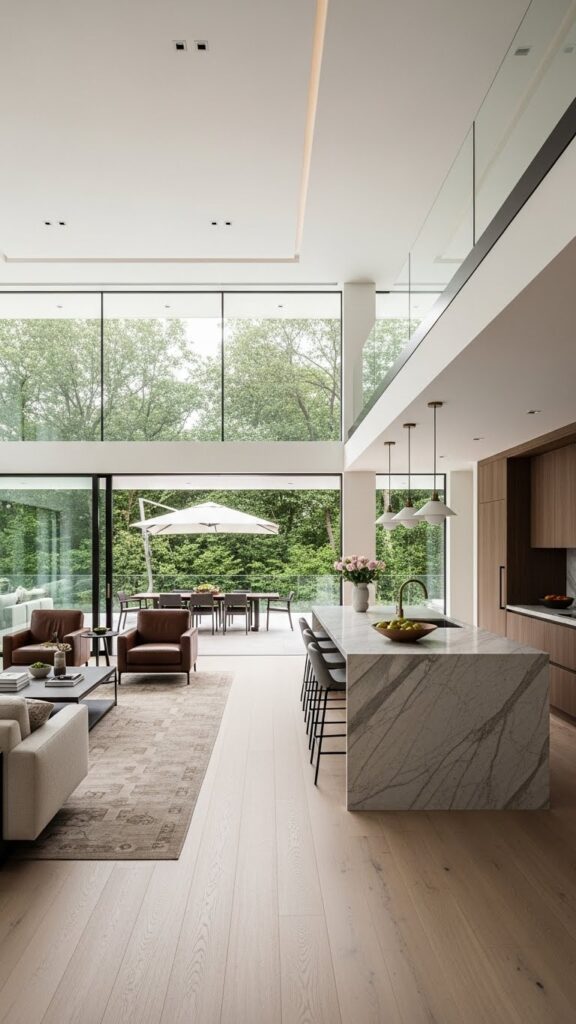
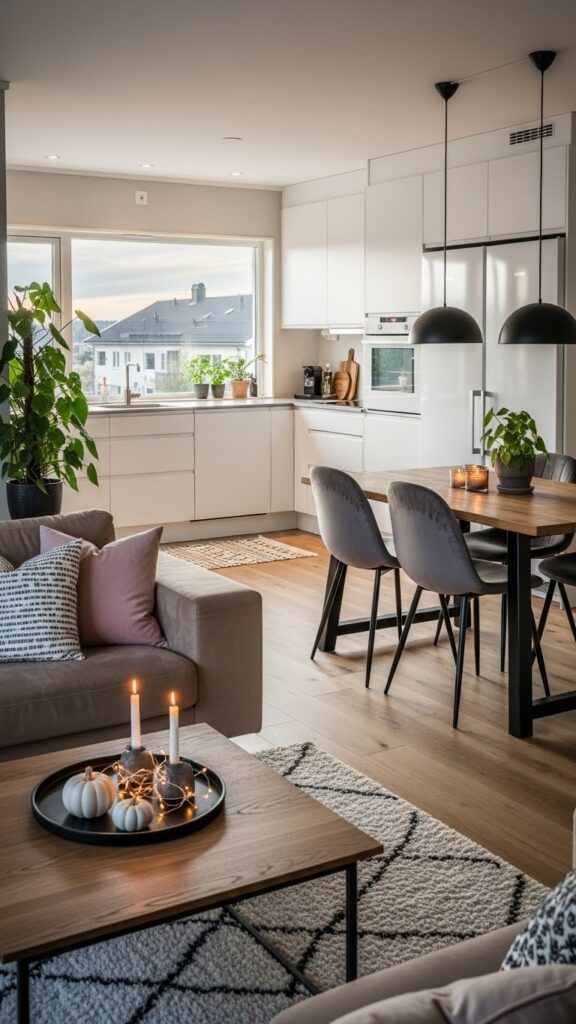
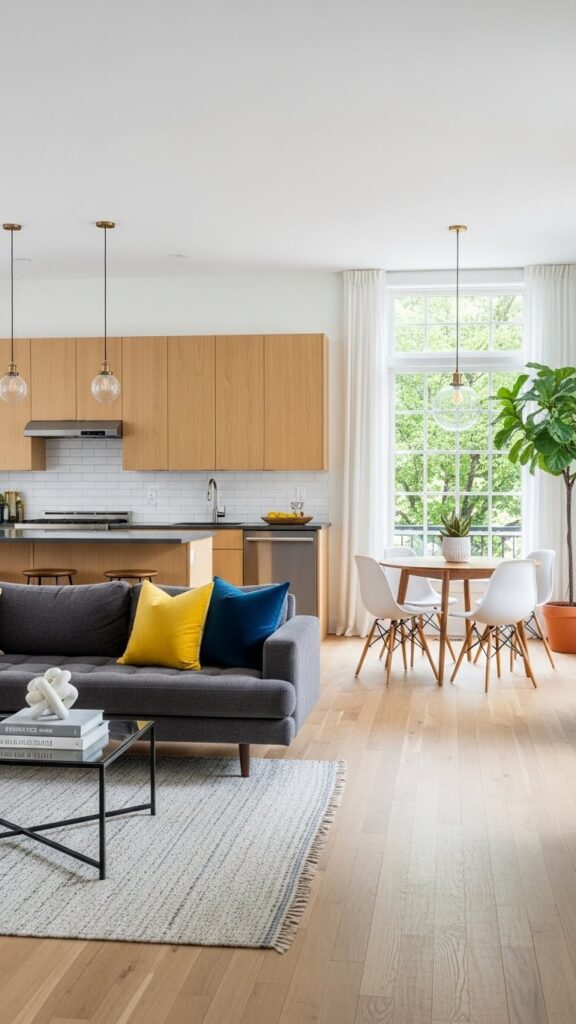
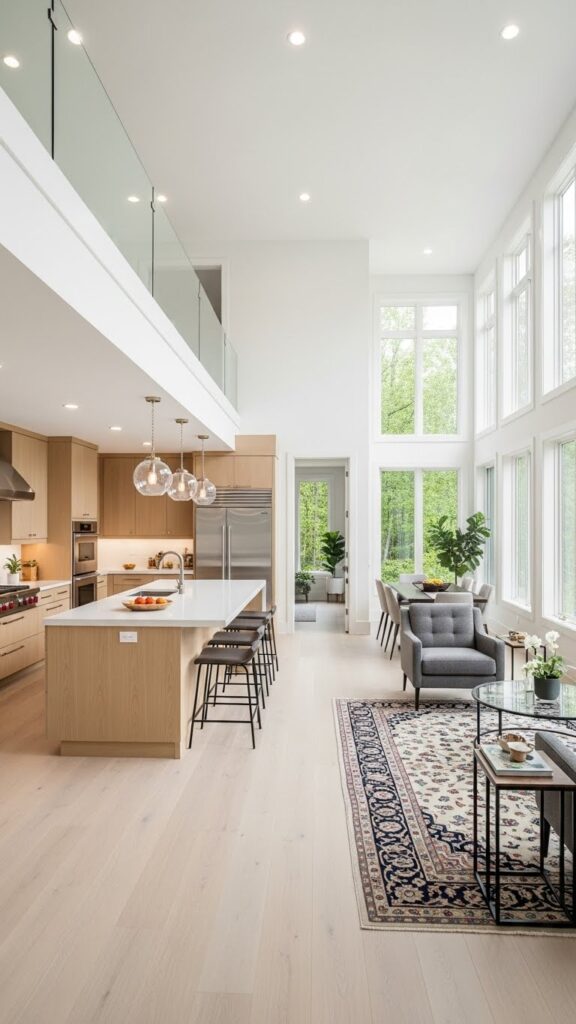
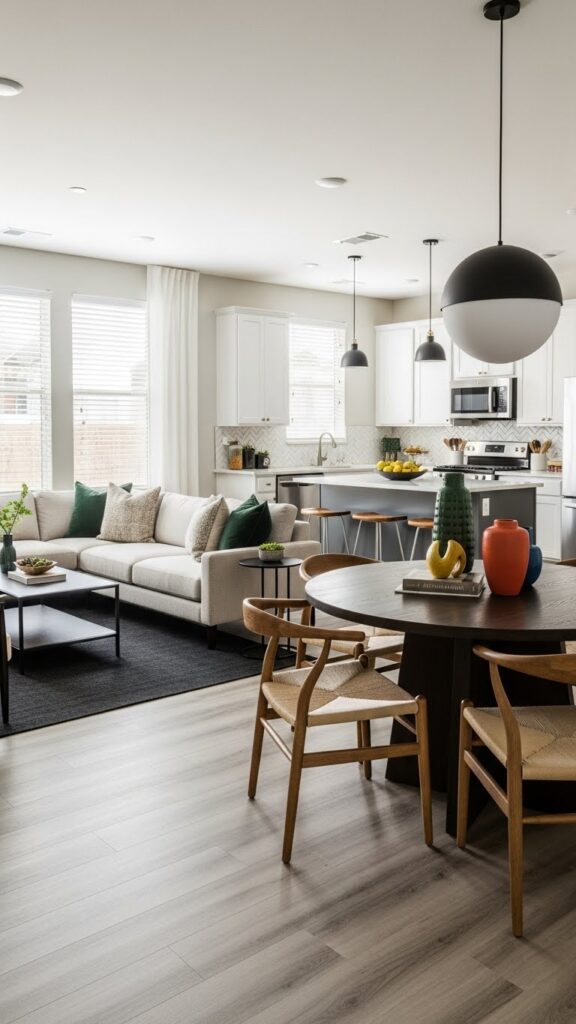
Flooring is a key element for continuity. Use the same flooring material across all zones. This visually expands the square footage.
The Central Island Anchor
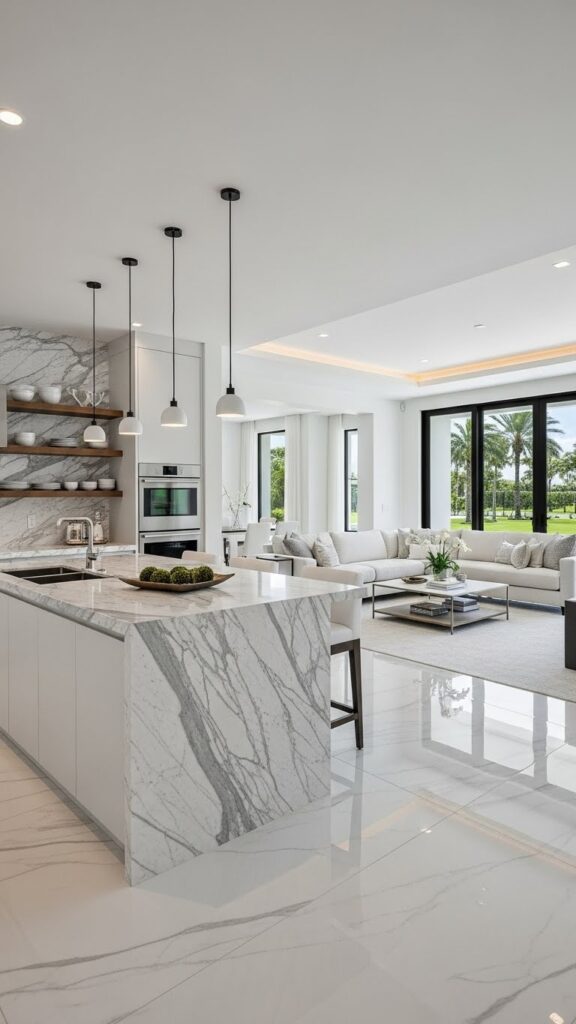
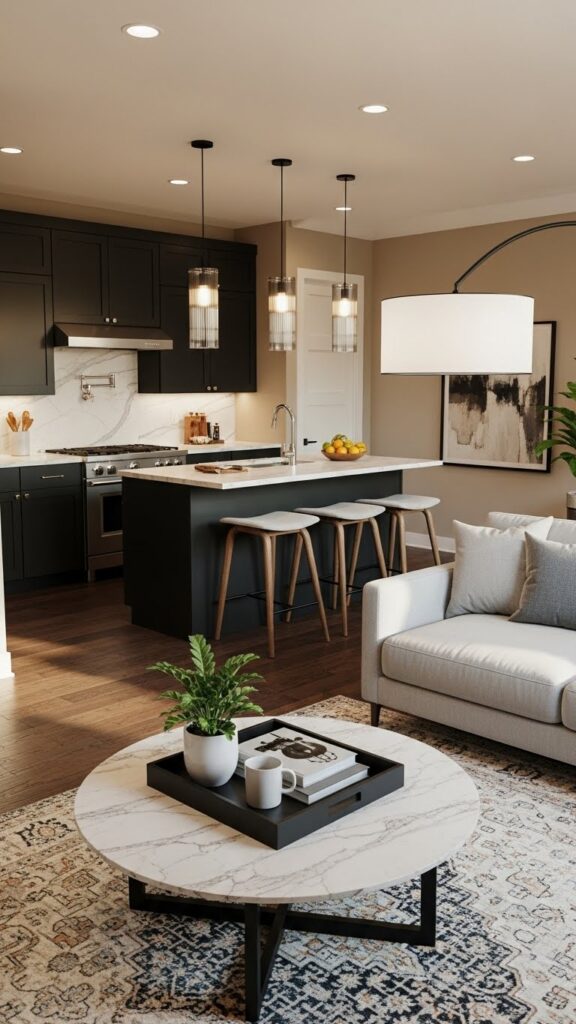
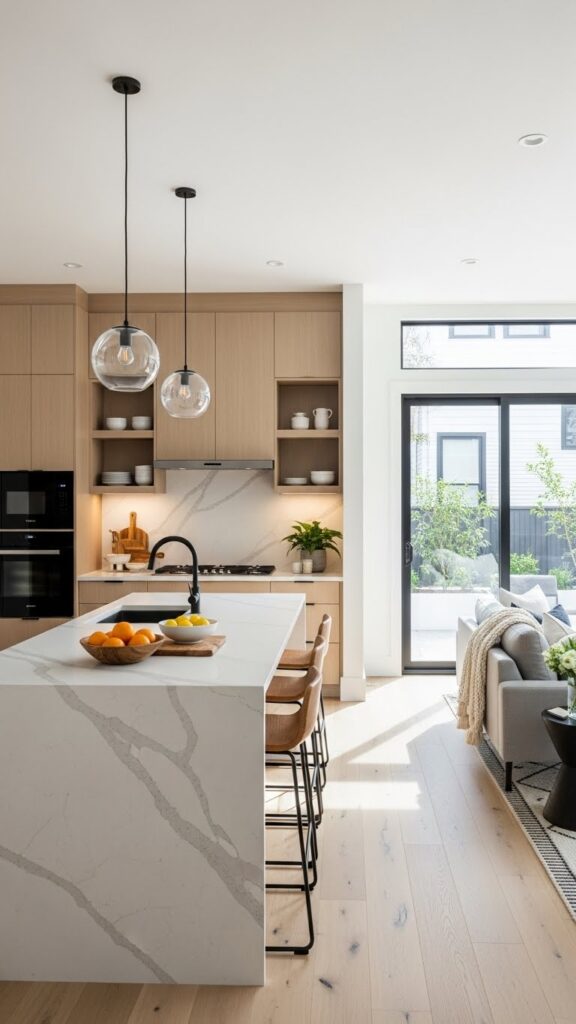
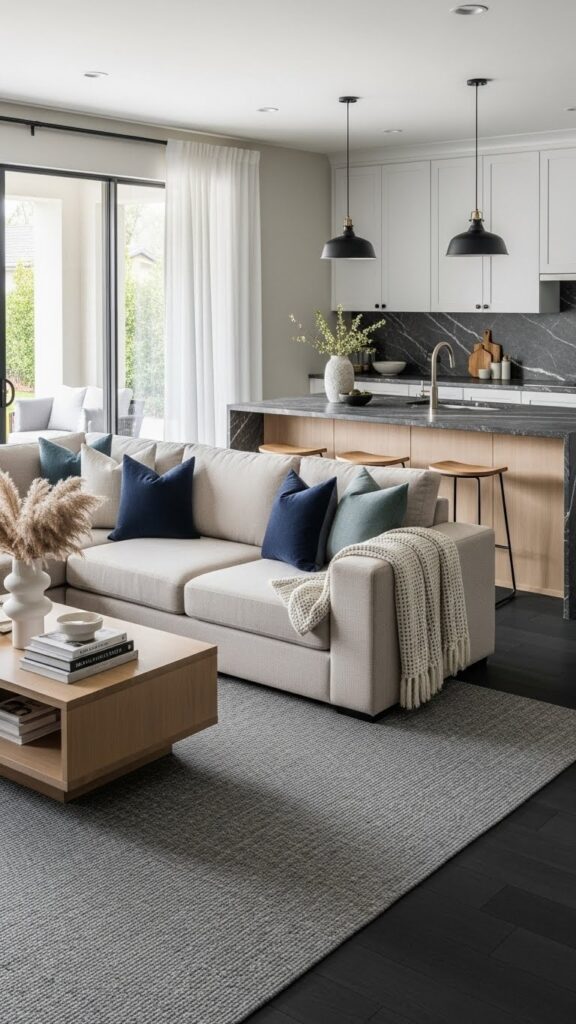
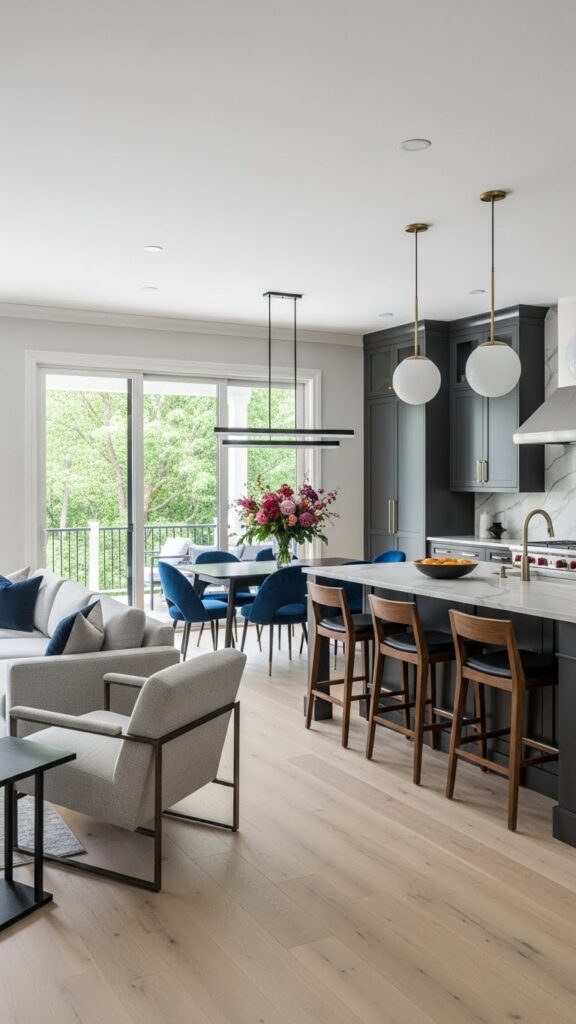
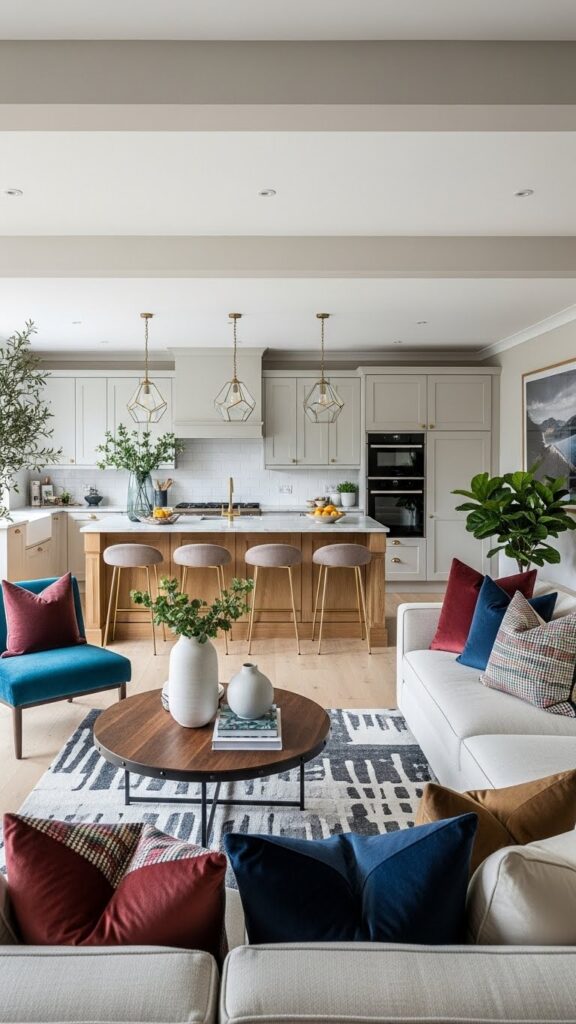
The island is the hero of open kitchen ideas. It acts as a bridge between the cooking and living zones. It provides a natural gathering spot for guests.
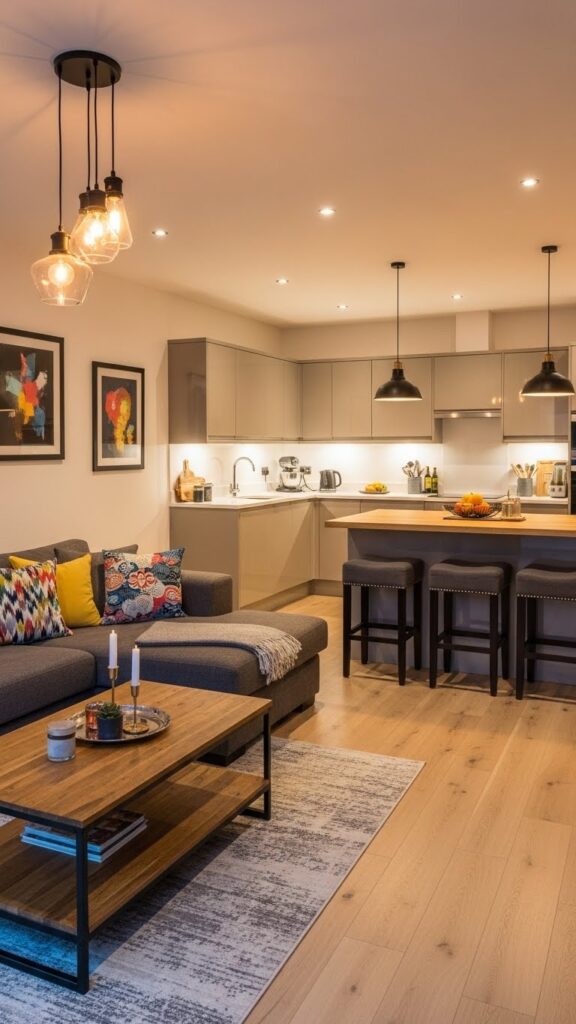
Use the island to define the kitchen’s boundary. Place bar stools on the outer edge. This keeps guests comfortable but out of the work triangle.
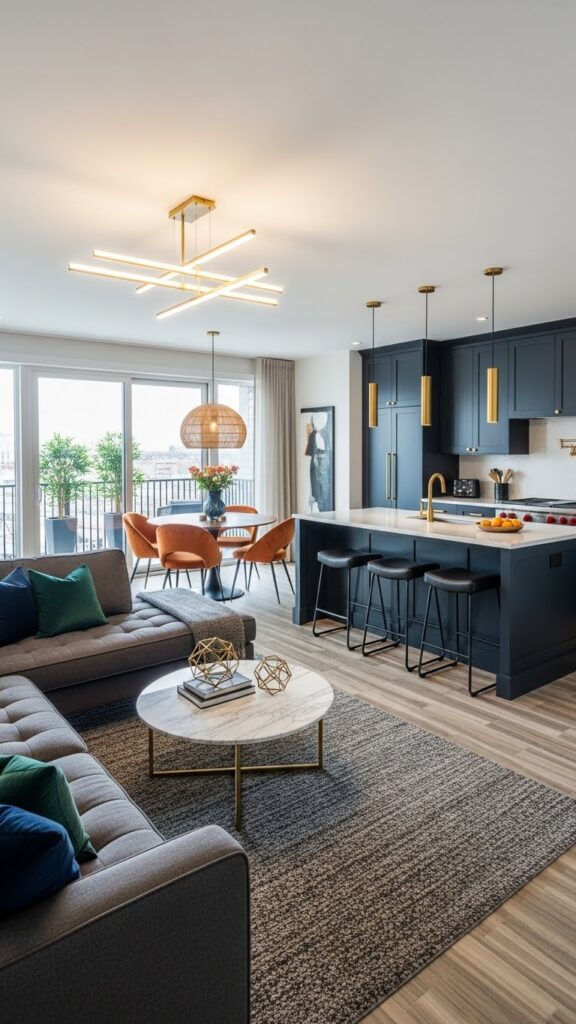
Choose a contrasting color for the island base. This turns it into a stylish focal point. It anchors the room visually.
Continuous Flooring Flow
Avoid chopping up the space with different floors. Use the same material from the front door to the kitchen. Hardwood or luxury vinyl plank works best.
This seamless transition makes the entire area feel huge. It eliminates visual breaks on the floor. It creates a true open floor plan.
If you must use tile in the kitchen, match the tone. A similar color to the living room wood helps. This maintains the flow.
Zoning with Area Rugs
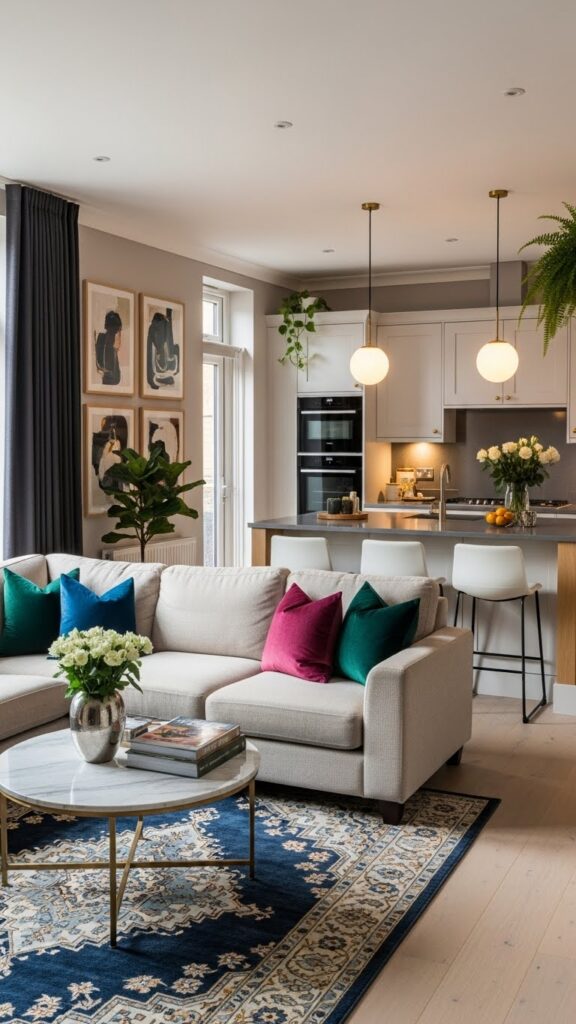
Without walls, you need other ways to define spaces. Area rugs are perfect for this task. Place a large rug in the living area.
This visually separates the lounge from the kitchen. It adds warmth and texture to the room. It also helps dampen sound.
Choose a rug that complements the kitchen cabinets. This ties the two zones together. It creates a cozy “room within a room.”
Consistent Color Palette
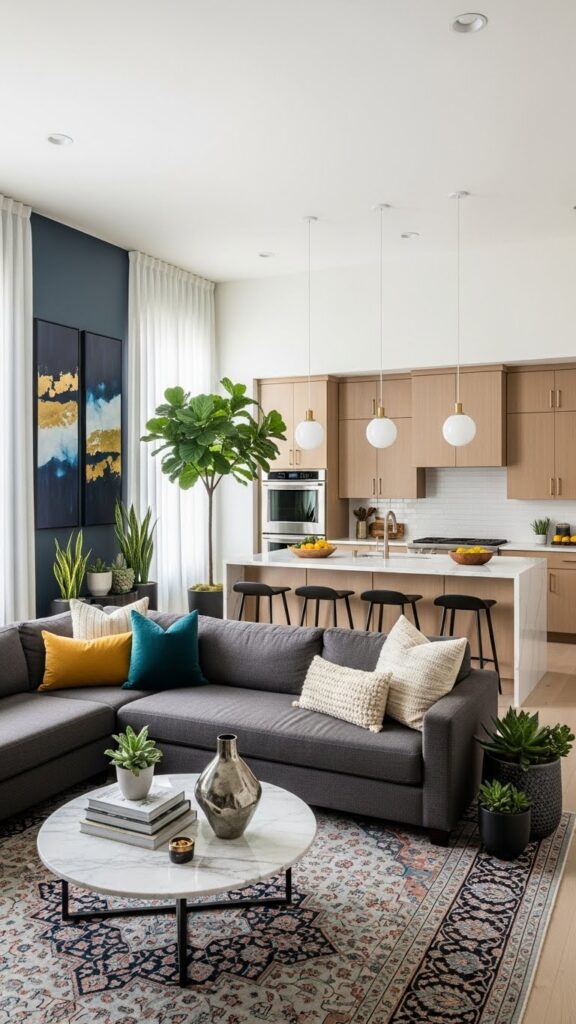
A unified color scheme is essential. The kitchen colors should flow into the living space. Pick a neutral base color for walls.
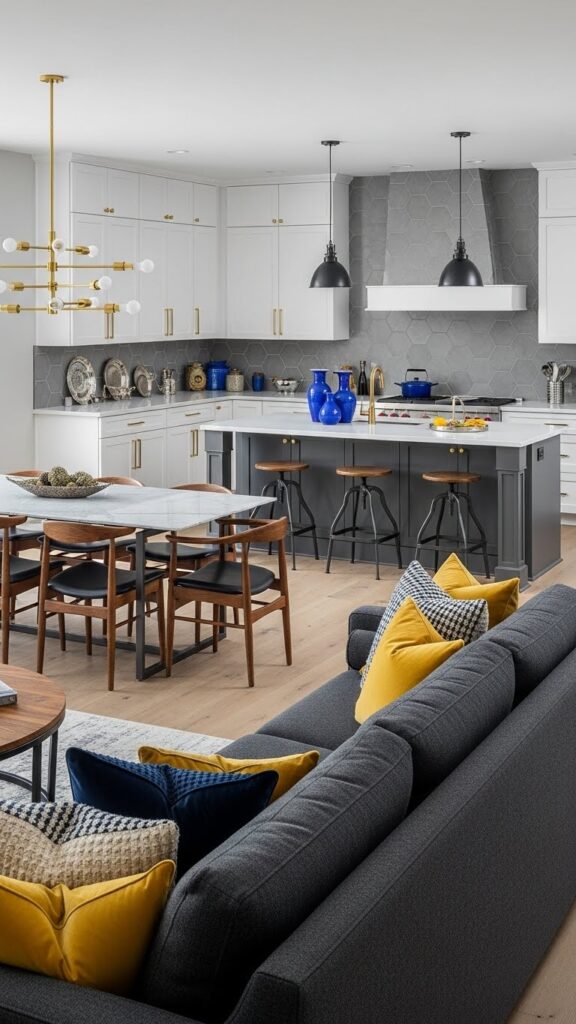
Use accent colors that repeat in both areas. If you have blue sofa pillows, use a blue fruit bowl. This creates a harmonious environment.
Avoid clashing colors that visually divide the space. Consistency makes the home feel calm. It is a hallmark of modern design.
Statement Lighting Fixtures
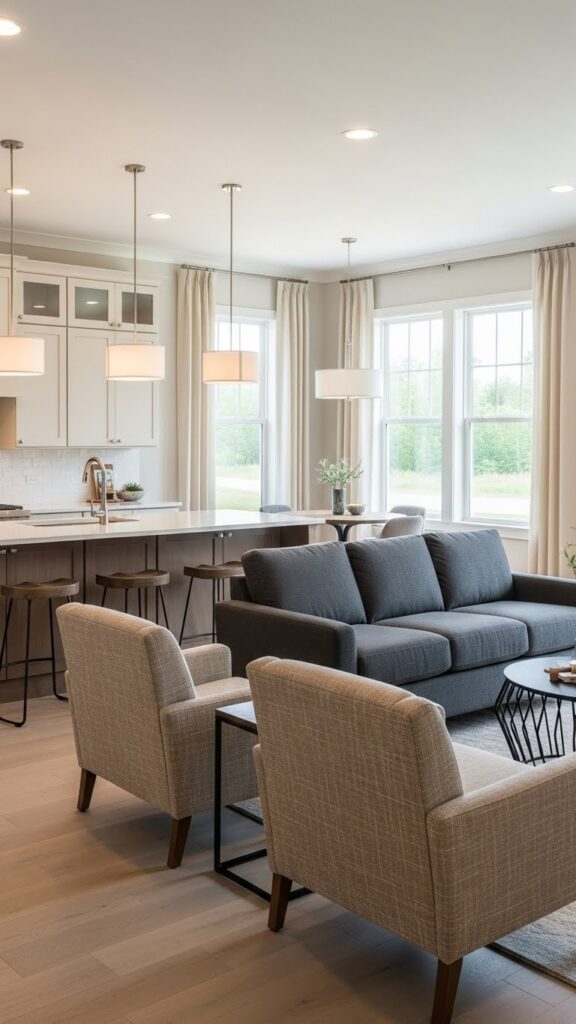
Use lighting to define the kitchen area. Hang large pendant lights over the island. This creates a visual ceiling for the kitchen.
It draws the eye and anchors the workspace. Ensure the style matches the living room lighting. This maintains design continuity.
Install dimmers on all switches. This allows you to change the mood. You can hide the kitchen mess with lower light.
Hidden Appliances
In an open space, you see everything. Concealed appliances help the kitchen look like furniture. Use panel-ready refrigerators and dishwashers.
This hides the industrial look of stainless steel. It makes the kitchen blend with the living room. It creates a seamless, high-end look.
Hide small appliances in an “appliance garage.” This keeps counters clear of clutter. It maintains a serene visual field.
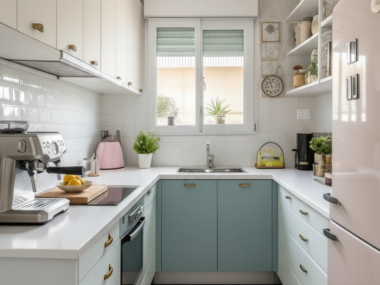
The Galley with a View
Even a galley kitchen can be open. Remove the wall at one end. This connects it to the dining area.
It creates a tunnel of light and space. Keep the upper cabinets minimal to widen the feel. Use light colors to expand the hallway effect.
This layout is efficient and social. It keeps the mess contained but the cook connected. It is great for small open kitchen spaces.
L-Shaped Layout Efficiency
The L-shaped kitchen is ideal for open plans. It tucks the workspace into a corner. This leaves the rest of the room open.
Add an island to create a triangle workflow. This setup offers plenty of counter space. It flows naturally into the dining zone.
It is versatile for any room shape. It allows for multiple cooks at once. It is a classic choice for a reason.
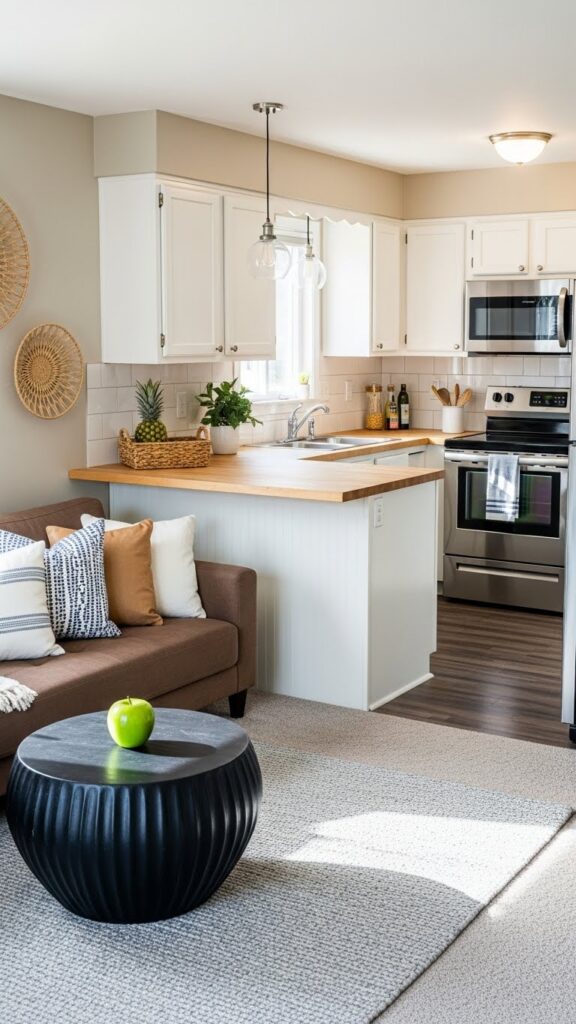
Peninsula Divide
If you lack space for an island, use a peninsula. It is attached to one wall. It provides extra counter space and seating.
This creates a clear boundary for the kitchen. It separates the cooking zone from the lounge. It creates a cozy U-shaped layout.
The peninsula acts as a serving buffet. It is perfect for parties. It is a smart kitchen layout idea.
Glass Partitions (Broken Plan)
Sometimes you need a little separation. This is called “broken plan” living. Use glass partitions or sliding doors.
This blocks noise and smells. However, it keeps the light and visual connection. It offers the best of both worlds.
You can close off the kitchen when needed. Black metal frames look very modern. It adds an architectural element to the room.
Minimalist Handleless Cabinets
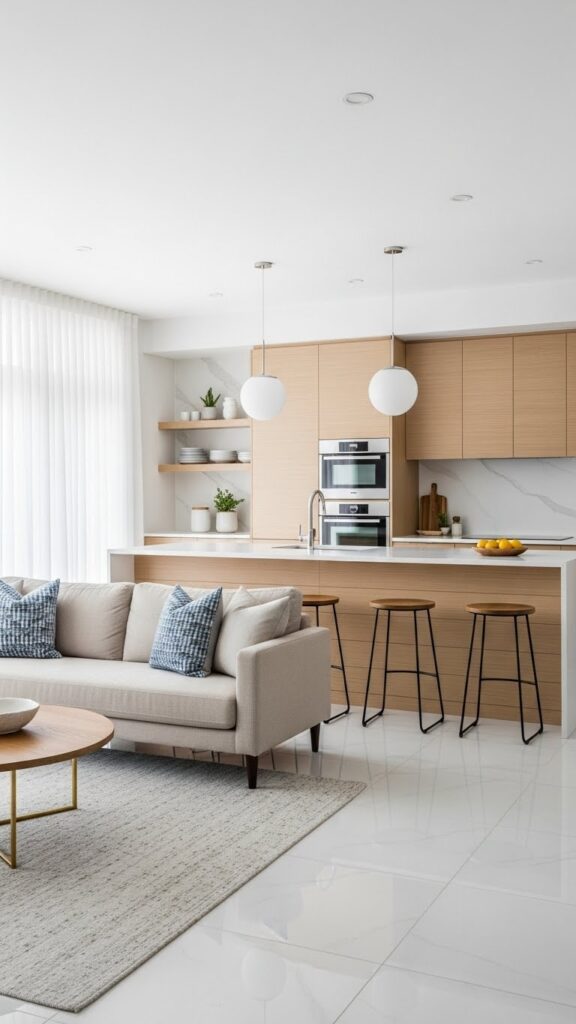
Visual clutter is the enemy of open plans. Choose handleless cabinets for a sleek look. Push-to-open mechanisms work great.
This removes visual noise from the room. It makes the kitchen look like a smooth wall. It creates a calming backdrop for the living area.
It is safer for kids running around. It is easier to wipe down. It defines modern kitchen style.
Architectural Ceiling Beams
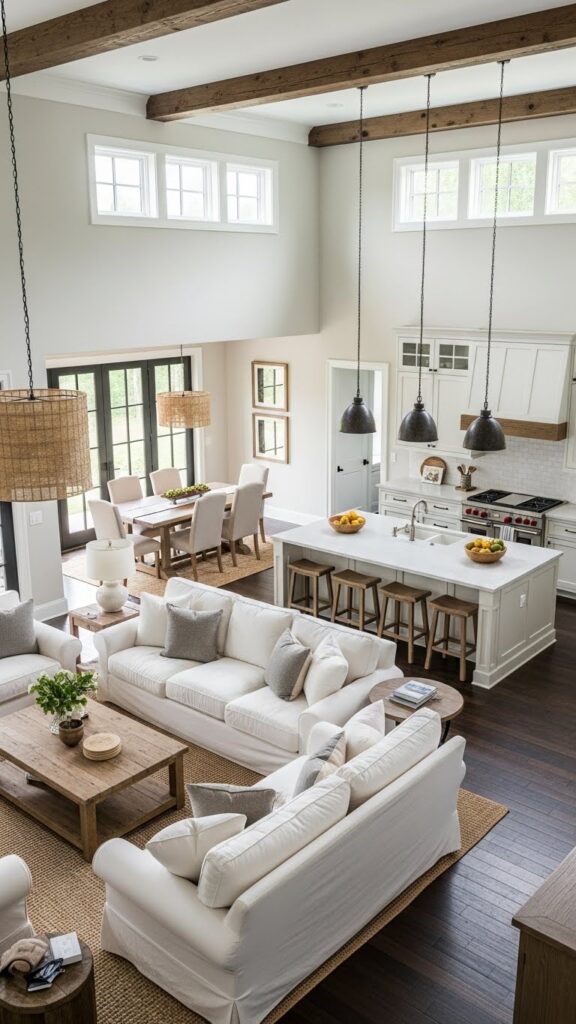
Use the ceiling to unite the spaces. Exposed wooden beams add warmth and character. They can run across the entire open area.
This draws the eye upward. It makes the room feel grander. It connects the kitchen and living zones vertically.
Beams can also hide structural supports. They add a rustic or industrial touch. They break up a large, plain ceiling.
Skylights for Natural Light
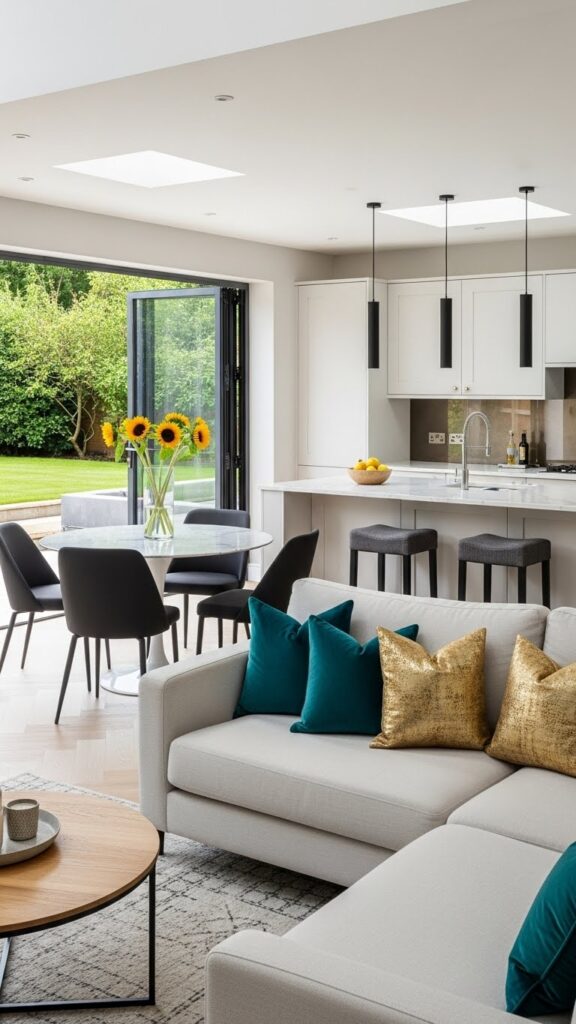
Light is crucial in open kitchen ideas. If possible, add skylights over the kitchen. This floods the workspace with daylight.
It reduces the need for artificial lights. It makes the kitchen feel airy and fresh. It highlights your beautiful countertops.
Natural light connects you to the outdoors. It improves your mood while cooking. It is a luxury feature that pays off.
Integrated Breakfast Nook
Save space by integrating dining. Build a banquette onto the back of the island. This creates a cozy breakfast nook.
It creates a smooth transition to the living area. It saves floor space compared to a separate table. It keeps family close to the cook.
Use performance fabrics for the seating. This ensures easy cleanup. It is a smart and stylish solution.
Open Shelving Display
Open shelves help merge rooms. Style them with items that fit both spaces. Mix cookbooks with decorative vases.
This blurs the line between kitchen and living room decor. It makes the kitchen feel less utilitarian. It shows off your personality.
Keep the shelves tidy and organized. Clutter on open shelves is very visible. Use matching jars for a clean look.
The Pantry Wall
Hide the mess with a pantry wall. This is a bank of floor-to-ceiling cabinets. You can store food, appliances, and clutter here.
It keeps the main kitchen counters clear. It allows for a minimalist aesthetic. It functions like a hidden scullery.
You can even hide a coffee station inside. Close the doors when guests arrive. It creates a calm, organized environment.
Industrial Style Accents
Industrial style works well in open lofts. Exposed brick and ductwork add character. Use metal stools and concrete countertops.
This rugged look is durable and trendy. It connects well with modern living spaces. It celebrates the structure of the building.
Balance the cold materials with wood. Warm lighting is also essential. It makes the large space feel cozy.
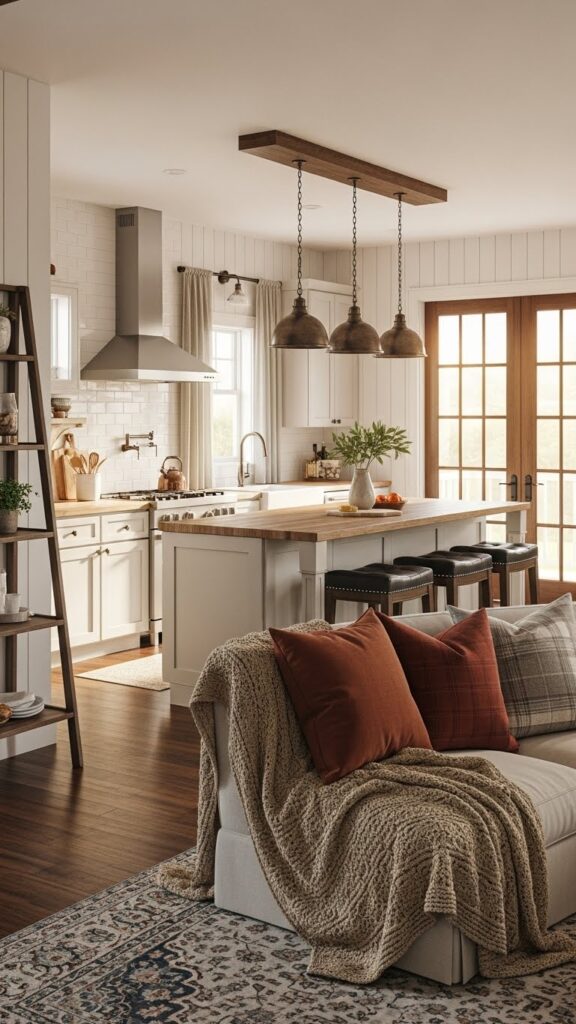
Farmhouse Warmth
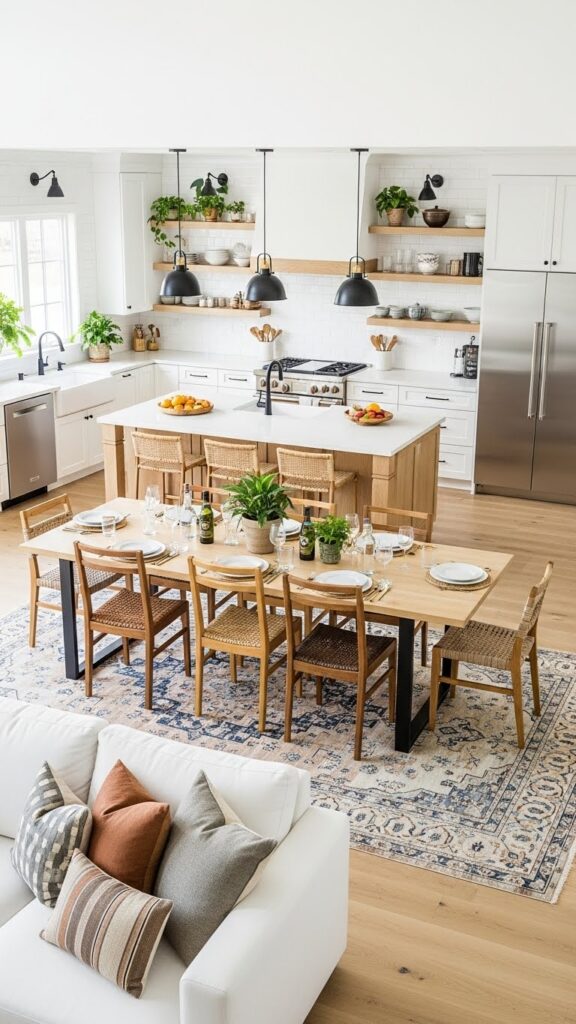
Farmhouse style is inviting and family-friendly. Use a large wooden island. Shaker cabinets add a traditional touch.
This style feels lived-in and comfortable. It encourages gathering and lingering. It bridges the gap between old and new.
Use warm whites and natural woods. Add vintage accessories for charm. It makes the open space feel like home.
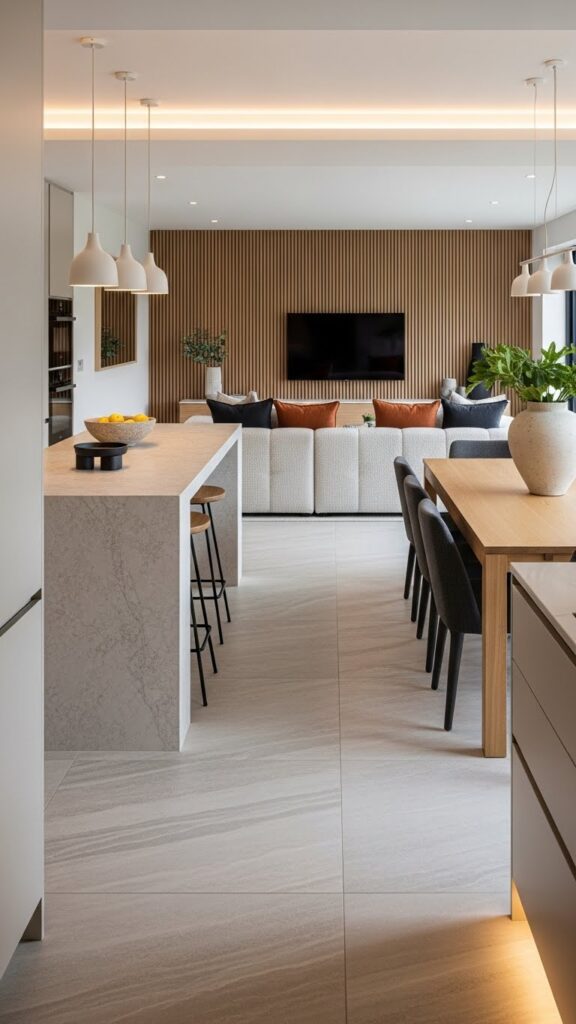
Modern Monochrome
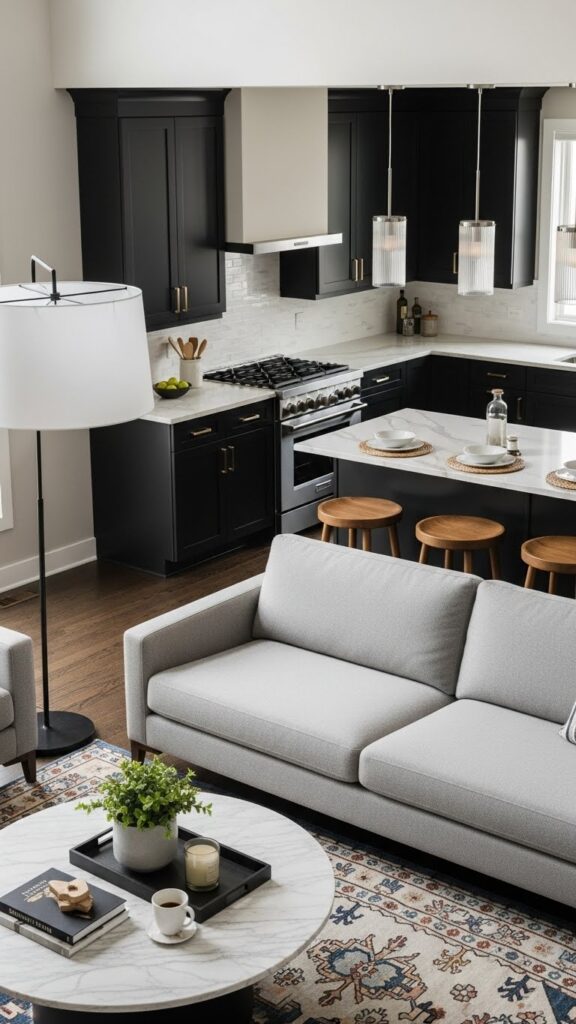
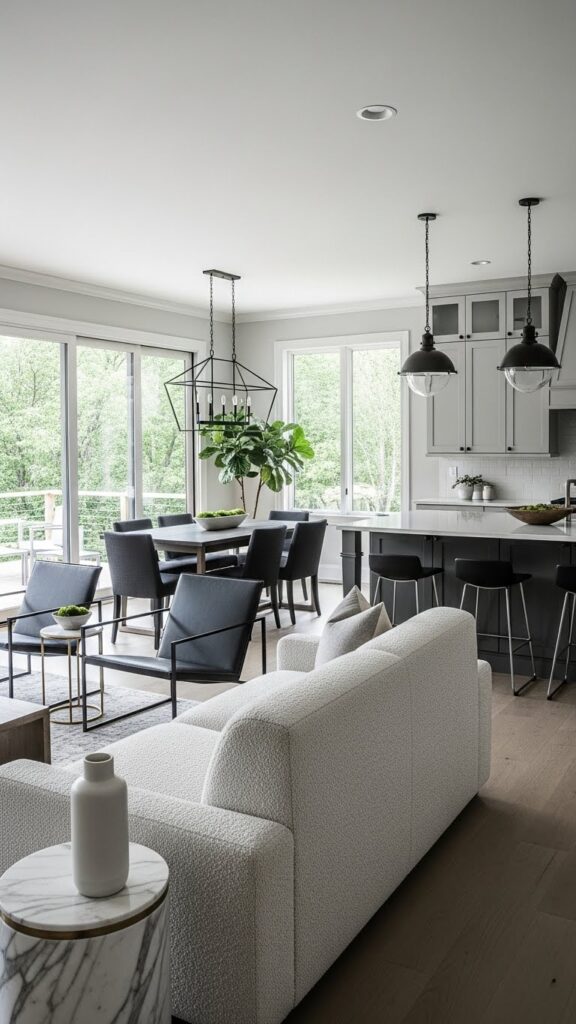
A monochrome palette is chic and simple. Stick to black, white, and grey. This unifies the kitchen and living areas.
It creates a sophisticated backdrop. Textures become more important than colors. Use marble, velvet, and wood for interest.
This look is timeless and elegant. It makes art and plants pop. It is easy to update with accessories.
Two-Tone Cabinetry
Two-tone cabinets add visual depth. Use a darker color for lower cabinets. Keep uppers white or light.
This grounds the kitchen without darkening it. It adds a designer touch. It creates a clear distinction within the open plan.
You can also paint just the island. This makes it a focal point. It adds personality to the room.
The “Social” Sink
Place your sink in the island facing the room. This allows the cook to face guests. You are not staring at a wall while washing up.
This promotes social interaction. You can watch TV or chat while working. It changes the dynamic of chores.
Ensure you have a deep sink. This hides dirty dishes from view. It keeps the island looking tidy.
Quiet Appliances are Key
Noise travels in open spaces. Invest in quiet appliances. Look for low decibel ratings on dishwashers and hoods.
This makes a huge difference in comfort. You can run the dishwasher while watching a movie. It reduces background hum.
Soft-close drawers also help reduce noise. Every little bit helps. Peace and quiet are luxury features.
Effective Ventilation
Cooking smells can permeate the whole house. A powerful range hood is non-negotiable. Choose one that is quiet but strong.
You can hide it in cabinetry. Or, make it a design feature. A stainless steel chimney looks great.
Ensure it vents to the outside. Recirculating fans are often not enough. Fresh air is vital for open plan living.
Using Furniture to Divide
Use your sofa to define the living zone. Place its back towards the kitchen. This creates a soft barrier.
A console table behind the sofa adds polish. It provides a place for lamps or decor. It acts as a buffer zone.
This creates separation without blocking light. It directs traffic flow around the seating area. It makes the room feel structured.
Maximize Vertical Storage
In open kitchens, wall space is often limited. You must go high. Take cabinets all the way to the ceiling.
Use the top shelves for rarely used items. This maximizes storage capacity. It also prevents dust from gathering on top.
A library ladder can help reach them. Vertical lines make the room feel taller. It is a smart use of volume.
Smart Home Integration
Modern homes need smart tech. Integrate voice-controlled lighting. Use smart speakers for music and timers.
A smart fridge can help with grocery lists. Hidden charging stations keep devices tidy. Tech should enhance, not clutter.
Automated blinds are great for large windows. This adds convenience and luxury. It fits the modern open lifestyle perfectly.
Conclusion
Embracing open kitchen ideas changes how you live. It brings people together in a shared space. It makes your home feel expansive and bright.
Careful planning is the key to success. You must balance aesthetics with function. Manage noise, smells, and visual clutter.
With these tips, you can design a dream space. It will be the true heart of your home. Start planning your open kitchen renovation today.
Frequently Asked Questions (FAQ)
How do I hide dirty dishes in an open kitchen?
A raised breakfast bar is a great solution. It creates a visual shield for the counter. Also, choose a deep sink.
Install two dishwashers if space allows. This lets you hide dishes immediately. Keeping counters clear is essential for the look.
Does an open kitchen smell up the house?
It can if you don’t have good ventilation. A high-quality extraction hood is vital. Ensure it vents to the outdoors.
Open windows when cooking strong smells. Use scented candles or air purifiers. Proper planning minimizes this issue significantly.
Is an open kitchen good for small houses?
Yes, it is excellent for small homes. Removing walls shares light and space. It makes both the kitchen and living room feel bigger.
It eliminates “dead space” like hallways. It allows for flexible furniture arrangements. It creates a more usable footprint.

 Thenna Andersen